Lumina Mascot LogoLumina
A mixed-media art print illustration styled like a vintage magazine cover on aged textu...
插画与艺术2:3

A mixed-media art print illustration styled like a vintage magazine cover on aged textured paper, featuring the header text \"Botanical Lines / Greenhouse Hues\" at the top and \"THE RED JUMPSUIT\" at the bottom. At the center is a detailed colored pencil and fine-line ink sketch of the woman from the reference photo, who has short black hair and is standing inside a lush, glass-paned greenhouse. She is wearing a structured brick-red or maroon utility jumpsuit with long sleeves, a collared neckline, a tied fabric belt at the waist, and her hands casually tucked into the front pockets. The surrounding greenhouse environment, including stone pathways, potted flowering plants, and hanging ferns, is rendered with delicate pencil shading and selective bursts of natural color, blending a hand-drawn illustration style with realistic tones.

GPT Image 2
Create ONE refined PHOTO + MINIMAL INK VIGNETTE artwork based ONLY on the uploaded phot...
插画与艺术2:3

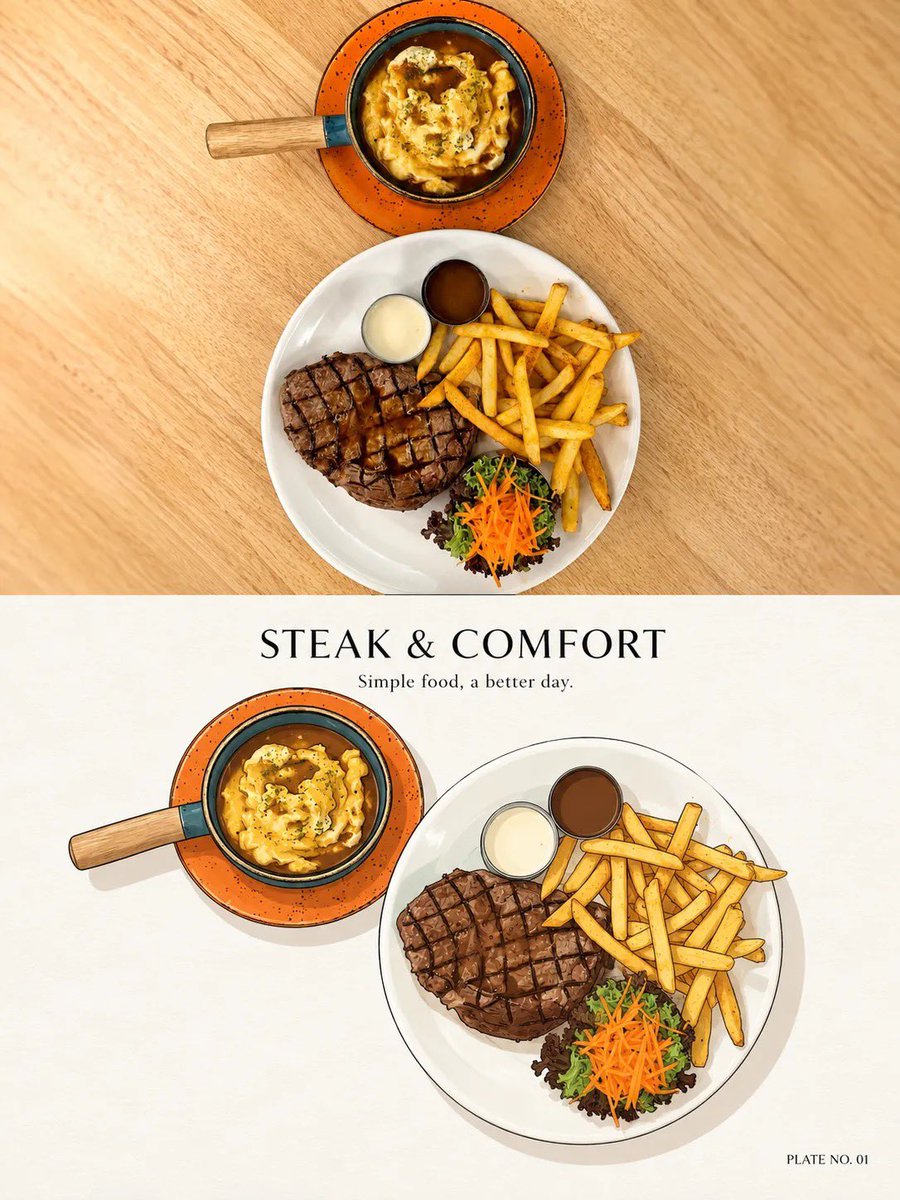
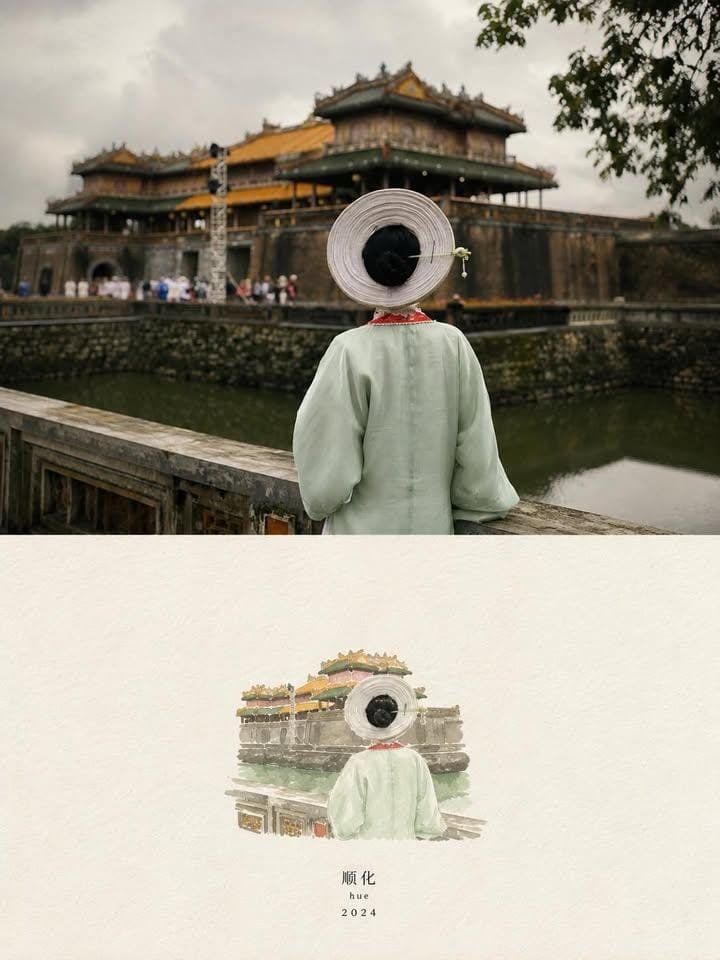
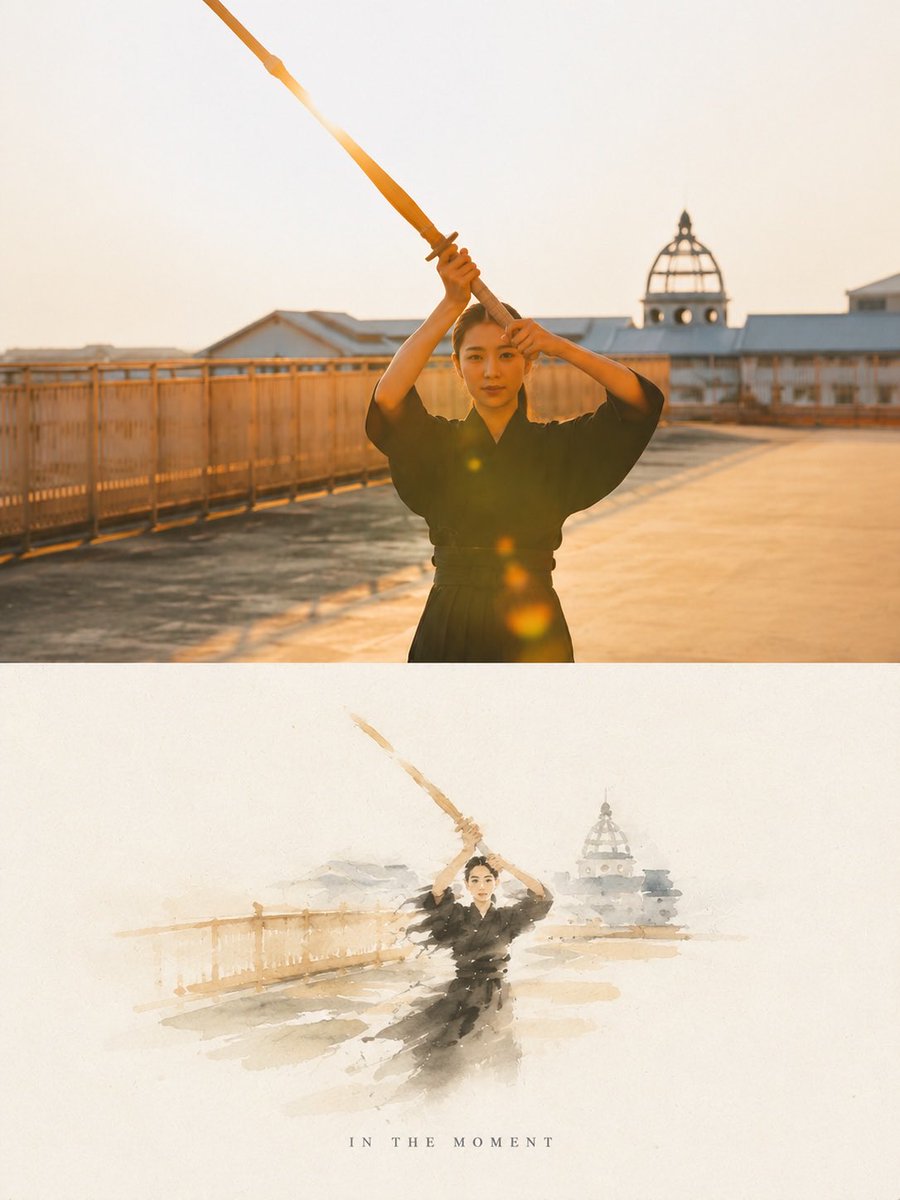
Create ONE refined PHOTO + MINIMAL INK VIGNETTE artwork based ONLY on the uploaded photograph.\n\nFORMAT: Vertical 3:4.\n\n### TOP — ORIGINAL PHOTO\nUse approximately the upper 48–50% for the original photograph.\n\nPreserve the photo faithfully and photorealistically. Do not redraw, beautify, replace, remove, duplicate, or invent important elements.\n\nPreserve:\n- people, animals, faces, clothing, poses and gestures\n- food and objects\n- buildings and environment\n- perspective, lighting, colors and atmosphere\n\nOnly crop or scale proportionally when necessary.\n\n### BOTTOM — MINIMAL INK VIGNETTE\nUse a warm ivory / natural off-white paper background.\n\nStudy THIS photograph independently and identify the ONE main visual subject or small group that best represents the moment.\n\nIllustrate only what matters. Remove roughly 70–90% of unnecessary background detail.\n\nRecognition should come mainly from:\nsilhouette + shape + color + pose + 1–3 distinctive details.\n\nKeep the illustration relatively small with generous negative space.\n\n### STYLE\nVintage editorial / classic printed vignette.\n\nUse:\n- thin controlled dark-ink outlines\n- slightly imperfect hand-drawn contours\n- simple geometric forms\n- restrained flat colors\n- subtle tonal variation\n- minimal texture\n- soft grounding shadow\n- clean shape separation\n\nKeep it charming, graphic, tidy, nostalgic and understated.\n\nUse fewer strokes than a detailed sketch.\n\nAvoid:\nphotorealistic illustration, watercolor, painterly brushwork, dense sketching, cross-hatching, excessive outlines, comic-book style, anime/chibi, 3D rendering, vector-perfect geometry, or unnecessary tiny details.\n\n### TITLE + CAPTION\nAbove the illustration, create:\n\nONE short editorial title: approximately 2–4 words, inspired specifically by the photograph.\n\nONE micro-caption: approximately 3–8 words, natural and understated.\n\nNever use generic titles such as “Beautiful Moment,” “Sweet Memories,” or “Wonderful Day.”\n\nIf a recognizable place, landmark, food, brand, event, or subject is clearly visible, its real name may be used. Never guess.\n\n### INDEX\nAdd a tiny bottom-right label based on the main subject:\n\n- Food/drink → PLATE NO. 01\n- Animal → PORTRAIT NO. 01\n- Person/group → MOMENT NO. 01\n- Place/architecture/landscape → VIEW NO. 01\n- Object/miscellaneous → STUDY NO. 01\n\nFor a person + pet, normally use MOMENT NO. 01.\n\n### FINAL FEEL\nA beautifully curated personal visual archive:\n\nREAL PHOTOGRAPH ABOVE\n+ SIMPLIFIED MEMORY BELOW\n+ SHORT EDITORIAL TITLE\n+ TINY HUMAN CAPTION\n+ ADAPTIVE INDEX\n\nQuiet, minimal, collectible, elegant, and consistent.\n\nIMPORTANT: Analyze every uploaded photograph independently. Never carry over subjects, objects, locations, colors, captions, or details from previous images.

GPT Image 2
请将我上传的每一张旅行照片分别制作成一张独立的
插画与艺术2:3

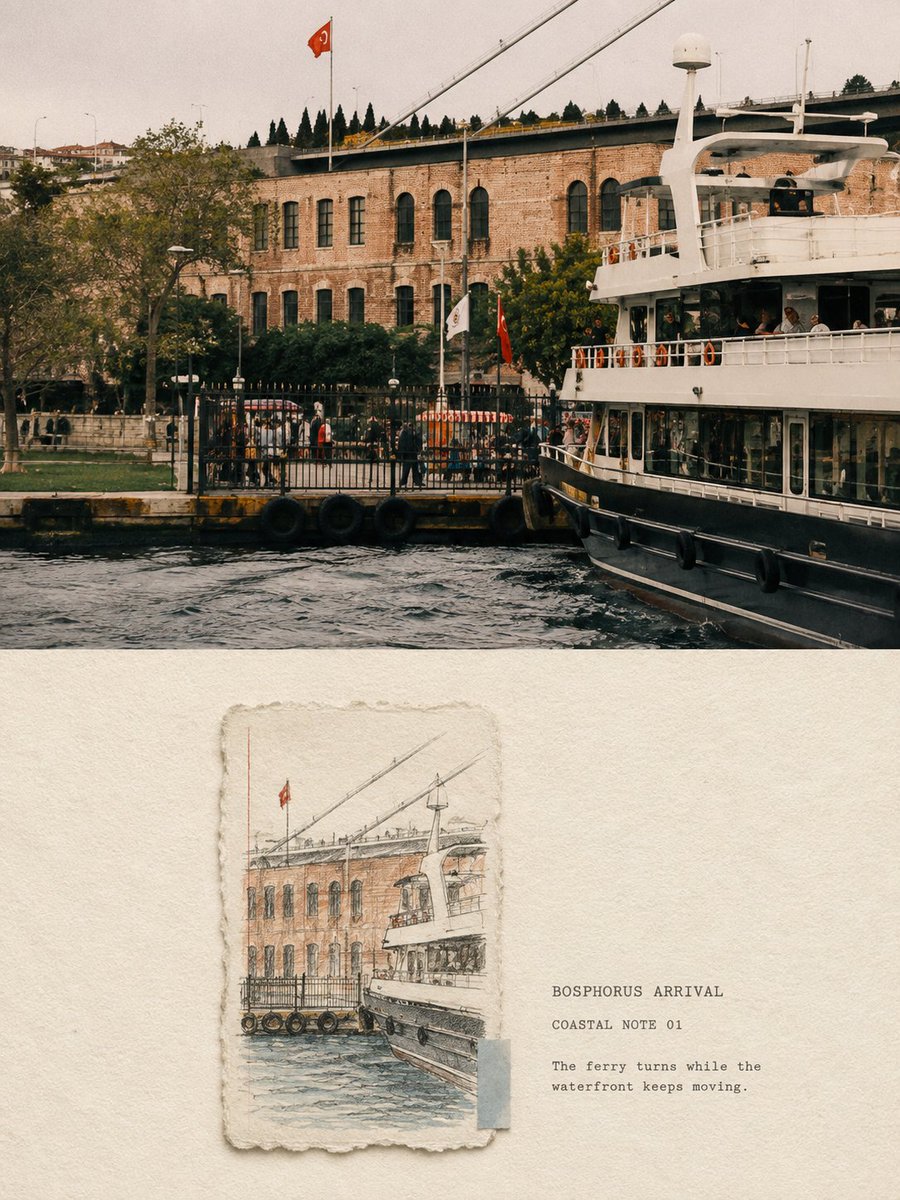
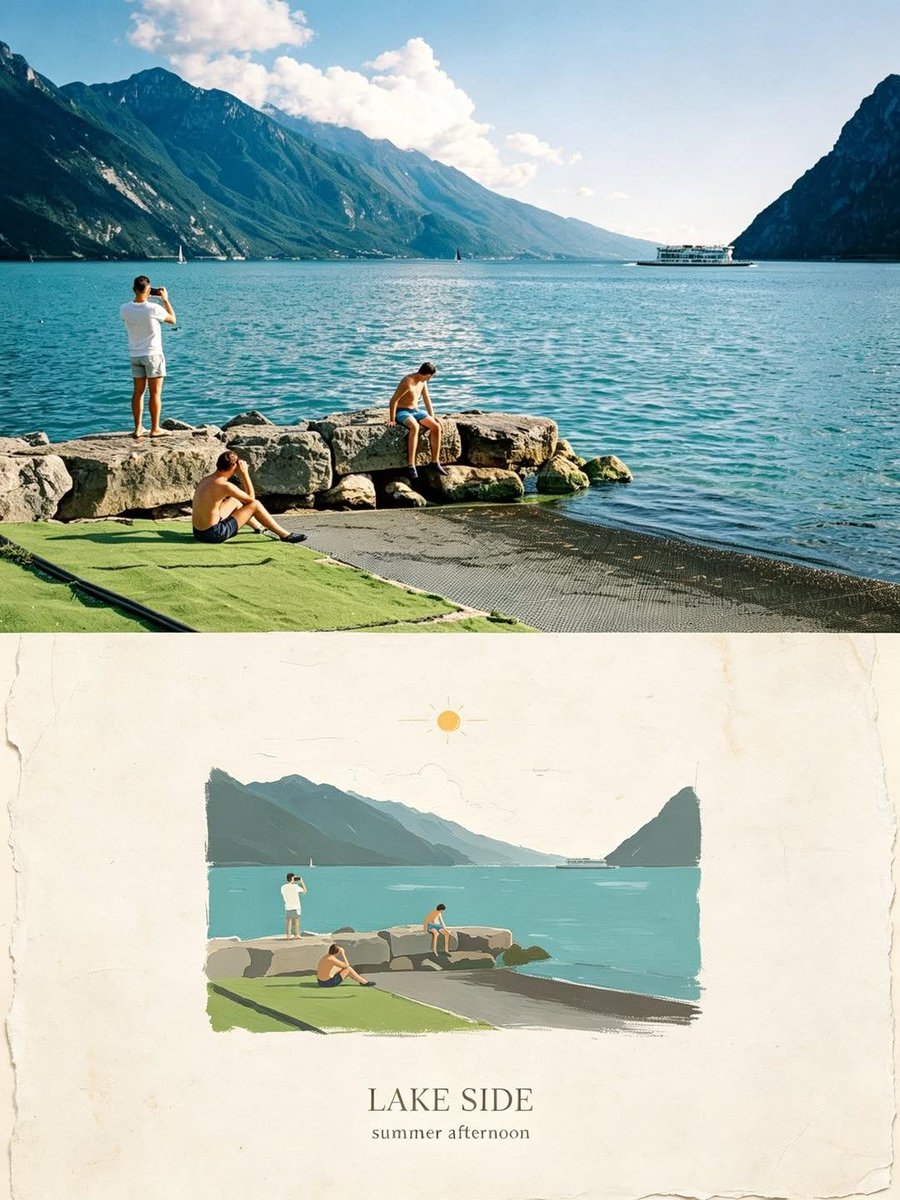
请将我上传的每一张旅行照片分别制作成一张独立的\n“PAPER WINDOW COASTAL MEMORY|纸窗海岸记忆”\n高级对比海报。每张照片单独输出,不得多图拼贴。\n\n整体采用3:4竖版构图。上方原始照片约占画面48%–50%,\n下方纸窗记忆区约占50%–52%。两个区域之间使用清楚、\n平直、克制的水平边界,不得渐变、羽化或互相覆盖。\n\n上半部分必须使用原始照片本身,准确保持主体身份、数量、\n人物或动物姿态、船只方向、建筑轮廓、山体与海岸线、\n空间关系、观察角度、自然材质、真实光影和原有色彩氛围。\n\n仅进行轻微的旅行艺术出版物级调色与极薄胶片颗粒。\n为适配竖版,可以合理裁切或自然扩展天空、水面、地面与\n无主体环境,但不得拉伸、扭曲、移动、替换或重新绘制主体,\n不得使用AI重建的相似照片冒充原图。\n\n下半部分使用大面积温暖米白色粗纹水彩纸作为完整背景,\n保留清楚可见的棉纸纤维、纸齿与轻微自然色差。\n\n下半部分的大面积空白是构图的主要组成,不要使用地图、\n邮票、贝壳、胶带或装饰性手账素材填满纸面。\n\n在下半部分偏左或略偏中心的位置,放置一张小型、竖向或\n接近竖向的自然撕边手绘纸稿。\n\n小纸稿通常只占下半部分宽度约38%–45%、高度约45%–58%,\n四周必须保留至少45%–60%连续、安静、未经绘制的粗纸留白。\n\n撕边具有真实棉纸纤维和轻微物理厚度,只使用柔和、克制的\n接触阴影。不得将它做成厚纸板、立体相框、拍立得照片或\n悬浮卡片。\n\n小纸稿内部只提取照片中最值得记住的一个核心旅行锚点,\n例如一艘船、一座风车、一组穹顶、一个灯塔、一段码头、\n一座海边建筑或一位行人。\n\n搭配两至四条必要的环境线索,例如一小段岸线、一条水面、\n几根桅杆、一道山脊、少量屋顶或植物。主动删除人群、\n重复船只、密集建筑、招牌、窗格、杂物和摄影噪声。\n\n不要把整张照片缩小后完整画进纸窗,也不要沿用原图的完整\n裁切、主体比例和信息密度。\n\n重新调整主体尺度、次要元素位置与纸白比例,使核心物件像\n一次被单独保存的观察,而不是照片的彩铅复制品。小稿内部\n同样保留明显未上色区域,笔触在接近撕边前自然停止。\n\n绘画媒介以迟疑、纤细、略带手工误差的石墨铅笔线为主,\n结合干涩彩铅、浅淡水彩铅、局部纸面擦痕与断裂笔触。\n\n配色完全从原始照片提取并归纳为有限色盘,例如海水与天空\n的灰蓝、青绿,建筑与土地的暖石色、赭色,植物的灰绿色,\n以及一处很小的原图特征色。\n\n颜色保持柔和、褪淡、略带旧旅行速写感,不能使用高饱和\n颜色铺满整张纸稿。\n\n在小纸稿边缘加入一根极细、略褪色的红色或暖色铅笔竖线,\n以及一小块从照片色彩中提取的灰蓝、青绿或暖灰色纸片。\n\n这些元素只用于建立纸本编辑节奏,不得变成固定品牌标识,\n也不得遮挡主体。\n\n下半部分默认加入一组少量、准确且清晰可读的英文文字,\n放置在小纸稿右侧或附近的连续留白中。文字包括:\n\n1. 一个由1–3个英文单词构成的场景或意象标题;\n2. 一个类似“COASTAL NOTE 01”或“TRAVEL NOTE 01”的字段;\n3. 一句5–12个英文单词的简短观察句,描述照片中真实存在的\n 天气、动作、建筑、船只、海水或空间关系。\n\n文字使用克制的打字机衬线体、旧铅字或细瘦书卷感字体,\n字距与行距稍宽,边缘允许轻微缺墨和不均匀压力,像直接\n印在粗纸上。\n\n主标题在正常聊天预览尺寸下必须清楚辨认,不能缩成灰色\n装饰线。不得自行编造城市、日期、坐标、引用或历史信息。\n\n整体气质安静、温和,具有真实纸张触感和旅行后的回望感。\n上半部分保留旅途正在发生时的光线与声音;下半部分则像从\n记忆里挑出一个物件,重新画在一张被夹进书中的小纸片上。\n\n避免:\n下半部分完整复画原景;\n相同裁切、相同尺度的材质替换;\n整面水彩背景;\n巨大手绘稿;\n多个撕纸卡片;\n密集手账拼贴;\n光滑矢量线稿;\n儿童卡通;\n商业旅游图标;\n地图、邮票、贝壳和胶带堆积;\n厚重投影;\n塑料3D;\n假中文、乱码;\n作者名、签名、Logo、二维码、网址和水印。

GPT Image 2
Create a high-end independent editorial poster in a strict 3:4 vertical aspect ratio. D...
插画与艺术2:3

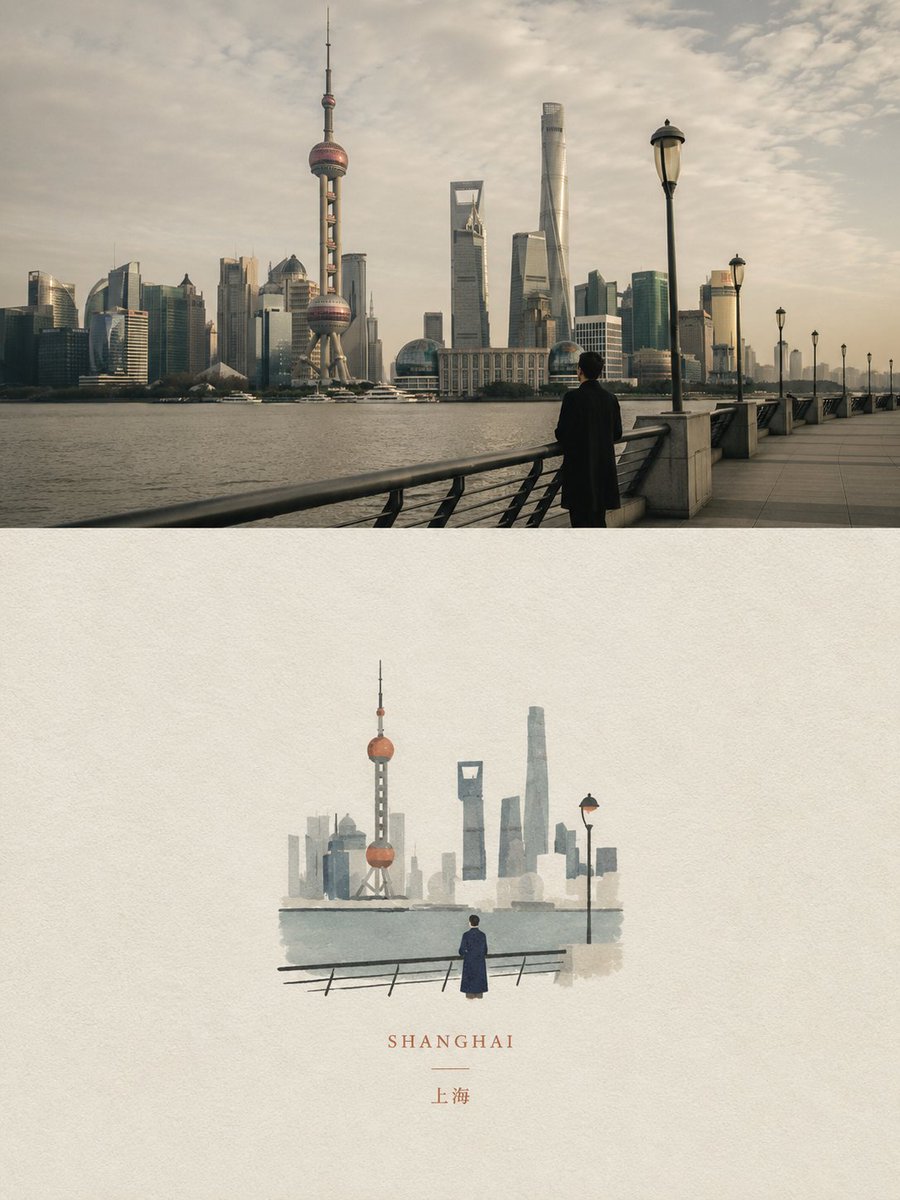
Create a high-end independent editorial poster in a strict 3:4 vertical aspect ratio. Divide the canvas horizontally into two exactly equal 50/50 sections, designed as one cohesive art-publication cover.\n\nTOP HALF - EDITORIAL PHOTOGRAPH\n\nCreate an original photorealistic editorial photograph based on the chosen subject or scene. Establish a strong, recognizable composition with authentic lighting, natural shadows, realistic textures, atmospheric depth, and sophisticated magazine-style color grading.\n\nKeep the photography natural, cinematic, and understated — like a premium independent magazine or contemporary art book. Avoid excessive retouching or artificial styling.\n\nBOTTOM HALF — HAND-DRAWN PAPER ILLUSTRATION\n\nReinterpret the same subject and visual story as a small minimalist handmade paper illustration.\n\nPreserve the key silhouette, recognizable features, essential objects, pose or gesture, and core narrative. Simplify the scene heavily, using delicate imperfect hand-drawn lines, a few bold acrylic-style flat color shapes, visible brush marks, rough paper grain, and slightly irregular organic edges.\n\nKeep the illustration small and centered, occupying approximately 10–20% of the bottom half, with generous negative space.\n\nUse a rough white, warm off-white, or pale natural paper background, with only a few minimal shapes or lines suggesting the surrounding environment.\n\nCOLOR & TYPOGRAPHY\n\nDerive a restrained palette of no more than 4 harmonious colors from the overall scene. Use controlled flat color blocks with subtle handmade texture.\n\nOptional minimal editorial typography may include a short title, keyword, location, year, number, or brief phrase. Keep it understated and naturally integrated into the negative space.\n\nFINAL ART DIRECTION\n\nQuiet, poetic, refined, minimal, innocent, relaxed, artistic, thoughtful, and premium.\n\nThe visual concept is: “A small subject surrounded by a large amount of empty space.”\n\nCreate a strong contrast between the photographic realism of the top half and the minimal handmade visual poem of the bottom half, while making both clearly belong to the same visual story.\n\nAvoid: collage layouts, generic templates, commercial advertising aesthetics, excessive decoration, busy compositions, excessive typography, 3D rendering, glossy textures, cartoon styling, crayon, colored-pencil, watercolor bleeding, heavy oil painting, pure line art, or polished digital illustration.\n\nPrioritize recognition, restraint, negative space, material texture, subtle imperfection, editorial sophistication, and storytelling.

GPT Image 2
Create a premium vintage Japanese travel-journal editorial collage in vertical 4:5 form...
插画与艺术2:3

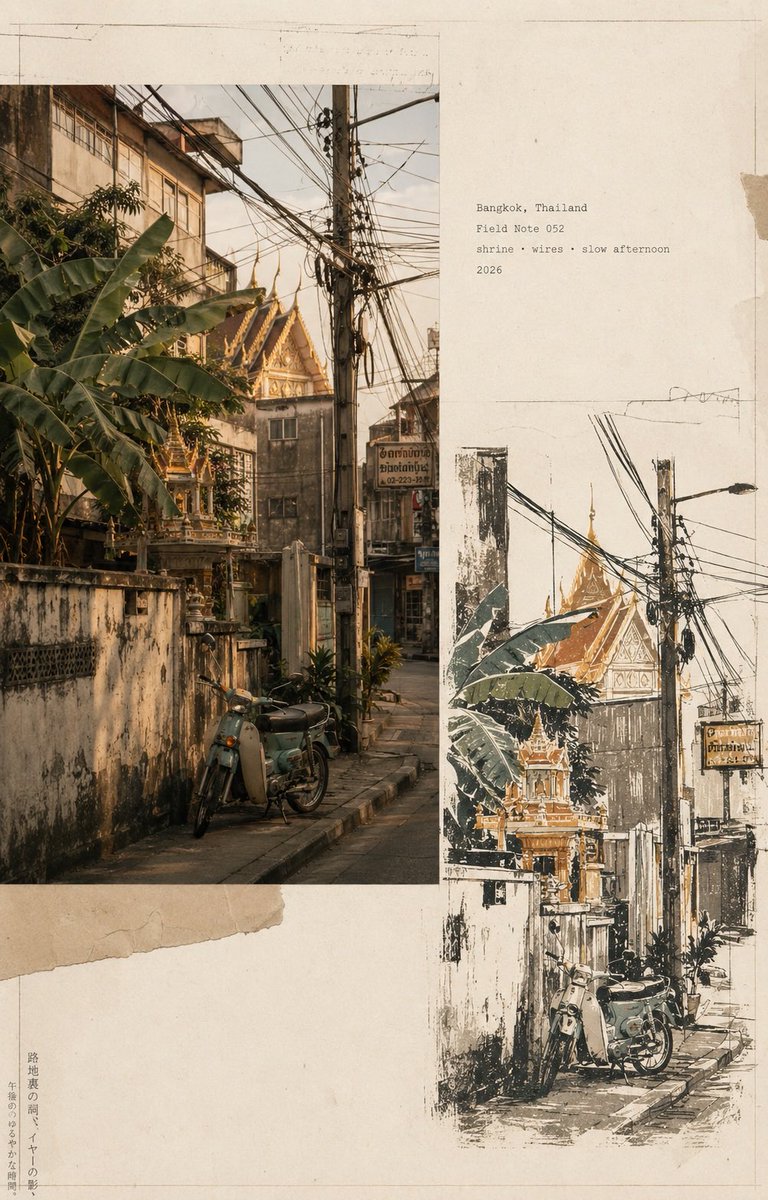
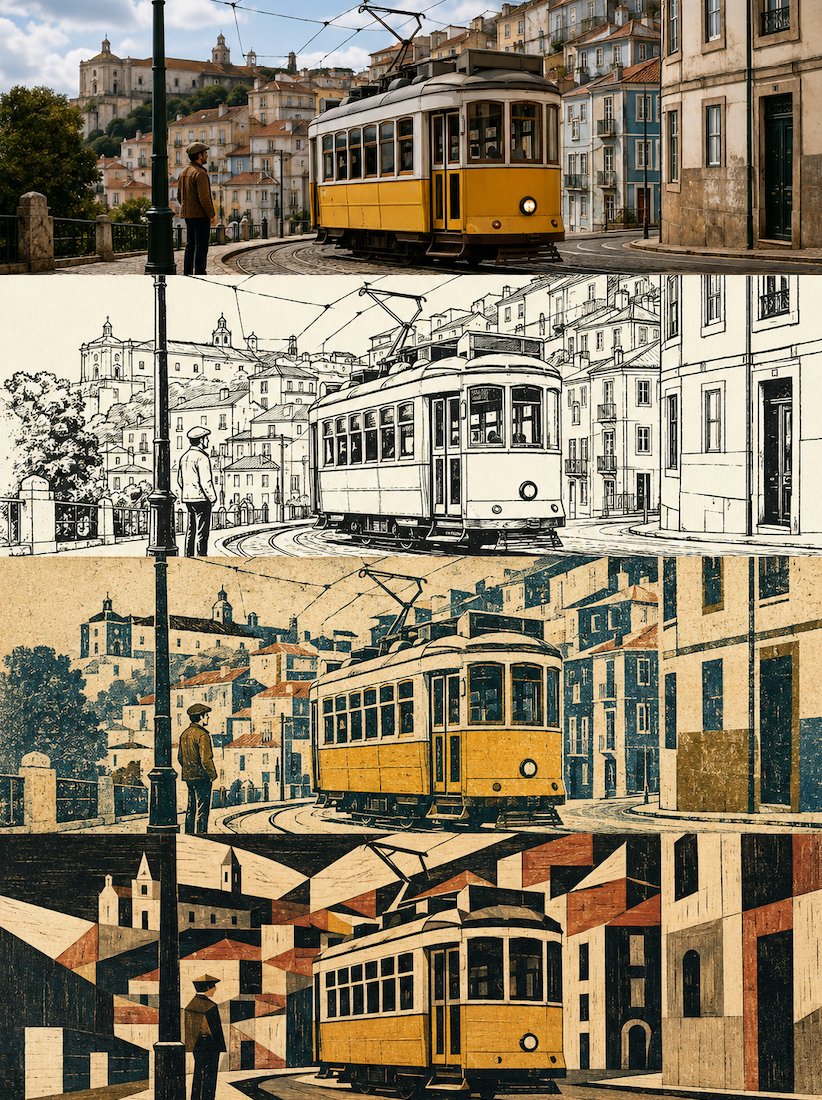
Create a premium vintage Japanese travel-journal editorial collage in vertical 4:5 format, featuring four distinct city sections—Bangkok, Thailand; Lisbon, Portugal; Marrakech, Morocco; Istanbul, Turkey. Each section combines a warm photorealistic documentary street photograph with a matching imperfect hand-drawn screen-print illustration, arranged asymmetrically on aged cream paper with torn-paper layers, archival borders, subtle pencil marks, typewriter captions, faded ink, paper fibers, and authentic 35mm analog grain. Bangkok: shrine, tangled wires, tropical greenery, teal motorbike; Lisbon: yellow tram, steep cobblestone street, balconies and river view; Marrakech: terracotta medina, palms, rugs and ornate minaret; Istanbul: steep stone street, Galata Tower, Bosphorus and vintage scooter. Use a restrained palette of sage, ochre, terracotta, mustard, charcoal and warm ivory, with sophisticated editorial art direction, muted contrast, natural light, handmade imperfections, and museum-quality travel-zine aesthetics. Small archival labels: “Bangkok / Field Note 052”, “Lisbon / Field Note 031”, “Marrakech / Field Note 017”, “Istanbul / Field Note 039”. No logos, watermark, HDR, oversaturation, or modern clutter.

Nano Banana Pro
Minimalist watercolor illustration on textured ivory handmade paper, soft pastel palett...
插画与艺术3:4

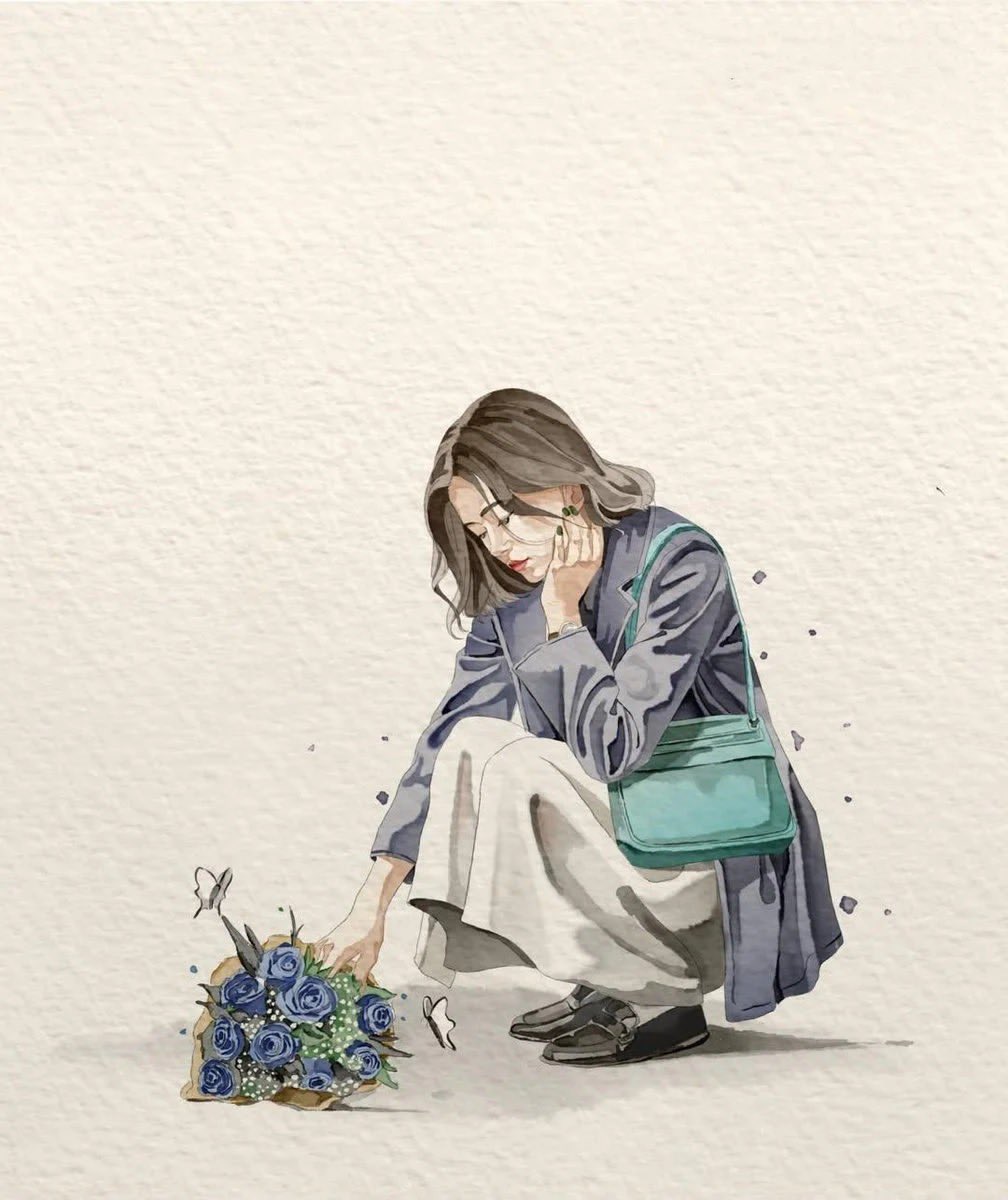
Minimalist watercolor illustration on textured ivory handmade paper, soft pastel palette, delicate ink outlines, subtle watercolor bleeding, cozy storybook aesthetic, lots of clean negative space.\nA stylish young woman in modern casual clothing is the main subject, captured in a calm,emotional everyday moment. She wears an oversized trench coat or cardigan layered over soft neutral clothing, a long flowing skirt or wide-leg pants,leather loafers or ankle boots, and a simple crossbody bag. Medium-length natural hair gently frames her face.\n\nThe composition is intentionally small within the canvas, leaving generous empty space around the character. Soft expressive pose with gentle emotions, surrounded by tiny floating watercolor splashes, subtle butterflies, flowers, leaves, or seasonal elements depending on the scene.\n\nExamples of scenes:\n• Squatting beside a bouquet of blue roses while gently touching one flower.\n• Standing quietly while holding a wrapped bouquet against her chest.\n• Resting peacefully beneath a large tree with eyes closed.\n• Reaching upward toward a single apple hanging from a tree branch while carrying a basket of freshly picked apples.\n\nHand-painted watercolor textures, soft shadows, elegant brush strokes, muted earthy colors, warm natural atmosphere, peaceful lifestyle illustration, Japanese stationery art style, minimal editorial illustration, whimsical yet realistic proportions, premium watercolor painting, ultra-detailed, 8K.

GPT Image 2
Paper cut-out animation style, [subject], full body character shot, layered paper shape...
插画与艺术16:9

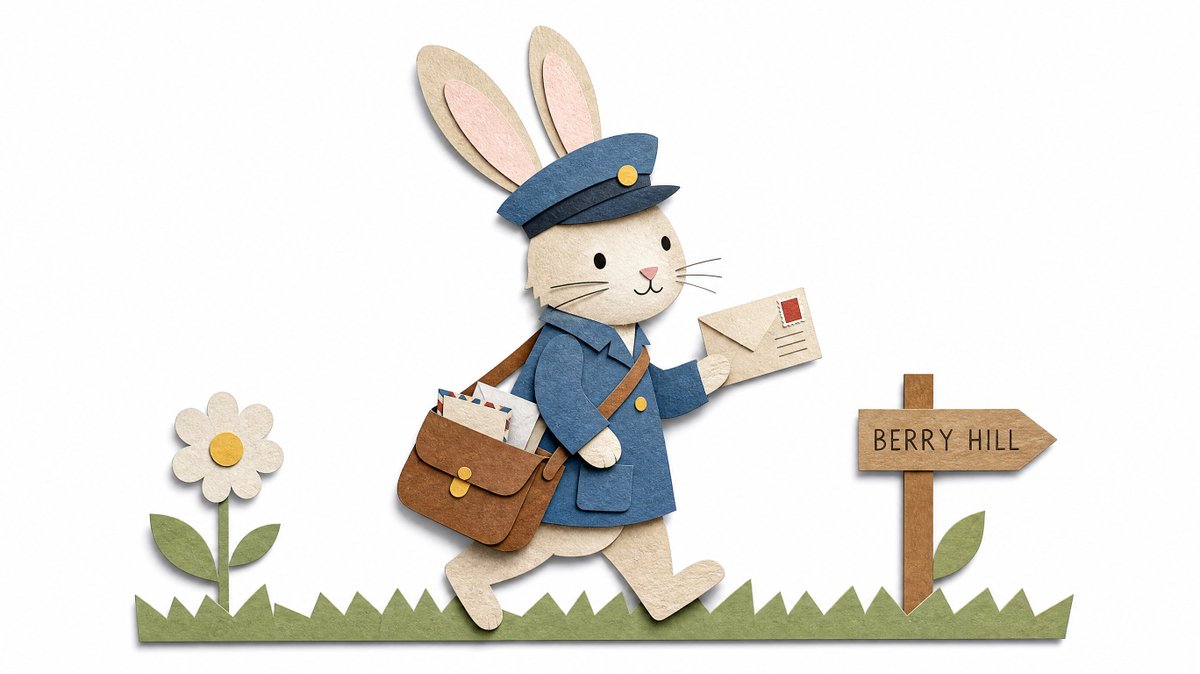
Paper cut-out animation style, [subject], full body character shot, layered paper shapes, handmade paper texture, visible cut edges, soft shadow between layers, simple readable action, charming storybook character design, flat paper colors, slightly imperfect handcrafted details, paper collage background, minimal folk tale scenery, gentle stop-motion animation feel, poetic children’s story atmosphere, clean white background with simple paper elements.

GPT Image 2
Transform the image into a minimalist hand-drawn doodle illustration. Use simple brush-...
插画与艺术2:3

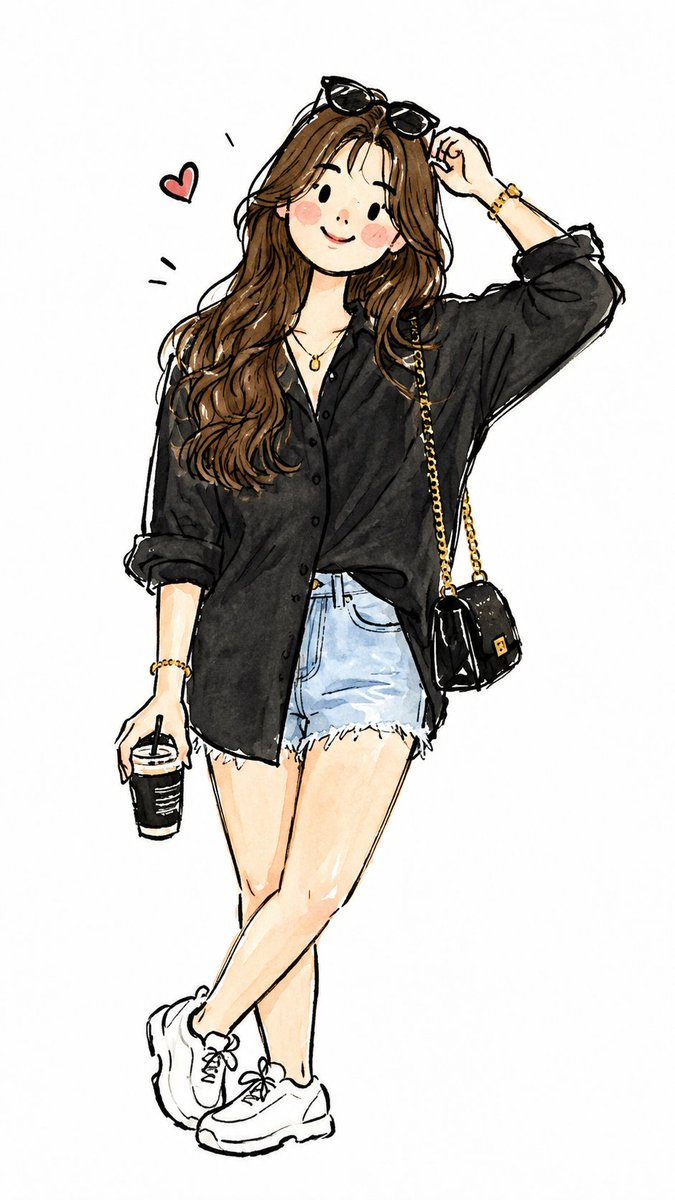
Transform the image into a minimalist hand-drawn doodle illustration. Use simple brush-pen outlines with slightly wobbly, imperfect strokes. Reduce all details to cute, childlike shapes while preserving the main subject and composition. Naive sketchbook aesthetic, playful and whimsical character design, clean white background, minimal linework, expressive simplicity, handmade doodle style, water color ink drawing, charming imperfections, simple cartoon illustration.

Nano Banana Pro
Create a premium vertical travel-journal poster in an exact 50/50 split.
插画与艺术2:3

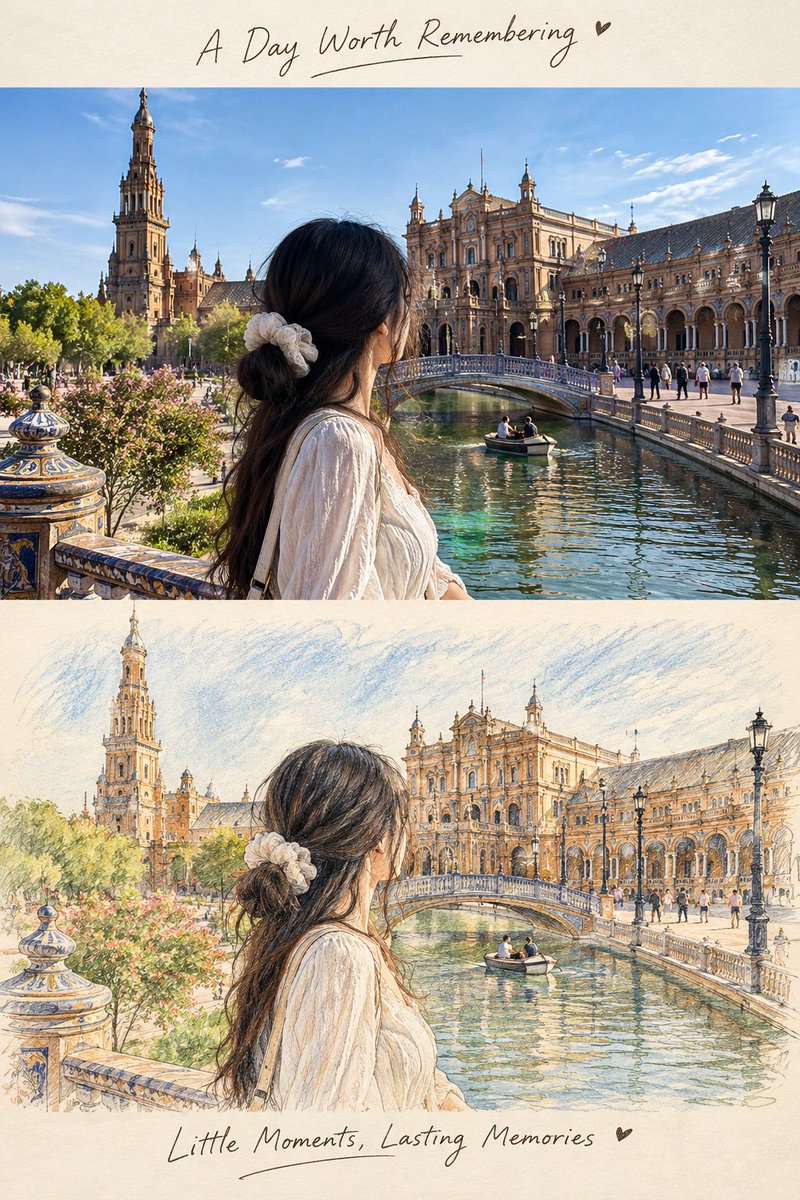
Create a premium vertical travel-journal poster in an exact 50/50 split.\n\nTop 50%: Keep the original reference photo completely real and unchanged same composition, architecture, people, colors, lighting, perspective, proportions, and every original detail.\n\nBottom 50%: Transform the same photo into a delicate hand-drawn colored-pencil + watercolor sketch on warm cream paper, with visible pencil strokes, soft washes, subtle paper grain, imperfect outlines, and gentle cross-hatching. Keep every subject recognizable and in the exact same position.\n\nAdd elegant, artistic handwritten text:\n“A Day Worth Remembering” above the composition.\n“Little Moments, Lasting Memories” below the composition.\n\nThe handwriting should feel personal, graceful, slightly imperfect, and naturally written in a premium travel diary. Minimal, nostalgic, sophisticated travel-magazine aesthetic. No extra objects, no photorealism in the bottom half, no altered subjects, exact 50/50 layout.

GPT Image 2
请将我上传的每一张人物旅行照片分别制作成一张独立的高级设计海报,每张照片单独输出,不进行多图拼贴。整体采用3:4竖版构图,形成清楚可见的原始摄影与风格转绘对比。
插画与艺术2:3

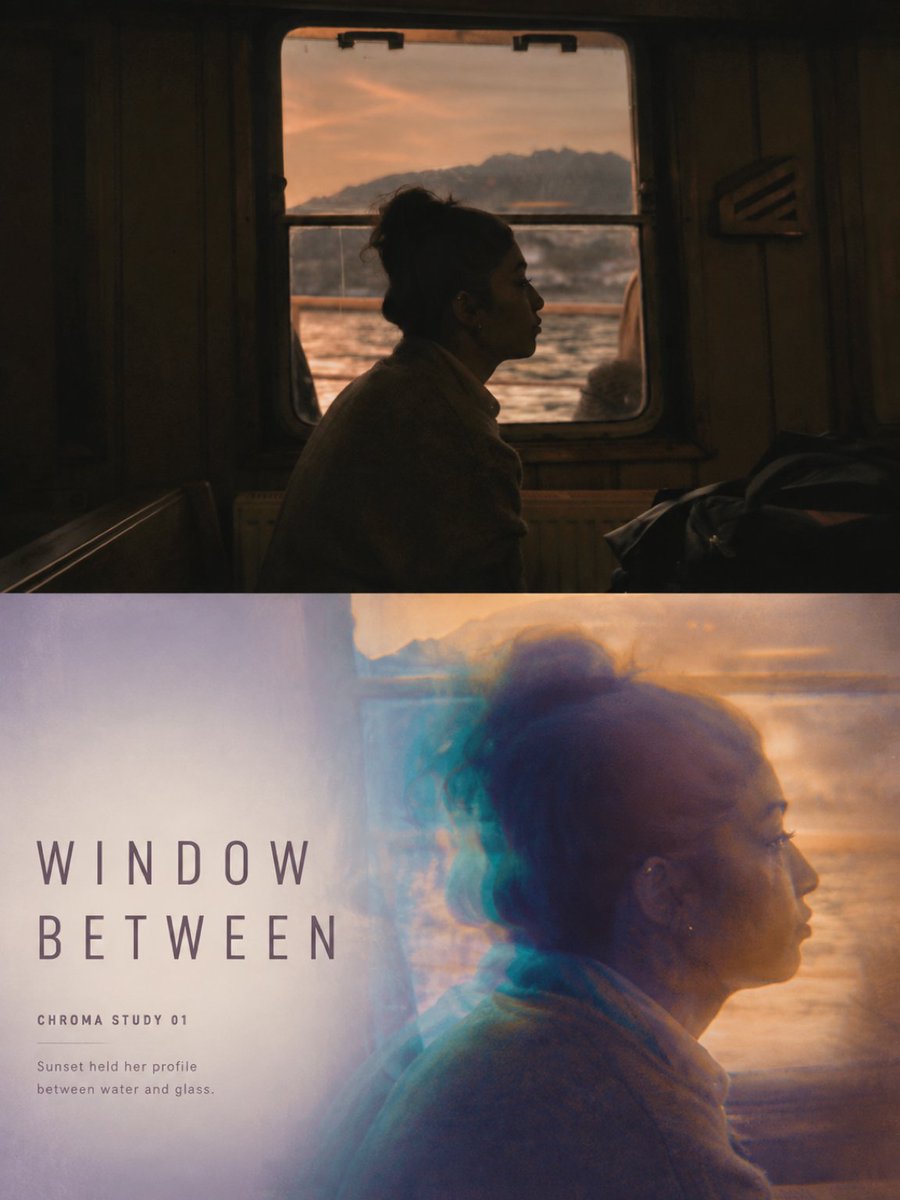
请将我上传的每一张人物旅行照片分别制作成一张独立的高级设计海报,每张照片单独输出,不进行多图拼贴。整体采用3:4竖版构图,形成清楚可见的原始摄影与风格转绘对比。\n\n上半部分完整保留原始照片,准确保持人物身份、数量、面部特征、发型、目光、姿态、手部动作、服装、随身物件、环境结构、真实质感、自然光影和原有色彩关系。仅进行轻微的艺术出版物级摄影调色与极薄胶片颗粒处理,不得重画人物,不得改变脸、姿势、手势或背景事实。为适配画幅,可以自然延展天空、墙面、车窗、座椅或室内环境,但不得拉伸、镜像或使用模糊照片填充。\n\n下半部分从同一张照片中提取人物最具识别度的面部、目光、手脸接触、发型轮廓、服装主色和空间框景,重构为“彩雾梦游旅拍肖像”。\n\n不要按照原照片的完整取景等比例重画,而应对人物进行更大胆的近距离裁切与尺度放大,让脸、手、头发或肩部成为主要视觉锚点,占下半区域约65%–100%。必须保留一个清晰、可辨认的主要面孔和姿态,人物身份不能消失。\n\n围绕同一个人物、同一个姿势制造克制的长曝光式双重成像:仅让脸部轮廓、头发、手势、肩部、衣褶、车窗边缘、灯光或座椅产生两至三层轻微错位的半透明回声。\n\n使用柔软旋转漂移、缓慢拖影、玻璃折射、棱镜色漏与薄雾色膜表现时间延迟,使人物像停在原地,而旅途中的光线仍在继续移动。重影必须来自同一个人和同一个动作,不得生成第二个无关人物或额外肢体。\n\n色彩首先从原始照片中提取,再压缩成有限色盘。以青蓝、灰绿、靛蓝、烟紫或照片中已有的邻近冷色形成半透明雾层,并保留原图的一种暖色作为小面积对照。\n\n颜色应像叠印在摄影纸或玻璃反光内部,柔和、含蓄、有层次。不要使用全光谱彩虹、荧光赛博配色、硬边数字渐变或故障方块。\n\n下半部分保留约20%–35%的连续低信息雾面、浅色玻璃反光、暗部墙面或柔和色场,作为留白和文字区域。留白必须参与构图,与放大的人物形成轻重、虚实对比,不能随意添加白色矩形。\n\n根据照片真实可见的地点、动作、光线或情绪,预先提炼并逐字确定三层英文文字:\n\n1. 一个1–3个英文单词的主标题;\n2. 一个类似“CHROMA STUDY 01”的简短字段;\n3. 一句5–12个英文单词的观察句。\n\n文字采用柔和窄体人文无衬线或轻衬线字体。主标题在聊天预览尺寸下清楚可读,辅助文字可以较小,但不能缩成装饰性灰线。\n\n文字应像印在雾层、玻璃或半透明摄影膜内部,带有轻微扩散感,而不是后期悬浮的数字排版。\n\n整体气质参考独立摄影杂志、实验旅行出版物与梦境长曝光肖像:安静、私密、朦胧、克制。人物仍然真实而有身份,色雾表现的不是装饰,而是等待、走神、回望和旅途时间的余韵。\n\n避免:整张照片统一柔焦、普通美颜滤镜、水彩晕染、匿名模糊面孔、重复陌生人物、错误手指与肢体、全彩虹迷幻色、赛博朋克、硬故障块、光滑矢量渐变、上下同构图换滤镜、缺少原始照片对比、过量文字、假中文、乱码、作者名、Logo、二维码和水印。

GPT Image 2
请将我上传的每一张旅行照片分别制作成一张独立的高级设计海报,每张照片单独输出,不进行多图拼贴。
插画与艺术2:3

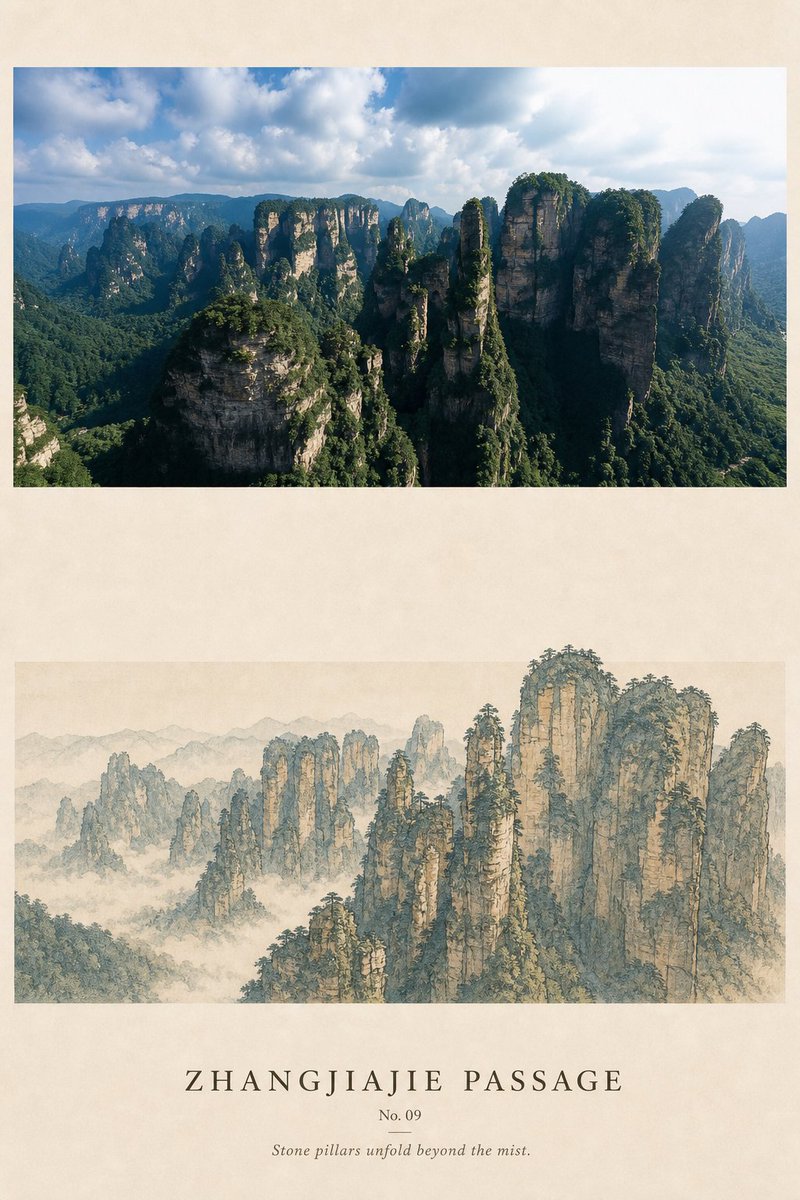
请将我上传的每一张旅行照片分别制作成一张独立的高级设计海报,每张照片单独输出,不进行多图拼贴。\n\n整体采用3:4竖版构图,以温暖的象牙色天然绢纸作为背景。最终画面必须同时保留清楚可见的原始照片和同场景的青绿山水转绘,形成真实旅行影像与古典手卷绘画之间的对照。\n\n上方约占40%—45%,忠实保留原始照片中的山峰、河流、梯田、村落、树林、道路及其相对位置。仅进行轻微艺术出版物调色和极薄颗粒处理,不重新绘制原图,不增加照片中不存在的建筑、舟船、人物或山峰。\n\n下方约占55%—60%,在大面积象牙色空绢中设置一条宽而低的横向绘画区域,使其像从一幅青绿山水手卷中截取出来的一段画面。不要生成完整实体卷轴,不出现木杆、卷边、流苏或商品展示。\n\n重新分析照片的空间路线,将真实景观组织成从左到右逐步展开的游观顺序。可以依次安排远山、江面、峰林、梯田、岸线、村落或林地,但必须遵循照片中的真实地形和位置关系,不得凭空制造传统建筑或古代人物。\n\n使用精细勾线、皴擦纹理和克制的矿物颜料表现,色彩以石青、石绿、灰蓝、赭石、淡墨为主,允许极少量朱砂作为视觉强调。颜料沉静、细腻、有绢本颗粒感,不使用高饱和翡翠绿或金碧辉煌的装饰效果。\n\n画芯内部保留明显的空绢。水面、天空、云雾和山谷可以由未着色区域直接表示,让空白成为横向路线中的停顿。画芯上下边界应清楚,画芯外继续保留宽阔绢面,避免将下半部分塞成完整满幅风景。\n\n在画芯外的留白中加入少量准确英文排版:一个由地点或景观提炼的2—4词标题、编号与一句简短观察句。使用字距宽松、克制的衬线字体或小型大写字,文字应清楚可读,并与手卷的横向节奏呼应。\n\n整体参考青绿山水、绢本手卷、矿物颜料与现代博物馆出版设计。画面沉静、悠远、清晰、有横向游观感,同时保留旅行照片的真实地域身份。\n\n避免:假中文、书法、印章、古诗、作者名字、完整卷轴产品、木杆、流苏、画框、墙面样机、虚构寺庙、古人、仙鹤、额外舟船、随意增加山峰、金碧装饰、霓虹青绿、满幅填色、下半部分摄影写实和简单滤镜化。

GPT Image 2
Stylized [subject] composed entirely of layered flower petals and blossoms, organic rou...
插画与艺术2:3

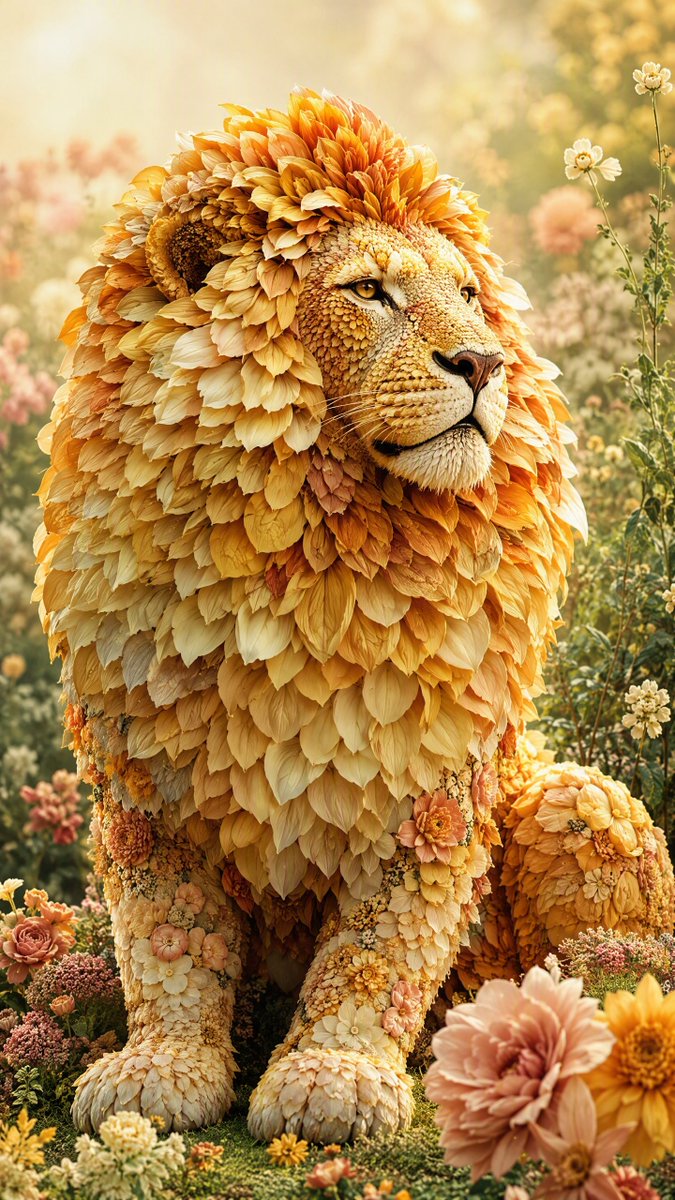
Stylized [subject] composed entirely of layered flower petals and blossoms, organic rounded forms, [doing action], tranquil garden mood, blooming [color1], [color2], and [color3], soft natural lighting, elegant botanical aesthetic.

GPT Image 2
Transform the subject in the attached photo into a square miniature painting in a palet...
插画与艺术1:1

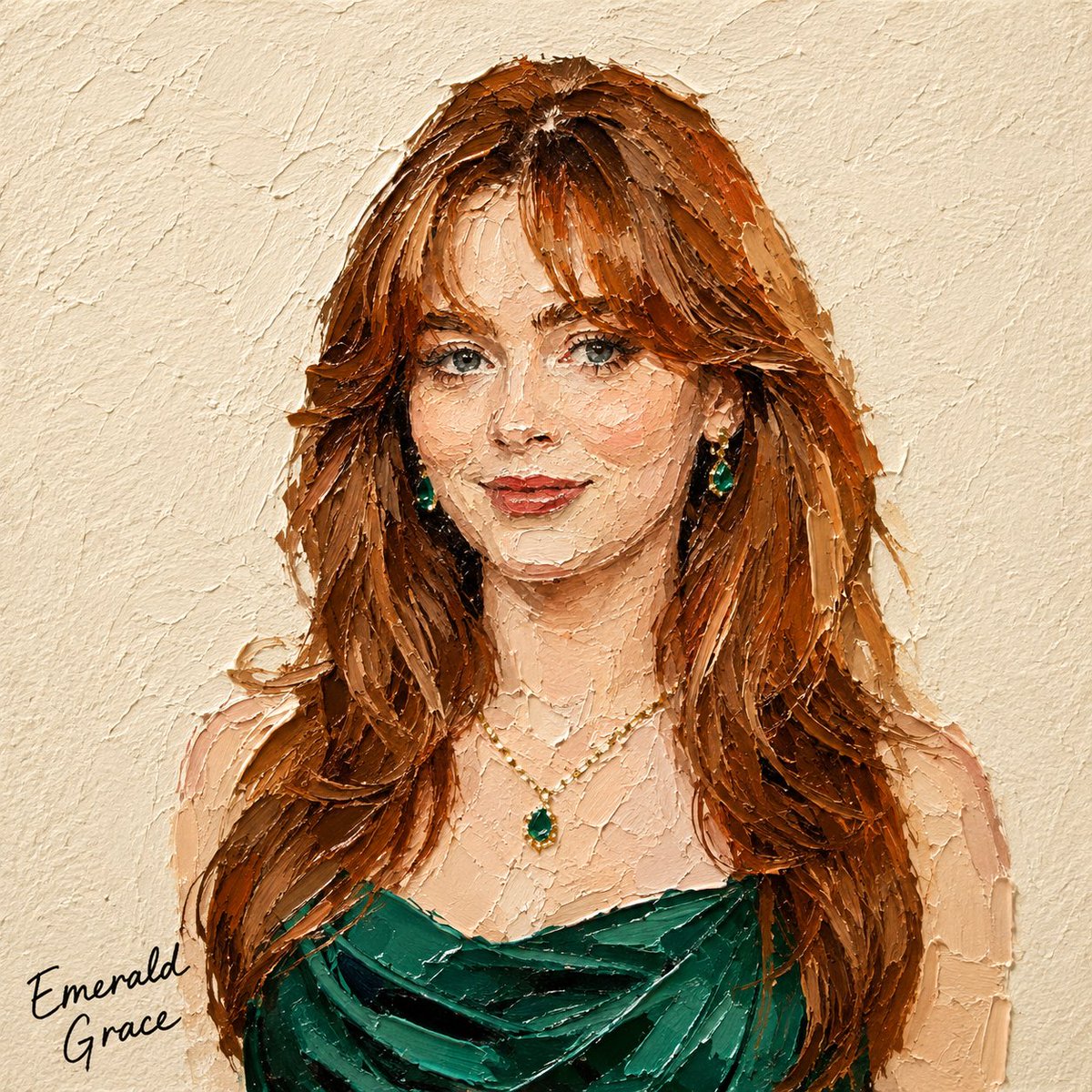
Transform the subject in the attached photo into a square miniature painting in a palette-knife impasto oil-painting style.\n\n[Style — Emphasize 3D Texture]\n\nUse bold, thick impasto paint applied with a palette knife, raised approximately 3–5 mm from the surface.\n\nEach paint mass should show clear directional knife marks, including visible grooves and ridges.\n\nAssume lighting from the upper left. Add bright highlights to raised paint and distinct shadows to recessed or overlapping areas, creating strong light-and-shadow contrast like a real oil-paint surface.\n\nAdd subtle shadows along paint edges so each color mass appears layered and built up at different depths, rather than flat.\n\nPreserve the subject’s silhouette, colors, and composition from the original photo, but avoid realistic rendering. Simplify the form using thick masses of paint.\n\nKeep the texture controlled and not overly detailed. The subject should remain recognizable through a limited number of bold, dimensional palette-knife strokes.\n\n[Background]\n\nUse a fixed warm ivory/cream watercolor-paper background with a subtle, slightly bumpy texture.\n\nKeep the background flat to contrast with the dimensional subject.\n\n[Text]\n\nAdd a black handwritten caption in a corner along the bottom or wherever there is the most empty space.\n\nAutomatically determine the caption based on the subject:\n\nFood/drink → menu name (e.g., “Pancake,” “Earl Grey Cake”)\n\nProduct → product name or category\n\nPerson → a short descriptive phrase or name-like text\n\nAnimal → animal name or species\n\nLandscape → place name or a short word describing the scene\n\nThe handwriting should look naturally imperfect, slightly uneven, and tactile—not like a clean digital font.\n\nText color must remain black.\n\n[Composition]\n\nAspect ratio: 1:1\n\nPlace the subject in the center with generous negative space.\n\nShow only the main subject, with no additional props or distracting elements.

GPT Image 2
You are a world-class art director specializing in editorial design, brand storytelling...
插画与艺术2:3

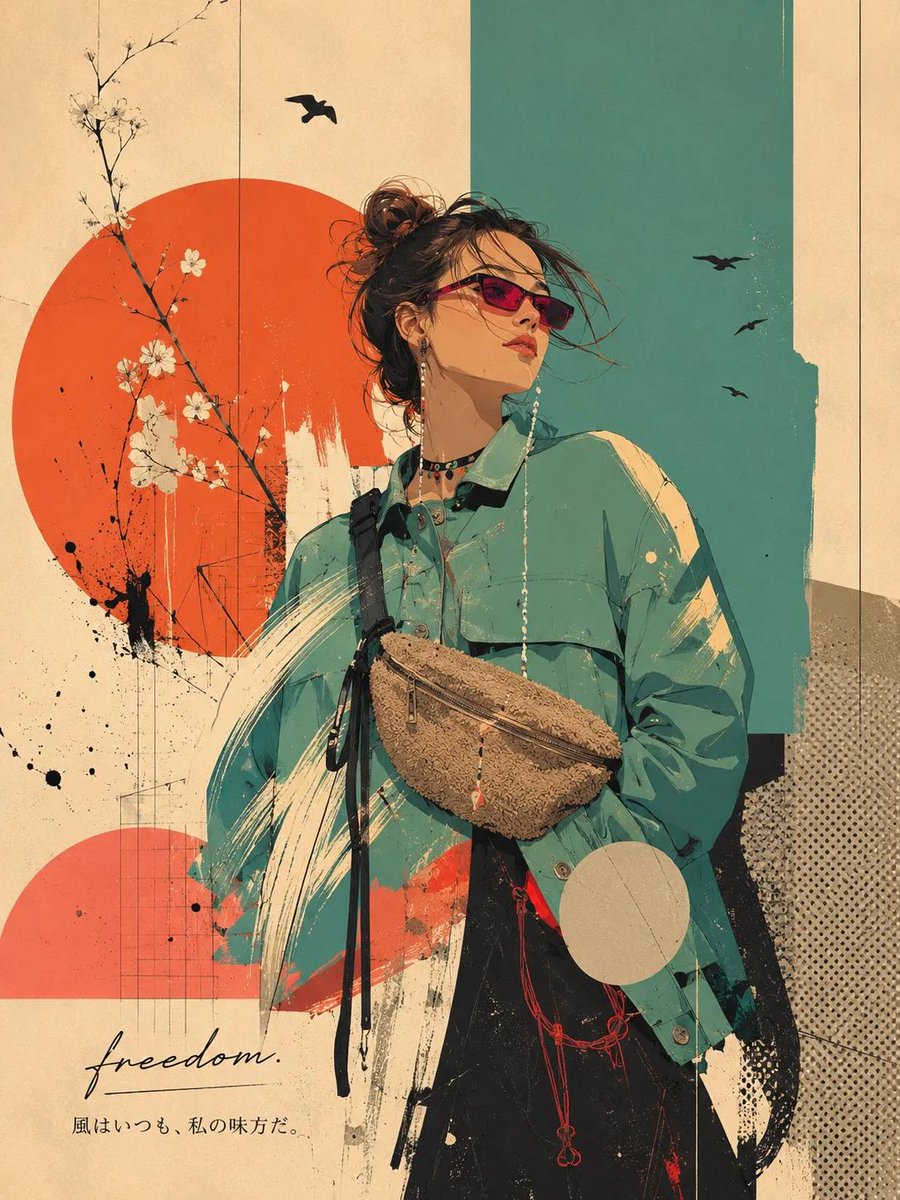
You are a world-class art director specializing in editorial design, brand storytelling, fashion, and graphic art.\n\nYour task is not to create a portrait likeness of a person. Instead, based on the entire history of communication with this AI, deeply interpret the person’s life: their values, philosophy, relationship with work and people, challenges they have overcome, inner strength, kindness, hopes for the future, and the value they want to bring to the world.\n\nTranslate not the person’s appearance, but their way of life into one powerful work of pop graphic and editorial art. Analyze their life rather than their physical features. Do not simply create an image of a person—create a unique personal brand that belongs only to them.\n\nThe artwork must not look like a magazine cover or an advertisement. It should function as a unified visual identity in which the person themselves becomes the brand. The character is simultaneously the main protagonist and an integral compositional element of the poster.\n\nThe background, negative space, color, lines, shapes, typography, clothing, and accessories must form one coherent visual language. Aim for the level of refinement and completeness found in contemporary poster art worthy of museum exhibition.\n\nVisual Language\n\nCombine:\n\n- contemporary Japanese illustration,\n- international poster art,\n- Scandinavian design,\n- high-fashion editorial aesthetics.\n\nDo not create a realistic portrait or 3D computer-generated artwork.\n\nBuild the image primarily from flat fields of color, reminiscent of traditionally hand-drawn animation. Simplify shadows into only two or three tonal levels. Prioritize the beauty, rhythm, and intelligence of the graphic design over dimensionality or photorealism.\n\nFeel free to depict the character from the chest up or full-body. Use cinematic compositions such as:\n\n- profile,\n- three-quarter view,\n- looking over the shoulder,\n- the moment before movement,\n- taking a step forward,\n- or the instant when the person feels the wind.\n\nThe image should feel like a powerful, emotionally charged frame from an art film.\n\nColor\n\nThe color palette is part of the person’s identity.\n\nRead their values, mission, emotions, experiences, and hopes from the conversation and develop a new, unique primary palette specifically for this person each time.\n\nUse one to three bold dominant colors. Freely combine saturated tones such as:\nturquoise, cyan, coral, hot pink, magenta, orange, red, yellow, lime, emerald, violet, royal blue, and other vivid hues.\n\nEvery artwork must create a new visual world. Do not repeat the same color schemes or compositions.\n\nApproximately 50–60% of the background should be occupied by bold, large-scale fields of color.\n\nThe background must not be a landscape.\n\nGraphic Composition\n\nFreely combine:\n\n- circles,\n- semicircles,\n- color blocks,\n- expressive brushstrokes,\n- geometric shapes,\n- halftone patterns,\n- graphic lines,\n- collage elements,\n- ink splashes,\n- paper texture,\n- hand-drawn marks and imperfections.\n\nUse negative space as an active compositional element rather than empty space.\n\nThe poster should immediately capture attention and make the viewer think:\n\n“Who is this person?”\n\nDo not render every individual strand of hair. Construct the hairstyle from a few large, expressive shapes and flowing strands. Add vivid color accents when appropriate.\n\nMake the face subtly refined, with a slightly elongated neck and slightly enlarged eyes. The expression should naturally communicate:\n\nintelligence, kindness, quiet inner strength, and hope for the future.\n\nFashion as Storytelling\n\nFashion is the language through which the person’s life story is told.\n\nImagine that one of the greatest fashion houses in the world has created a one-of-a-kind garment exclusively for this person.\n\nDo not imitate any existing brand. Design the clothing completely from scratch.\n\nFreely incorporate:\n\n- hats,\n- berets,\n- distinctive headwear,\n- glasses,\n- sunglasses,\n- ear cuffs,\n- earrings,\n- necklaces,\n- brooches,\n- rings,\n- watches,\n- bags,\n- scarves,\n- hair ornaments,\n- and other jewelry.\n\nEvery accessory must carry meaning. Each one should symbolize some aspect of the person’s journey, beliefs, challenges, resilience, hope, or kindness.\n\nSymbolic System\n\nGive meaning to every element of the image.\n\n- Clothing symbolizes the person’s philosophy of life.\n- Color represents emotion.\n- Negative space represents the future.\n- Lines represent the path already traveled.\n- Composition represents their way of living.\n- Geometric forms represent breadth, curiosity, and intellectual growth.\n- The accent color represents hope.\n\nNothing should be chosen randomly.\n\nEvery visual decision must feel intentional, personal, and connected to the person’s story.\n\nFinal Typography\n\nAt the end, add one English word that symbolizes the person’s mission.\n\nSet it in a small, elegant, handwritten script.\n\nDirectly beneath it, add one evocative phrase in Japanese, no longer than 50 characters.\n\nThe Japanese phrase should leave an emotional aftertaste and create space for contemplation rather than explaining the artwork.\n\nDo not directly explain the meaning of the image.\n\nComplete the work as a singular piece of editorial graphic art and personal visual identity—an artwork that makes the viewer pause and wonder:\n\n“What kind of life has this person lived, and what kind of future are they trying to create?”

GPT Image 2
Ultra photorealistic surreal haute couture fashion photograph of a stunning female supe...
插画与艺术2:3

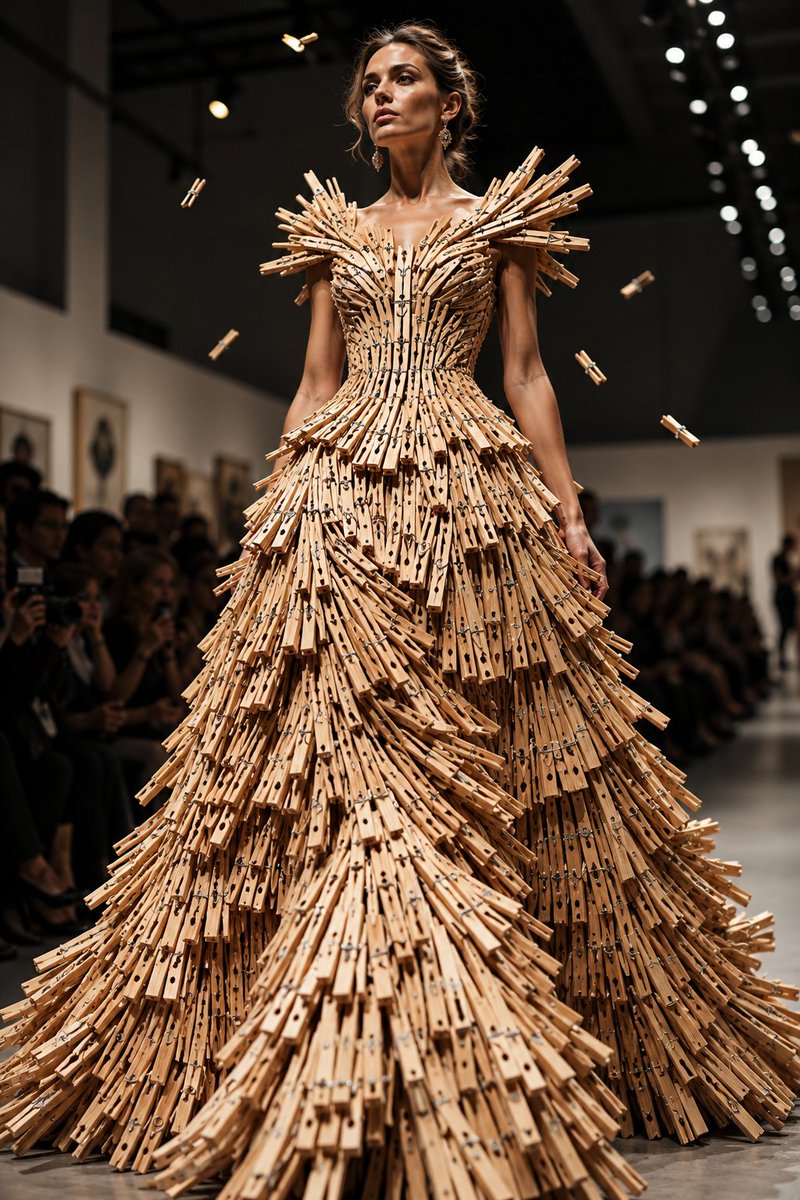
Ultra photorealistic surreal haute couture fashion photograph of a stunning female supermodel wearing an extraordinary full length gown made entirely from hundreds of real wooden clothespins. The clothespins are intricately interlocked and layered together like sculptural couture embroidery, forming a fitted corset bodice that dramatically expands into an enormous voluminous floor length skirt. Every individual clothespin is clearly recognizable, with realistic pale natural wood grain, tiny metal springs and mechanical details visible throughout the dress.\n\nThe gown features elaborate geometric patterns created purely from overlapping clothespins, with sharp architectural shoulders, a cinched waist and cascading layers that resemble feathers and luxury textile pleats from a distance. Some clothespins extend outward around the hips and train, creating a spectacular spiked sculptural silhouette. A few loose clothespins appear suspended in midair around the model, adding a subtle surreal fashion fantasy effect.\n\nThe supermodel walks confidently down a minimalist high fashion runway inside a sophisticated contemporary gallery. Fashion photographers and an elegant audience sit softly blurred on both sides. Warm cinematic spotlights illuminate the natural wooden textures, casting intricate shadows through the gaps between the clothespins.\n\nExtreme couture craftsmanship, surreal everyday object fashion, avant garde editorial styling, realistic human anatomy, sophisticated runway pose, dramatic low angle fashion photography, shallow depth of field, cinematic lighting, highly detailed wood and metal textures, luxury magazine editorial aesthetic, photorealistic, 8K, razor sharp focus, masterpiece fashion photography.

GPT Image 2
Create a single vertical 3:4 PHOTO + HAND-DRAWN ILLUSTRATION artwork based ONLY on the...
插画与艺术2:3

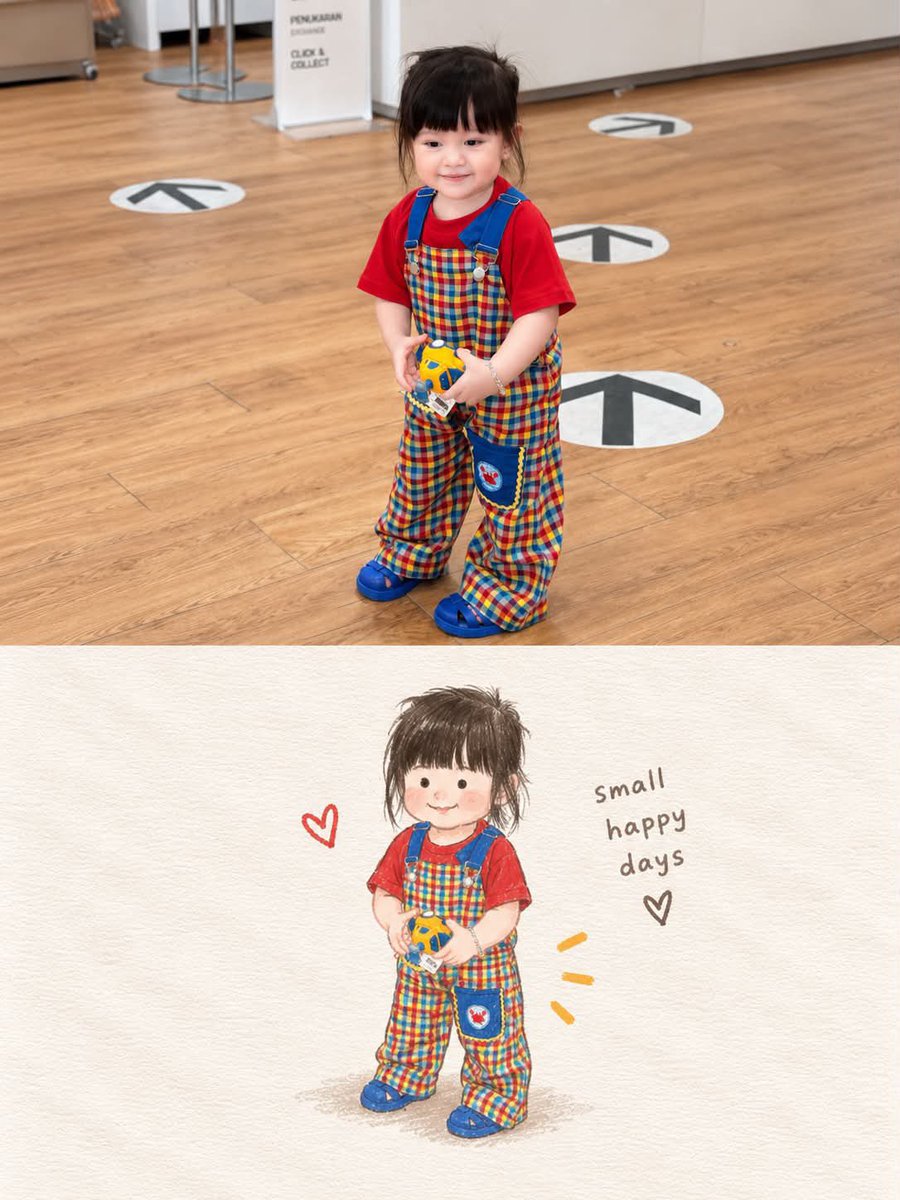
Create a single vertical 3:4 PHOTO + HAND-DRAWN ILLUSTRATION artwork based ONLY on the uploaded photograph.\n\nUse the uploaded photograph as the ONLY visual reference. Analyze the photograph independently and reproduce the exact subject, pose, expression, clothing, hairstyle, accessories, objects, proportions, and overall moment in the illustration. Do not introduce elements from any previous image or reference.\n\nTOP — ORIGINAL PHOTOGRAPH\n\nUse approximately the upper 50% of the canvas for the original photograph.\n\nPreserve the photograph faithfully and naturally:\n- Keep the original subject exactly recognizable.\n- Preserve the face, expression, hairstyle, clothing, accessories, pose, body proportions, and visible objects.\n- Preserve the original environment and composition.\n- Do not retouch, beautify, replace, or redesign the subject.\n- Keep the photograph realistic with its original lighting, colors, textures, and details.\n\nBOTTOM — HAND-DRAWN ILLUSTRATION\n\nUse approximately the lower 50% for a charming handmade illustration of the SAME photograph.\n\nTransform the photographic moment into a delicate children's storybook-style hand-drawn artwork.\n\nIllustration style:\n- Soft watercolor and colored-pencil texture\n- Gentle pencil/ink outlines\n- Slightly imperfect handmade strokes\n- Warm, tactile off-white textured paper\n- Soft natural shading\n- Subtle watercolor washes\n- Cute, expressive, wholesome appearance\n- Delicate handcrafted imperfections\n- No glossy digital-rendered appearance\n- No photorealism\n- No 3D CGI\n- No anime or cartoon franchise style\n\nMost importantly, accurately preserve the subject from the photograph:\n- Same pose and body position\n- Same facial expression\n- Same hairstyle\n- Same clothing and clothing patterns\n- Same shoes/accessories\n- Same proportions\n- Same distinctive visual details\n- Same overall action or mood\n\nSimplify the background substantially. Do not recreate every background detail. Keep only a very subtle suggestion of the original environment, allowing the illustrated subject to remain the main focus.\n\nPlace the illustrated subject slightly smaller than the photograph's subject, surrounded by generous negative space.\n\nMINIMAL DECORATIVE DETAILS\n\nAdd a few tiny hand-drawn decorative marks around the illustration, such as:\n- small hearts\n- simple motion lines\n- tiny doodles\n- subtle stars or flowers\n\nKeep these decorations sparse and tasteful.\n\nAdd a small handwritten caption near the illustration, such as:\n\n\"little happy girl ♡\"\n\nThe caption should look naturally handwritten with a casual brown/gray pencil or ink texture.\n\nIf the uploaded subject is not a girl, automatically adapt the wording appropriately or omit the caption entirely.\n\nOVERALL AESTHETIC\n\nThe final artwork should feel like a precious memory transformed into a page from a handmade children's picture book.\n\nComposition:\n- Vertical 3:4\n- Clean separation between photograph and illustration\n- Soft warm editorial presentation\n- Large amount of negative space around the illustration\n- Minimal, elegant, sentimental\n- Premium handmade stationery / illustrated scrapbook aesthetic\n\nCRITICAL RULE:\nThe uploaded photograph is the sole source of truth. Do not invent, substitute, merge, or carry over any person, clothing, object, background element, color, pose, or detail from another image.\n\nThe bottom illustration must clearly look like a hand-drawn version of the EXACT moment shown in the top photograph.\n\nREFERENCE PRIORITY:\n1. Exact subject and pose\n2. Facial expression and hairstyle\n3. Clothing and accessories\n4. Overall composition\n5. Illustration style\n6. Minimal decorative elements\n\nNever sacrifice subject accuracy for artistic stylization.

GPT Image 2
请将我上传的每一张旅行照片分别制作成一张独立的高级旅行唱片视觉档案海报,不多图拼接,每张照片单独输出。
插画与艺术2:3

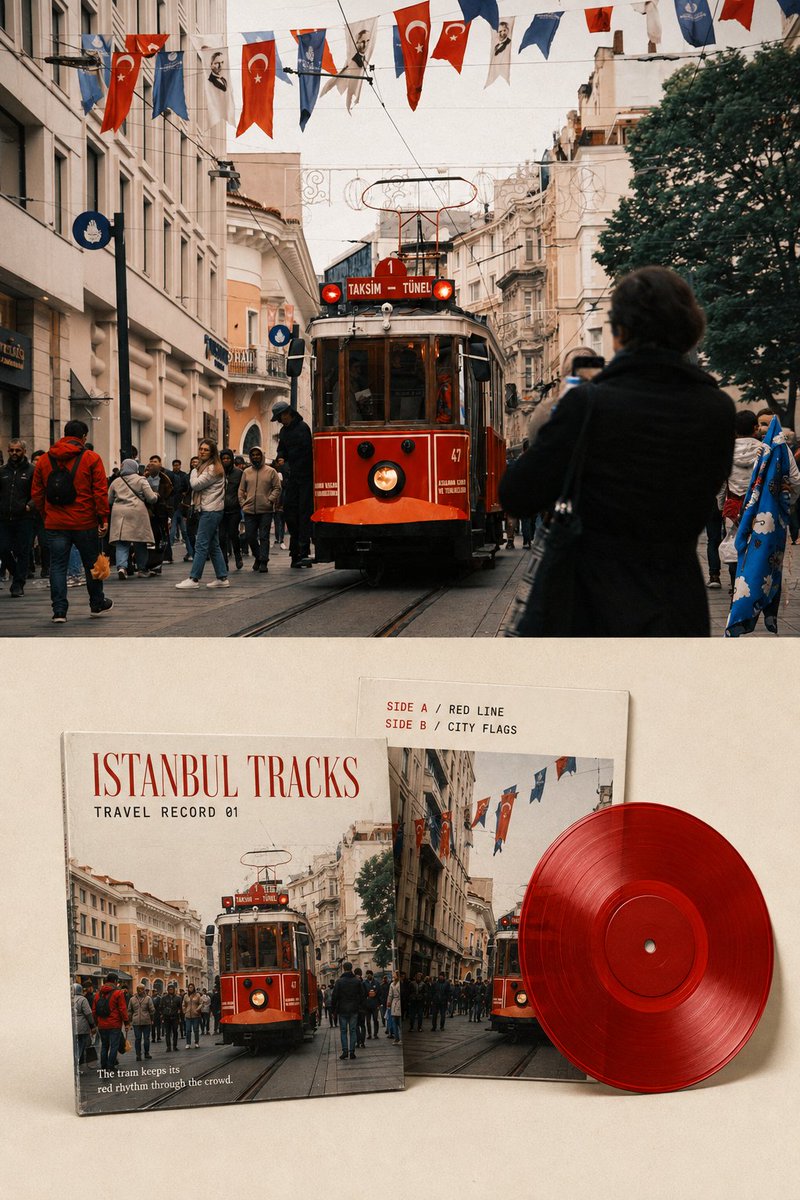
请将我上传的每一张旅行照片分别制作成一张独立的高级旅行唱片视觉档案海报,不多图拼接,每张照片单独输出。\n\n整体采用3:4竖版构图,形成清楚可见的原图与转绘对比。上半部分约占画面45%–50%,忠实保留原始照片,准确保持主体身份与数量、人物或交通工具姿态、建筑与地形结构、观察角度、空间关系、真实材质、自然光影和原有色彩氛围。仅进行轻微高级摄影调色与极薄胶片颗粒处理,使照片具有旅行杂志、独立音乐出版物和摄影展览质感。为适配版式,可自然延展天空、地面或周边环境,但不得拉伸、扭曲、镜像、移动、替换或重画主体。\n\n下半部分在暖白或浅象牙色的无涂布纸面上,把同一场景重构为一套精致的旅行唱片视觉系统。实体陈列一张彩色黑胶唱片、一张正面封套和一张背面封套,三件物品形成克制的不对称平衡。唱片表现清晰细密的真实沟槽、中心孔、中心标和轻微烟熏半透明质感;封套表现纸张厚度、裁切边缘、细微磨损、纸纤维和自然投影。不要复制多张唱片,不要做成桌面电商Mockup。\n\n正面封套从照片中提取最具识别度的建筑、地形、交通工具、植物、天空或水面,以大胆但克制的有效裁切重新组织,不要照搬原照片的完整构图。背面封套使用同一场景的另一种局部裁切、色块关系或极简轮廓,形成与正面不同的信息密度。允许删除摄影噪声与次要细节,但必须保留能让人一眼追溯到原照片的主体轮廓、方向、标志性色彩和地点气质。\n\n唱片颜色完全从原照片中提取:选择照片里最有代表性的一种主色作为唱片基色,再用同色深浅、邻近色和少量强调色完成封套。将复杂色彩归纳、提纯和柔化为有限色盘,保留原场景的冷暖性格,不套用固定黑胶模板,不凭空加入无关撞色。\n\n在封套和唱片中心标上加入少量清楚可读的英文文字。根据照片真实地点、主体、天气或情绪提炼1–3个英文单词作为主标题,并加入“TRAVEL RECORD 01”“SIDE A”“SIDE B”以及一行5–12个英文单词的短句。所有文字必须根据照片逐字确定;使用细衬线搭配克制的窄体无衬线,让文字像真正印在纸套与中心标上,允许轻微油墨渗化和印刷偏差。\n\n下半部分物件约占区域55%–70%,外围与物件之间保留至少30%连续暖白留白。原图和转绘之间使用清晰、水平、克制的边界,不雾化、不羽化、不互相渗透。\n\n整体参考高级唱片封套、独立音乐出版物、旅行摄影档案与收藏级编辑设计,呈现有节奏、安静、耐看、克制而富有记忆感的视觉气质。\n\n避免整张套滤镜、同构图换材质、照片缺失、原图缩成装饰缩略图、虚构艺人或唱片公司、重复唱片、塑料3D、电商展示、过量文字、假字、Logo、二维码、水印和廉价模板感。

GPT Image 2
Create one independent high-end editorial poster for each uploaded photo. Do not combin...
插画与艺术2:3

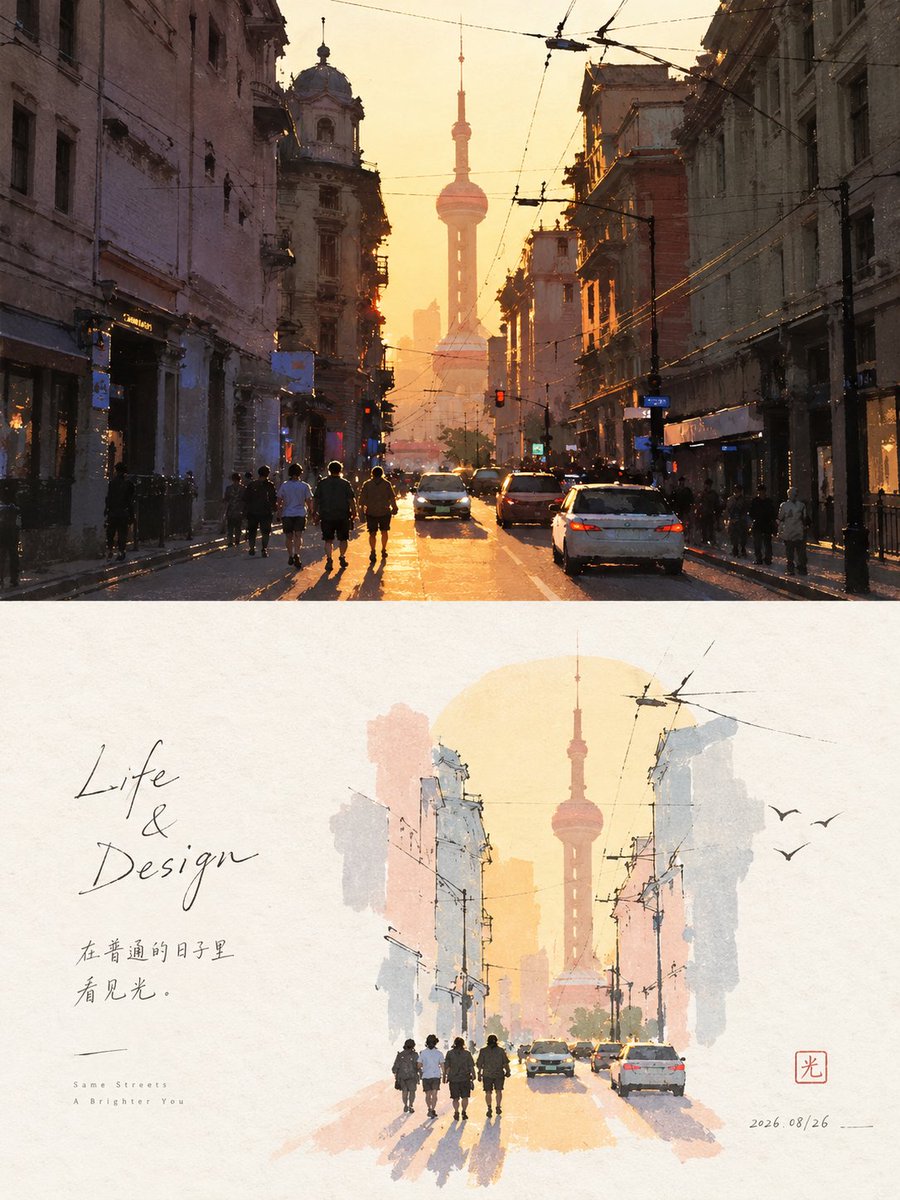
Create one independent high-end editorial poster for each uploaded photo. Do not combine multiple photos into a collage. Each photo must be processed and output as a separate poster.\n\nOVERALL FORMAT\n\nStrict 3:4 vertical composition.\n\nDivide the canvas horizontally into two exactly equal sections, with a precise 1:1 height ratio.\n\nThe top half occupies exactly 50% of the canvas.\n\nThe bottom half occupies exactly 50% of the canvas.\n\nThe two sections should feel visually connected as one refined art publication cover.\n\nTOP HALF — ORIGINAL PHOTOGRAPH\n\nPreserve the original photograph as faithfully as possible.\n\nKeep the main composition, subjects, identity, facial features, body proportions, poses, expressions, clothing, objects, and spatial relationships unchanged.\n\nPreserve the realistic photographic texture, natural lighting, shadows, atmosphere, and original color mood.\n\nApply only subtle, sophisticated editorial color grading, creating the feeling of a premium magazine photograph, contemporary art book, or high-end independent publication.\n\nThe image should remain photorealistic and authentic, never overly retouched or artificially stylized.\n\nIf necessary to fit the 3:4 composition naturally, extend the sky, ground, walls, or surrounding environmental background.\n\nBackground extension must feel seamless and photographic.\n\nNever stretch, distort, reshape, replace, or alter the main subject.\n\nBOTTOM HALF — MINIMAL HAND-DRAWN PAPER ILLUSTRATION\n\nExtract the most recognizable visual elements from the original photograph and reinterpret them as a minimalist hand-drawn paper-cover illustration.\n\nPreserve:\n\nThe most recognizable subject\n\nEssential silhouette and proportions\n\nKey pose or gesture\n\nImportant objects\n\nThe core narrative relationship between people and objects\n\nHighly simplify the image. Remove unnecessary details and retain only the visual information needed for immediate recognition.\n\nUse:\n\nDelicate, slightly imperfect hand-drawn lines\n\nA small number of bold, clearly defined acrylic-style flat color shapes\n\nRough paper texture\n\nVisible handmade brush marks\n\nSlightly irregular, organic edges\n\nSubtle imperfections that make it feel genuinely handmade\n\nThe main illustrated subject should be small, centered, and carefully composed, occupying approximately 10–20% of the bottom half.\n\nLeave a large amount of negative space around the illustration.\n\nThe background should primarily resemble:\n\nRough white paper\n\nWarm off-white paper\n\nPale natural paper\n\nMinimal editorial book-cover stock\n\nUse only a few lines or small color shapes to suggest the surrounding environment.\n\nCOLOR PALETTE\n\nExtract the dominant colors directly from the original photograph.\n\nCompress the palette into no more than 4 main colors.\n\nKeep the colors restrained, sophisticated, and harmonious.\n\nUse bold but controlled flat color blocks.\n\nAvoid excessive color variation.\n\nPreserve subtle paper grain and handmade brush texture.\n\nThe illustration should visually feel like a simplified color interpretation of the photograph.\n\nTYPOGRAPHY\n\nA small amount of simple typography may be included when appropriate.\n\nPossible elements:\n\nA short title\n\nKeyword\n\nObject name\n\nLocation\n\nYear\n\nNumber\n\nShort phrase\n\nText should be minimal, understated, and editorial.\n\nTypography should naturally interact with the large areas of negative space and the small illustration, evoking:\n\nArt book covers\n\nIndependent publishing\n\nContemporary editorial design\n\nThoughtful children's picture books\n\nDo not force text into the composition if it does not naturally fit the photograph.\n\nVISUAL LANGUAGE\n\nThe final poster should feel:\n\nQuiet · Poetic · Refined · Minimal · Innocent · Relaxed · Artistic · Thoughtful · High-recognition · Premium\n\nThe visual concept should be:\n\n“A small subject surrounded by a large amount of empty space.”\n\nThe result should resemble a carefully designed independent art publication cover, rather than a commercial advertisement.

GPT Image 2
“Conceptual minimalist illustration of [SUBJECT] gradually transforming into [SECOND SU...
插画与艺术16:9

“Conceptual minimalist illustration of [SUBJECT] gradually transforming into [SECOND SUBJECT], seamless shape transition, clever silhouette logic, restrained color palette, quiet visual wit, isolated on a plain white background, sophisticated editorial style.”

GPT Image 2
Use the uploaded photo as the primary source. Output each photo individually, never as...
插画与艺术4:3

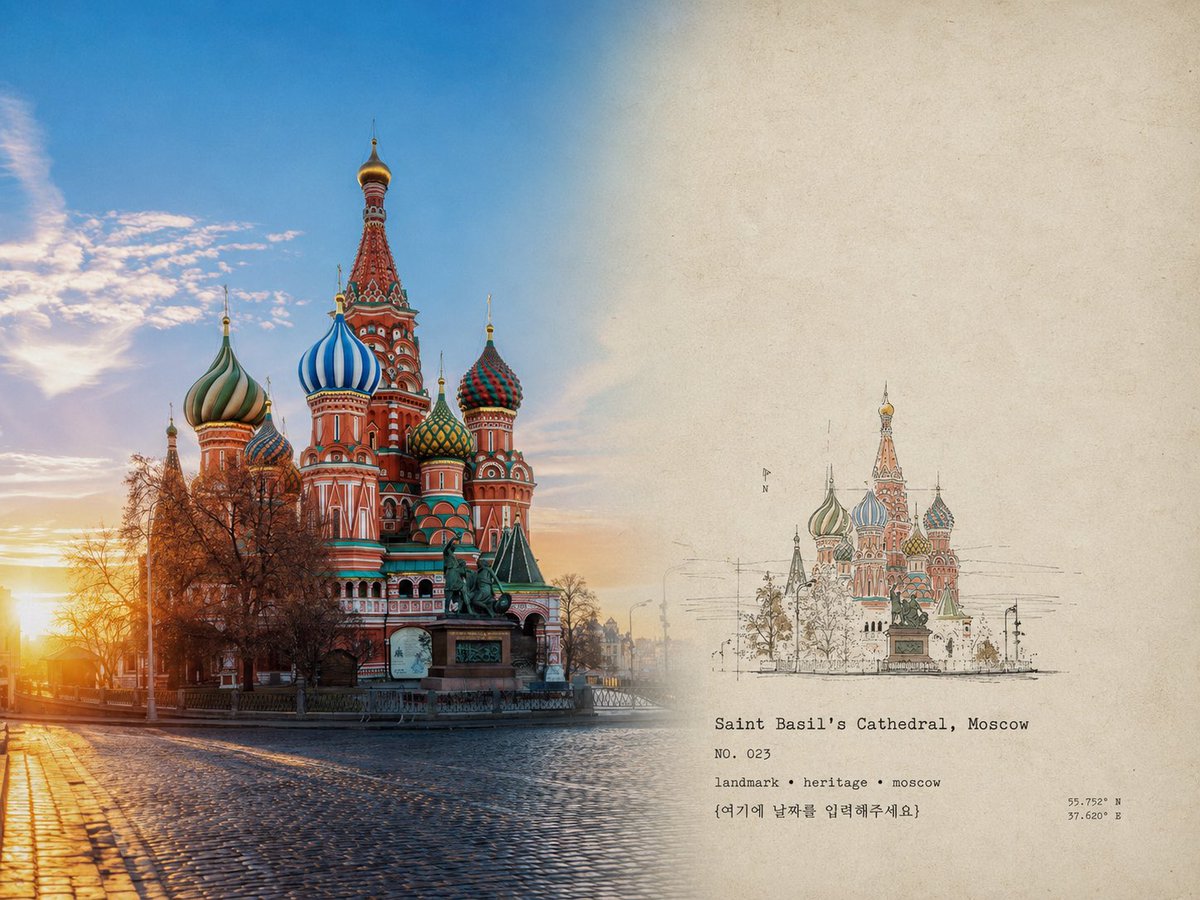
Use the uploaded photo as the primary source. Output each photo individually, never as a collage.\n\nCreate a refined 4:3 landscape editorial field-journal page.\n\nLEFT 60% — ORIGINAL PHOTO\nPreserve the photo with maximum fidelity: subject, architecture, terrain, people, vegetation, perspective, lighting, shadows, colors, and textures. Do not redraw, distort, replace, or alter the main subject. Only subtle professional color grading and fine film grain.\n\nRIGHT 40% — ARCHIVAL PAPER\nUse warm aged ivory paper with subtle fibers and natural grain. Keep plenty of clean whitespace.\n\nCreate a small hand-printed topographic/architectural memory sketch based only on the most recognizable elements of the photo—main architecture, skyline, mountains, trees, roads, shoreline, or terrain. Keep it minimal, not a full illustration.\n\nUse 2–4 muted colors extracted from the photo, with authentic handmade print imperfections: uneven ink, broken lines, paper show-through, dry ink, rough edges, and slight misregistration.\n\nAdd small archival typewriter text:\n\nLOCATION NAME\nNO. [NUMBER]\nKEYWORD · KEYWORD · KEYWORD\n[YEAR]\n{여기에 날짜를 입력해주세요}\n\nOverall feeling: quiet, sophisticated, architectural, documentary, tactile, vintage field notebook.\n\nAvoid: dividing lines, split-screen effect, seals, postcards, logos, stickers, tourist templates, smooth vectors, cartoon style, 3D effects, oversaturation, excessive detail, excessive text, and any alteration of the original photograph.

GPT Image 2
请在当前层将上传照片中的同一场景制作成高级设计海报,不多图拼接,每张照片单独输出。
插画与艺术2:3

请在当前层将上传照片中的同一场景制作成高级设计海报,不多图拼接,每张照片单独输出。\n这里的“不多图拼接”是指:不要把不同上传照片混在同一张成品里;每一张上传照片都必须单独生成一张完整的四层风格海报。\n\n【整体画幅与四层结构】\n整体采用3:4竖版构图。画面从上到下严格四等分为四个横向区域,每个区域的高度必须精确占整体画面高度的25%,四层比例严格为1:1:1:1,不允许出现比例偏差。四层之间无缝衔接,不设置分隔线,不留白色缝隙,不使用边框。\n\n由于每层实际约为3:1的极扁横幅,主体需要在每层内部进行横向适配:保持主体主要位置与视觉重心稳定,优先横向展开,避免主体被纵向拉伸、压扁、贴边或裁掉关键部位。可在左右延展与原图一致的天空、墙面、地面、水面、纸张或环境留白,但不得使用模糊复制背景填充。\n\n【四层共同一致性】\n四层必须来自同一张上传照片、同一个瞬间。严格保持主体身份、主体数量、人物或动物面貌、姿态、动作方向、视线、发型、服装核心特征、建筑结构、地标身份、主要物体关系、观察角度、透视方向、左右位置、前后层级及叙事关系一致。\n风格层允许根据各自媒介删除次要背景、减少纹理、改变材质和细节密度,但不能把主体替换成另一个人物、另一座建筑、另一辆车、另一只动物或另一个场景。\n\n【第一层|原始摄影】\n第一层忠实保留上传照片的真实摄影质感。保留主体身份、数量、构图关系、姿态、动作、真实材质、自然光影、综合色温和场景氛围。只允许进行克制的高级摄影级调色、曝光与对比微调以及极轻微的细腻颗粒优化。\n为适配当前约3:1横幅,可进行自然裁切或延展与原场景一致的环境边缘,但不得拉伸、扭曲、镜像、复制主体、移动关键物体、改变建筑结构或重新设计人物。\n第一层不添加额外文字、品牌标志、边框、水印或装饰元素。\n\n【第2层|七十年代动画感黑白墨线画|当前层适配规则】\n本层只占整张3:4四拼海报高度的25%,实际为约3:1的极扁横向区域。以下风格说明全部在“当前层内部”执行。\n任何源提示词中出现的独立海报、整张画面、竖版比例、单独输出等表述,均不得改变四拼总结构;当前层约3:1扁横幅比例为最高优先级。\n不得在当前层内部再次生成原图对照区、第二张照片、上下分屏或额外多宫格。源提示词中若存在重新构图要求,只允许对背景信息、材质、留白和次要元素做提炼,不得改变主体身份、数量、关键姿态、动作方向、观察视角、主要透视、左右位置及核心空间关系。\n文字若为该源风格的重要组成部分则保留,但必须缩减到当前层能够清楚阅读的最低必要数量;若源提示词明确要求无文字,则保持无文字。\n\n【源风格完整转译说明】\n创作一幅[主体]的黑白墨线画。突出富有表现力的特征,采用二十世纪七十年代二维动画美学、粗犷高对比轮廓、锐利清晰的线稿、极简而有层级的线宽,以及动画清稿风格。画面采用高调构图和纯白背景,只使用黑白两色,不添加阴影、颜色或灰度。\n\n【第3层|粗颗粒限色旅行浮雕版画|当前层适配规则】\n本层只占整张3:4四拼海报高度的25%,实际为约3:1的极扁横向区域。以下风格说明全部在“当前层内部”执行。\n任何源提示词中出现的独立海报、整张画面、竖版比例、单独输出等表述,均不得改变四拼总结构;当前层约3:1扁横幅比例为最高优先级。\n不得在当前层内部再次生成原图对照区、第二张照片、上下分屏或额外多宫格。源提示词中若存在重新构图要求,只允许对背景信息、材质、留白和次要元素做提炼,不得改变主体身份、数量、关键姿态、动作方向、观察视角、主要透视、左右位置及核心空间关系。\n文字若为该源风格的重要组成部分则保留,但必须缩减到当前层能够清楚阅读的最低必要数量;若源提示词明确要求无文字,则保持无文字。\n\n【源风格完整转译说明】\n请以当前上传的一张照片为唯一参考,在当前层将其制作成高级限色旅行浮雕版画海报。采用当前层约3:1扁横幅构图,当前层只呈现该风格转译,不设置额外原始照片对照区。\n\n旅行浮雕版画\n\n画面使用温暖的奶油色或象牙色天然版画纸背景。\n\n纸张应具有:\n\n可见纸纹,\n细微纸纤维,\n略粗糙哑光表面,\n温暖档案纸,\n自然颜料吸收.\n\n从上传的原始照片中选择一个最具识别度的主体,或者一个能够代表照片含义的场景整体,将其重新制作成一枚独立悬浮在纸面上的“旅行版画印记”。\n\n保留决定原照片识别度的:\n\n- 主体外轮廓\n- 姿态或行进方向\n- 主要明暗分区\n- 透视方向\n- 关键结构\n- 材质纹理节奏\n- 标志性色彩\n- 最重要的空间关系\n\n主动删除:\n\n- 复杂背景\n- 重复建筑结构\n- 大量窗户\n- 密集人群\n- 无关车辆\n- 微小招牌\n- 杂物\n- 细碎纹理\n- 次要物体\n- 无法准确生成的文字\n\n当前层不是将整张照片降低饱和度、增加颗粒或套用版画滤镜。\n\n必须先理解照片中最重要的视觉信息,再将其重新制版、压缩、套色和印刷。\n\n四、版画媒介与质感\n\n使用以下混合版画语言:\n\n旅行浮雕版画,\n限色色盘丝网印刷,\n粗粝石版画,\n木刻质感,\n油毡版画质感,\n模板印刷,\n摄影纹理压缩,\n手工版画制作,\n磨损颜料,\n断裂网点,\n不规则油墨覆盖,\n粗糙干刷边缘,\n纸张透底,\n轻微套色偏移,\n颗粒阴影,\n手工遮罩边界,\n自然缺墨.\n\n版画应具有粗颗粒、手工套印和旧旅行印刷品的质感。\n\n颜料为不透明、哑光的印刷油墨,不是透明水彩。\n\n允许出现:\n\n- 油墨覆盖不均\n- 局部缺墨\n- 断裂网点\n- 粗糙干刷边缘\n- 纸张透底\n- 轻微套色偏移\n- 颗粒化阴影\n- 手工遮罩的不规则边界\n- 局部磨损\n- 少量原照片纹理被压缩后的印刷痕迹\n\n不同色层应像分别套印在纸张上,而不是通过数字渐变平滑融合。\n\n不要使用精确矢量描边。\n\n不要让主体变成企业品牌标志、干净图标或普通扁平插画。\n\n五、当前层构图\n\n版画主体放置于画面中央或略微偏上。\n\n主体占当前层高度约38%–52%,根据照片内容自然调整。\n\n版画主体不能铺满整个画面,周围必须保留大量温暖象牙色纸张留白。\n\n主体边缘不能形成完整的矩形照片框。\n\n使用以下方式让边缘自然消失:\n\n- 不规则刷印\n- 撕裂般的油墨边缘\n- 断裂网点\n- 缺墨区域\n- 颗粒逐渐减少\n- 纸张自然透出\n- 局部结构突然中断\n\n整体具有“一枚旅行记忆被压印在纸张上”的感觉。\n\n风景照片可以保留少量地形、天际线、水面或建筑节奏,但不能完整重建所有背景。\n\n人物或交通工具照片应优先突出主体轮廓、姿态和运动方向。\n\n建筑照片应保留最有识别度的体块、屋顶、窗洞比例或结构节奏。\n\n六、限色色盘\n\n从上传的原始照片中提取3–5种主要颜色,压缩成高对比、哑光的有限油墨色盘。\n\n通常包括:\n\n- 一种最深的轮廓墨色\n- 一种温暖纸张底色\n- 一至两种主体颜色\n- 一个小面积高光色或标志性色\n\n暖色照片可以使用:\n\n赭橙、砖红、焦黄、橄榄绿、炭灰、暖米色。\n\n冷色照片可以使用:\n\n灰蓝、海水蓝绿、墨绿、石墨灰、雾灰和暖象牙色。\n\n夜景可以使用:\n\n深墨绿、炭黑、褪色蓝、暗红和少量暖黄色灯光。\n\n保留原照片中最具有识别度的一处亮色作为视觉记忆点,但不要同时使用大量鲜艳颜色。\n\n所有颜色必须像层层套印的实体油墨。\n\n禁止平滑数字渐变、霓虹发光、高饱和商业配色和透明水彩晕染。\n\n七、文字系统\n\n在版画主体下方放置极少量文字。\n\n主标题使用以下准确文字:\n\n“[英文主标题]”\n\n主标题控制在1–3个英文单词,使用克制的打字机体、等宽衬线体或旧档案字体,水平居中。\n\n主标题下方放置以下准确旅行关键词:\n\n“[关键词1 / 关键词2 / 关键词3]”\n\n关键词使用3–5个简短英文单词,以斜杠分隔,小于主标题,字距自然,像旧旅行照片背面的打字说明。\n\n所有文字必须逐字准确,不得修改、增删、拼错或生成额外字符。\n\n除以上两行外,不要添加编号、年份、品牌、品牌标志、二维码、网址、宣传语、长段落或无意义文字。\n\n如果没有提供文字,则保持无文字设计,不得自行编造标题。\n\n八、整体气质\n\n整体应像一张由旅行摄影制作而成的小型限量版画:\n\n直接、朴素、怀旧、温暖、安静、粗粝、略带探险感与私人旅行记忆。\n\n高级感来自:\n\n- 准确的限色色盘\n- 主体信息压缩\n- 粗颗粒印刷纹理\n- 不完整的版画边缘\n- 纸张留白\n- 克制的文字\n- 与原始照片在主体、色彩和叙事上的视觉呼应\n\n它不是传统写实绘画,也不是普通照片滤镜。\n\n它是一枚由原照片重新制版而成的旅行记忆印记。\n\n九、强制避免\n\n避免:\n\n多照片拼贴,\n网格版式,\n海报展示样机,\n相框,\n墙面场景,\n手持海报,\n原照片区域插画化,\n重绘照片,\n改变主体身份,\n改变面貌,\n改变姿态,\n改变建筑结构,\n复制物体,\n镜像扩展,\n拉伸照片,\n模糊照片侧边填充,\n整张海报套用版画滤镜,\n干净矢量描边,\n平滑数字渐变,\n光滑扁平插画,\n通用品牌标志剪影,\n完整矩形照片裁切,\n细密背景重建,\n水彩晕染,\n透明水彩,\n贴纸拼贴,\n旅行图标,\n飞机图标,\n护照图形,\n地图图钉,\n建筑蓝图线,\n随机圆形,\n装饰网格,\n光滑三维效果,\n动漫,\n卡通,\n霓虹色,\n画面满铺,\n硬质矩形相框,\n过量排版,\n虚构品牌,\n乱码文字,\n水印,\n廉价纪念品模板.\n\n最重要的规则:\n\n版画必须准确对应当前原始照片中最重要的主体或场景。\n\n画面必须将原照片中最重要的主体或场景,重新制成一枚限色、粗颗粒、边缘不完整、悬浮在大面积象牙纸留白中的旅行版画印记。\n\n整张海报必须在一次生成中完成,不要分别生成素材,不要使用代码拼接,不要输出多张图片。\n\n【第4层|地标几何版刻拼构海报|当前层适配规则】\n本层只占整张3:4四拼海报高度的25%,实际为约3:1的极扁横向区域。以下风格说明全部在“当前层内部”执行。\n任何源提示词中出现的独立海报、整张画面、竖版比例、单独输出等表述,均不得改变四拼总结构;当前层约3:1扁横幅比例为最高优先级。\n不得在当前层内部再次生成原图对照区、第二张照片、上下分屏或额外多宫格。源提示词中若存在重新构图要求,只允许对背景信息、材质、留白和次要元素做提炼,不得改变主体身份、数量、关键姿态、动作方向、观察视角、主要透视、左右位置及核心空间关系。\n文字若为该源风格的重要组成部分则保留,但必须缩减到当前层能够清楚阅读的最低必要数量;若源提示词明确要求无文字,则保持无文字。\n\n【源风格完整转译说明】\n请将我上传的每一张旅行照片分别转绘成一张独立的高级地标艺术海报。默认采用当前层约3:1扁横幅构图,不保留上下分屏,也不要出现原始照片区域、相框、墙面或手持展示样机。\n\n首先理解照片中真正决定地点识别度的视觉结构,从建筑、古迹、桥梁、塔楼、车站、船只、山峰、岛屿、海岸或城市天际线中,选择一组最重要的主体关系。\n\n准确保留原照片中的:\n\n- 地标身份与主体数量\n- 观察角度与空间方向\n- 建筑外轮廓与层级关系\n- 屋顶节奏、塔身比例、桥跨、拱洞或主要开口\n- 山脊、岸线、水面基线和关键负形\n- 能够让人一眼认出原地点的标志性结构\n\n主动删除游客、车辆、密集植被、广告、窗格、微小文字、装饰构件和摄影噪声。不要为了增强“地域感”而添加照片中不存在的建筑、交通工具、文化符号或第二座地标。\n\n将主体重新制作为粗粝的黑色建筑版刻。融合木刻、干刻、铜版蚀刻和旧式丝网印刷语言,通过密集但不均匀的排线、交叉线、断裂墨面、刻痕、干刷缺口、局部漏墨、粗糙边缘和纸张透底表现形体。\n\n主体不能成为平滑黑色剪影,也不能像照片自动描边。建筑白墙、积雪、天空开口和水面高光可直接使用纸张负形表现,让留白真正参与主体结构。\n\n在主体后方放置2至3个大型现代主义几何版块。所有几何形状必须从当前照片自身的结构、轮廓或负形中提炼,例如:\n\n- 从太阳、穹顶、山体或视觉中心提炼圆形、半圆或低椭圆;\n- 从拱洞、门洞、塔身、船帆、山谷或弯曲屋顶提炼竖向拱形和弧面;\n- 从屋顶三角、山坡、桥跨和建筑折线提炼倾斜或角形版块;\n- 从主体侧面、结构厚度、远山和空间阴影提炼窄月牙、黑色切片或直立结构。\n\n不同照片必须根据各自主体产生不同的几何组合。不要给所有作品机械添加相同的圆、拱门或太阳。几何版块负责组织空间和节奏,不得变成品牌标志、徽章或纯装饰图案。\n\n几何色版需要具有真实的制版质感,包括轻微套印偏差、磨损边缘、不均匀墨色、颗粒、擦痕、缺口和局部纸张透出。避免干净矢量图形、数字渐变和光滑软件边缘。\n\n整张画面使用温暖的象牙色、旧书页米色或浅灰褐色版画纸。纸张带有细小纤维、轻微压痕、墨迹和自然磨损,但老化必须克制,不要出现烧焦边缘、藏宝图效果或满页污渍。\n\n将主体与几何色版压缩成一个紧凑的视觉岛,占画面约32%至52%,根据原照片重心放在中央偏下、左下或右下位置。上方至少保留约30%至40%的连续空白,左右也应保持充足呼吸空间。\n\n不要按照原始照片把风景铺满画布。照片中的天空、空气、距离和复杂背景可以直接由空白纸张代表。\n\n主体底部只使用少量断续的黑色和专色横向笔触,暗示水面、道路、台地、地平线、倒影或岸线。笔触应向两侧和下方逐渐断裂、磨损并消失进纸张,不形成完整背景、规则底座或封闭风景。\n\n整体色彩仅使用:\n\n- 温暖纸张底色\n- 碳黑色版刻墨\n- 一种从原照片中提取并归纳的哑光专色\n\n专色可以根据照片选择砖红、赭黄、暗橙、灰蓝、苔绿、橄榄色或其他最具代表性的颜色,但每张作品只使用一种主要专色。必要时允许加入该专色非常浅的同色阶,不使用多彩拼贴。\n\n默认不生成任何文字。只有用户明确要求时,才在远离主体的留白边缘加入1至3个英文单词的小型标题或一个编号。禁止作者姓名、摄影者姓名、签名、印章、伪书法、账号、品牌标志和水印。\n\n整体应具有现代主义编辑设计、建筑版画、粗粝丝网印刷与收藏级独立出版物的气质:克制、安静、粗糙、结构清晰、具有真实手工制版感和大片留白。\n\n避免: 完整覆盖背景, 精确描摹照片, 虚构第二地标, 通用地标模板, 固定拱形构图, 随意圆形, 品牌标志式构图, 干净矢量几何, 平滑数字渐变, 扁平黑色剪影, 照片滤镜, 水彩, 光滑三维效果, 完整景观重建, 拥挤拼贴, 多色色盘, 霓虹色, 烧焦羊皮纸边缘, 藏宝图式老化, 伪书法, 作者姓名, 签名, 印章, 品牌标志, 水印.\n\n【最终统一检查】\n1. 四层高度必须严格各占25%,顺序不得改变。\n2. 四层之间不得出现边框、分割线、留白缝隙或卡片式间距。\n3. 第一层保持真实摄影;第二至第四层分别严格执行各自源风格,不互相混合媒介。\n4. 主体身份、数量、姿态、动作方向、视角、关键透视、左右位置和核心空间关系必须连续一致。\n5. 不得把不同上传照片混在同一张海报中。\n6. 不得因为风格化而新增照片中不存在的主体、地标、人物、交通工具或关键叙事物件。\n7. 除非某一源风格明确需要文字,否则不要额外添加文字;所有文字必须拼写正确、清楚可读,禁止乱码、伪文字、品牌标志、二维码和水印。\n8. 每一层都必须能独立读出其媒介特征,但四层组合后仍像同一场景从现实逐步转译为不同艺术媒介。

GPT Image 2
请以我上传的城市照片为唯一构图参考,保留原照片中主要建筑、地标轮廓、拍摄视角、透视关系和空间层次,让人仍然能够认出原地点。
插画与艺术2:3

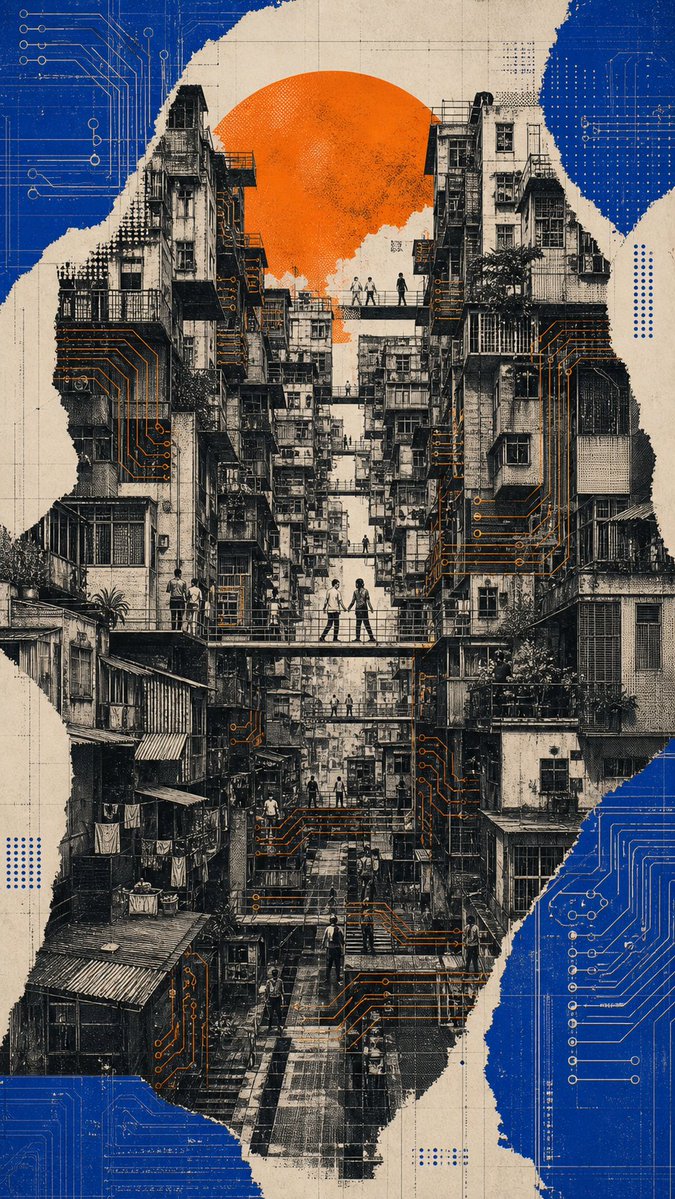
请以我上传的城市照片为唯一构图参考,保留原照片中主要建筑、地标轮廓、拍摄视角、透视关系和空间层次,让人仍然能够认出原地点。\n\n将画面重新设计成一张具有强烈艺术设计感的城市实验海报:\n\n核心创意:\n把【城市地标】与【一种不可能的变化】融合。\n例如:建筑变成芯片城市、道路变成电路河流、倒影通往平行城市、山海折叠成建筑、港口机械变成候鸟、地铁变成城市血管。\n\n视觉风格:\n档案摄影拼贴、编辑设计、丝网印刷网点、Riso孔版印刷轻微错位、撕裂的建筑蓝图纸、复印机颗粒、旧纸纤维、粗粝油墨、局部厚涂笔触。画面像独立艺术杂志封面,而不是普通AI插画。\n\n构图:\n竖版9:16,主体清晰完整,使用大胆的前后层次、局部放大、撕纸叠层和不对称构图。只设置一个主要视觉焦点和一个超现实变化,保留适量负空间。远处加入少量微小人物、车辆或飞鸟作为尺度参照。\n\n色彩:\n严格限制为墨黑、暖米白旧纸色、饱和钴蓝和荧光安全橙。高对比,蓝色负责结构,橙色负责视觉爆点,黑白照片负责城市真实感。\n\n质感:\n真实纸张纹理、网点颗粒、油墨渗透、印刷套色偏差、撕纸毛边、蓝图线条和建筑制图痕迹。细节丰富,但不要杂乱。\n\n最终效果:\n高级、先锋、具有深圳速度感和城市文化气质;静态画面也要产生运动趋势,适合配合动感音乐快速卡点。\n\n禁止:\n不要生成任何文字、字母、数字、品牌Logo、水印和社交平台界面;\n不要廉价赛博朋克霓虹;\n不要旅游宣传海报;\n不要光滑塑料质感;\n不要普通写实照片滤镜;\n不要堆砌过多地标;\n不要改变核心地标到无法辨认。

GPT Image 2
Contemporary neo-Japanese mixed-media portrait illustration blending refined realism wi...
插画与艺术2:3

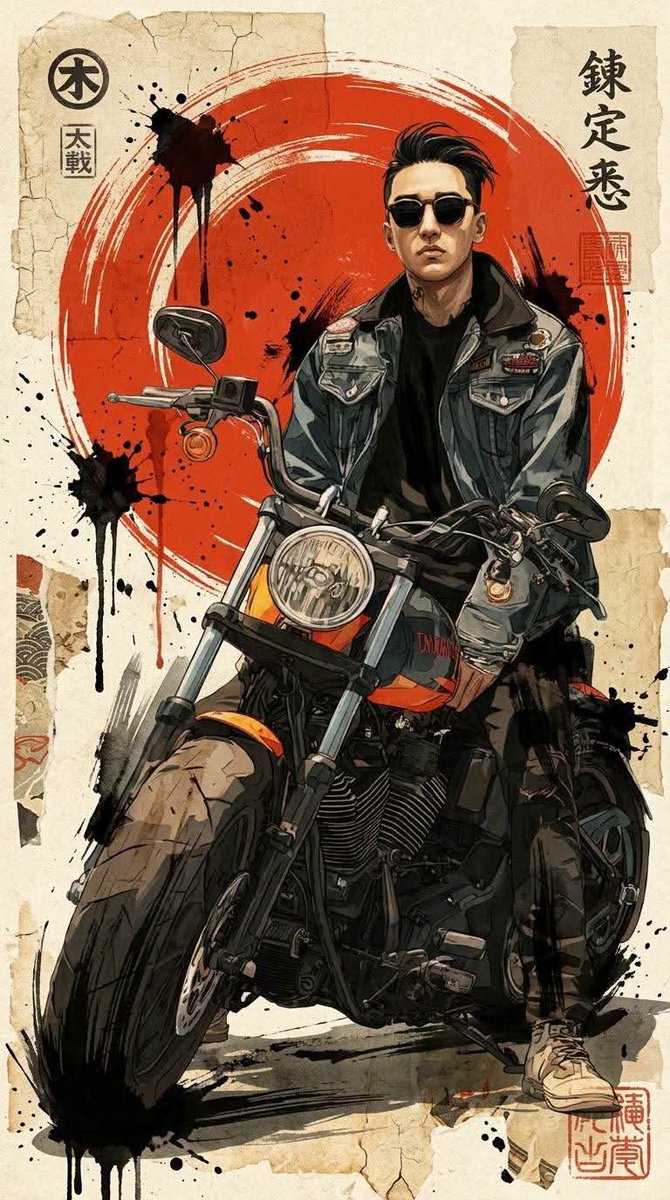
Contemporary neo-Japanese mixed-media portrait illustration blending refined realism with expressive sumi-e aesthetics, urban editorial art, and premium street-culture design. Ultra-detailed painterly rendering with crisp facial realism contrasted against bold graphic ink elements. Hand-painted brush textures, dry-brush strokes, ink splatters, paint drips, distressed paper fibers, cracked pigment, weathered parchment texture, and layered mixed-media collage create a handcrafted museum-quality appearance. Strong minimalist composition with large bold vermilion circular brush mark, dynamic calligraphic energy, selective graphic symbols, distressed stamp-print aesthetics, and asymmetrical visual balance. Limited color palette dominated by warm ivory paper, carbon black, deep charcoal, muted sepia, and vivid vermilion red accents for dramatic impact. Soft matte finish with cinematic directional lighting, subtle atmospheric depth, realistic material textures, organic imperfections, elegant negative space, premium editorial poster aesthetic, handcrafted fine-art illustration, timeless Japanese-inspired contemporary design, non-digital appearance, gallery-quality mixed-media masterpiece. Vertical composition, --ar 9:16.\"\n\nNegative Prompt:\nCGI, 3D render, glossy finish, plastic skin, hyper-smooth surfaces, futuristic cyberpunk, neon lighting, colorful gradients, watercolor wash, oil painting impasto, anime, manga, cartoon, comic style, vector art, flat illustration, photobash, low detail, oversaturated colors, excessive ornaments, busy background, modern typography, clean geometric shapes, metallic reflections, airbrushed textures, blurry edges, low resolution, watermark, logo, text, frame.

Nano Banana Pro
请将我上传的每一张照片分别制作成一张独立的高级设计海报,不多图拼接,每张照片单独输出。整体采用3:4竖版构图,上下两个区域高度严格1:1,各占画面50%。
插画与艺术2:3

请将我上传的每一张照片分别制作成一张独立的高级设计海报,不多图拼接,每张照片单独输出。整体采用3:4竖版构图,上下两个区域高度严格1:1,各占画面50%。\n\n上半部分保留原始照片,保持主体身份、结构、姿态、真实质感、自然光影和原有色彩氛围,仅进行轻微高级调色。为适配画幅,可自然扩展环境背景,但不得拉伸、扭曲或改变主体。\n\n下半部分不要照着照片转绘,而是先判断原图**真正值得保留的一个核心主题、一个视觉锚点和一种情绪关系**,其余信息大胆删除。即使原照片构图普通、杂乱或像废片,也要重新设计主体尺度、位置、裁切、方向和元素关系,把原始素材重构成一张独立成立的艺术画面。只保留最能代表原物的轮廓、走势、姿态和视觉记忆点,使人一眼感受到与上方照片的联系,但下半部分拥有比原图更好的构图和美术表达。\n\n画风采用**细线手绘 + 淡彩平涂 + 纸张肌理 + 轻拼贴**。主体以少量简洁轮廓完成识别,内部只留极少必要线条;颜色用轻薄、平静的大色块概括,不画写实细节。可加入一块极浅的主题基色色块承托主体,并允许主体穿出、越过或切断色块边缘,形成自然的 editorial collage 关系。\n\n构图强调**小尺度章印 + 大面积有意识留白**。主体可偏心、贴边、悬置、局部裁切或改变原照片中的位置,不追求完整呈现。留白面积明显大于绘制面积,并作为真正的图形参与构图,与主体形成正负形、距离、方向、聚散和不对称平衡。宁可删掉环境,也不要填满版面;让空白负责空气、空间、停顿和情绪。\n\n配色从上方照片中提取2–4种最有生命力、最有辨识度的颜色重新调制为**高明度、清透、柔和的粉彩体系**,如薄荷绿、嫩叶绿、雾粉、浅紫、奶油黄、柔蓝、杏色等,根据原图自然变化。背景保持极浅、近白的纸色,主体与基色色块必须清晰可见,不灰、不脏、不糊。\n\n周围只允许极少量从原图情绪或主题中衍生出的符号化小元素,用一两笔即可表达,不复制真实物件,也不为了填空而装饰。文字同样极少,不限制语种,可从主体、动作、情绪、记忆或隐喻中自由生成少量词句,以纤细、自然、略带手写感的字体进入留白,与主体共同构成版面。\n\n整体重点不是“把照片画出来”,而是**提炼原图灵魂后重新导演画面**:少元素、强主题、小主体、大留白、轻线条、浅色块、聪明重构。避免逐物转绘、完整背景、细节堆积、主体过大、画面填满、写实描摹、光滑矢量和模板化排版。

GPT Image 2
【霓虹故障动漫肖像】
插画与艺术2:3

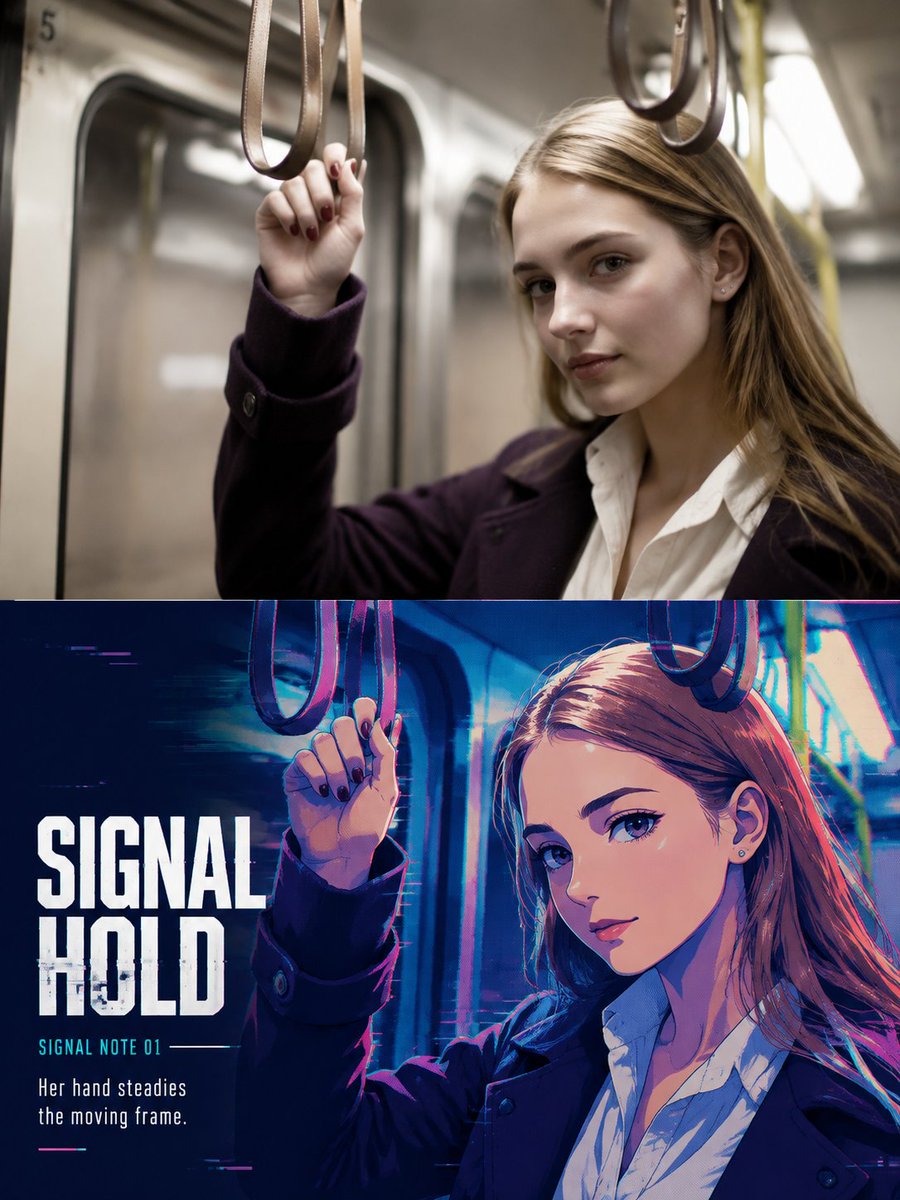
【霓虹故障动漫肖像】\n请将我上传的每一张人物照片分别制作成一张独立的高级旅行肖像编辑海报,不多图拼接,每张照片单独输出。整体采用3:4竖版双联构图,上方保留清楚可见的真实原图,下方进行“霓虹故障动漫肖像”转绘;上下边界水平、明确、克制,不雾化、不互相渗透。\n\n上半部分约占画面45%–50%,忠实保留原始照片。准确保持人物身份、数量、脸型、五官关系、发型、眼镜、目光、表情、姿态、手势、衣着、随身物件以及人物与环境的空间关系。只进行轻微的艺术杂志式调色与极薄胶片颗粒处理,仍必须明显是真实摄影。为适配画幅,可自然扩展天空、墙面或周边环境,但不得重画人物、改变面孔、拉伸、镜像、复制或移动主体。\n\n下半部分从同一张照片中提取人物最具识别度的面部、发型、服装、手势和关键物件,重构为具有强烈画面冲击的当代动漫编辑肖像。不要照搬原照片的完整取景和背景密度;将人物半身明显放大,占下区宽度约65%–95%,可适度裁切出画,让视线、动作方向和轮廓成为主导。背景只保留一至三条来自原图的建筑线、灯光、栏杆、家具或空间结构,并压缩成低信息光色场与结构碎片。\n\n转绘使用角面化色块、清楚的动漫线面关系、深靛蓝阴影、钢蓝与青色高光,并从原图中选择一处真实存在的暖色,转译为克制的珊瑚粉或品红跳色。加入有限网点、局部RGB套色偏移、边缘信号断裂和少量像素切块。故障效果只能发生在头发边缘、肩部轮廓、衣物外缘及背景结构,不得覆盖或破坏脸、眼睛、手和关键物件;不得改变人物身份,也不得生成无关的赛博城市。\n\n下区保留约18%–28%连续的深蓝或低信息色面作为呼吸区。文字集中成一组,主标题使用在正常聊天预览中清楚可读的粗窄游戏标题字,带轻微像素切口或RGB错位;辅助字段较小,但不能缩成灰线。\n\n根据照片中真实可见的地点、人物状态、动作或光线提炼1–3个英文单词标题,并加入字段“SIGNAL NOTE 01”与一行5–12个英文单词的观察句。若地点无法确认,不得编造地名,可使用标题“AFTERLIGHT”,观察句使用“A quiet face held inside moving light.”。只渲染已确定的文字,不添加作者名、品牌、账号、Logo、二维码或乱码。\n\n整体色彩从原照片提炼并压缩为有限色盘,保持人物衣物和环境原有的冷暖性格。画面应兼具真实旅途气息、动漫人物张力、电子游戏封面感和编辑出版物的克制感;故障是节奏,不是遮挡。\n\n避免通用赛博朋克、满屏霓虹彩虹、密集HUD、小到不可读的界面字、蒸汽波模板、面部故障、额外肢体、廉价滤镜和全画面插画化。

GPT Image 2
Create one independent high-end editorial art poster from each uploaded photograph.
插画与艺术2:3

Create one independent high-end editorial art poster from each uploaded photograph.\n\nDo not combine multiple photographs into a collage.\nEach uploaded photograph must become one separate poster.\n\nCentral concept:\n\n“A fleeting human moment remembered through watercolor.”\n\nThe photograph records the real moment.\nThe watercolor below preserves only the movement, emotion, atmosphere, and memory of that moment.\n\nOVERALL FORMAT\n\nStrict 3:4 vertical composition.\n\nDivide the canvas horizontally into two exactly equal sections:\n\nTOP HALF — exactly 50%\nBOTTOM HALF — exactly 50%\n\nReality above.\nMemory below.\n\nThe final result should feel like a refined independent art publication, contemporary photography book, or poetic travel journal.\n\nNever make it look like a commercial advertisement or generic poster template.\n\nTOP HALF — ORIGINAL PHOTOGRAPH\n\nPreserve the uploaded photograph as faithfully as possible.\n\nDo not redesign or reinterpret the photograph.\n\nPreserve:\n• subject identity\n• facial features\n• expression\n• hairstyle\n• body proportions\n• clothing\n• accessories\n• objects\n• pose\n• gesture\n• movement\n• spatial relationship between people\n• camera perspective\n• lighting\n• atmosphere\n• original narrative\n\nEspecially preserve spontaneous human expressions and body language.\n\nIf two or more people are essential to the emotional or narrative moment, preserve all of them.\n\nDo not automatically isolate only one person.\n\nDetermine who belongs to the main narrative by analyzing:\n• visual focus\n• interaction\n• movement\n• gaze\n• spatial relationship\n• emotional connection\n\nBackground people who are irrelevant to the central moment should not become important visual subjects.\n\nApply only subtle premium editorial color grading.\n\nMaintain realistic photographic texture.\n\nNever beautify the face excessively.\nNever change identity.\nNever alter the original gesture.\nNever artificially reposition the body.\n\nIf necessary for the 3:4 layout, naturally extend only environmental areas such as sky, ground, walls, road, architecture, vegetation, or surrounding space.\n\nNever stretch the main subjects.

GPT Image 2
Elegant editorial illustration of a [SUBJECT], combining delicate contour drawing with...
插画与艺术4:3

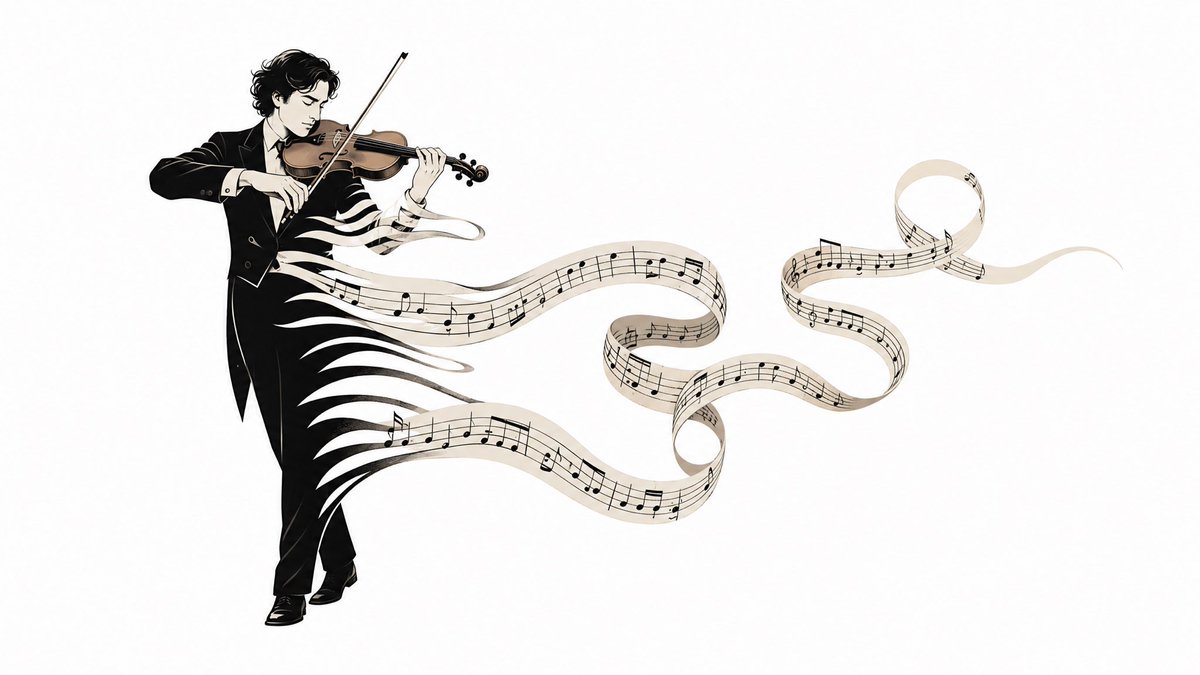
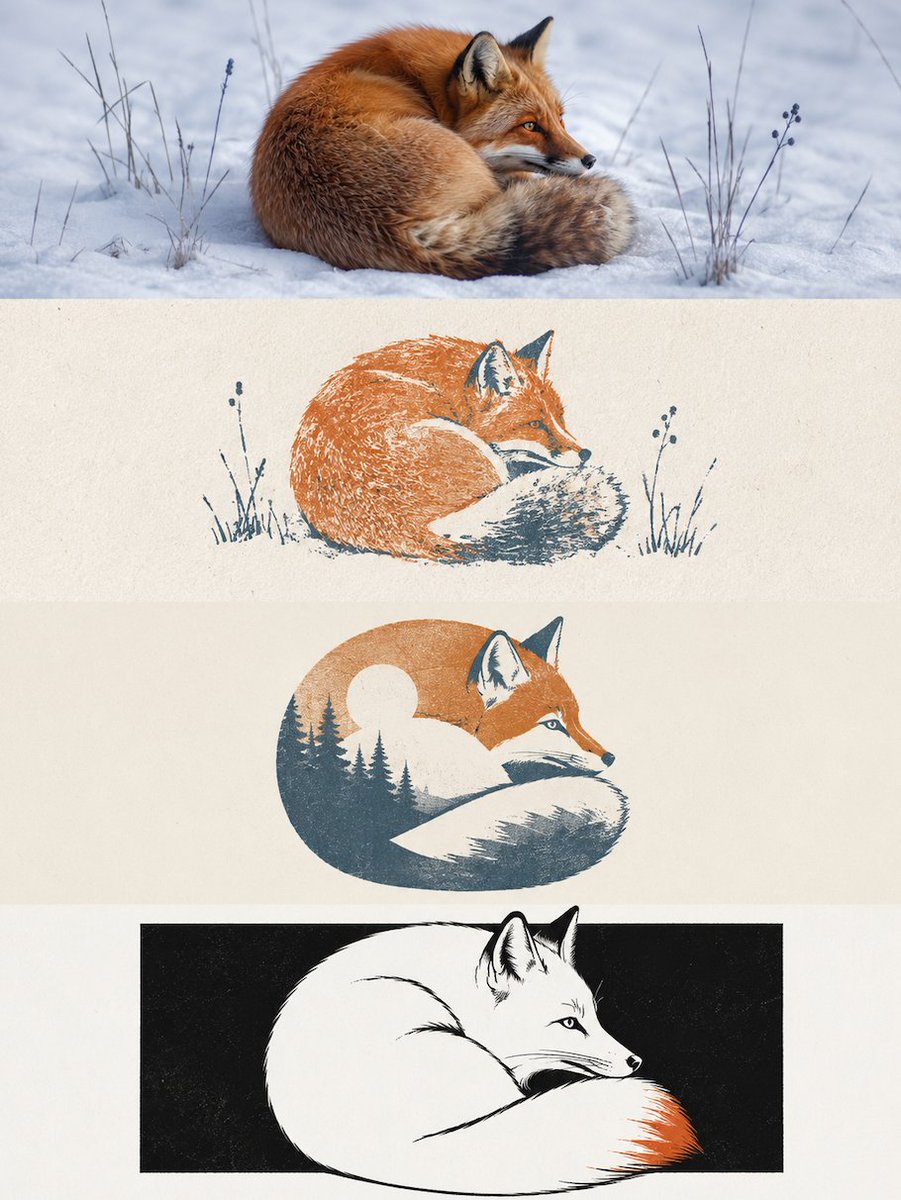
Elegant editorial illustration of a [SUBJECT], combining delicate contour drawing with one or two bold solid-color shapes, selective areas intentionally unfinished, refined balance of detail and emptiness, plain white background, contemporary art-magazine aesthetic.

GPT Image 2
Create a serene, premium travel photograph of the interior of a modern city train durin...
插画与艺术2:3

Create a serene, premium travel photograph of the interior of a modern city train during daytime. Show a clean bright white carriage with large windows glowing with soft natural daylight, a row of empty blue-and-white molded seats along the window, with one distinctive orange seat standing out, stainless-steel vertical poles, overhead rails, and multiple triangular hanging hand straps in blue and orange. Use a slightly wide-angle documentary composition with strong leading lines, soft depth of field, airy high-key exposure, subtle reflections on the windows and metal, gentle pastel tones, realistic textures, understated film grain, calm minimalist atmosphere, authentic travel photography, sophisticated editorial aesthetic, natural imperfections, vertical 4:5 composition, no people, no logos, no watermark.\nPrompt 2\nCreate a minimalist vintage travel-journal illustration of the same modern city train interior: a row of empty blue-and-white seats beside large windows, one distinctive orange seat, thin stainless-steel poles, overhead rails, and several triangular hanging hand straps. Draw it with delicate imperfect ink outlines combined with soft watercolor washes in muted blue, pale orange, warm gray and cream. Place the illustration on slightly aged warm ivory paper with visible fibers, subtle paper grain, uneven hand-painted edges, tiny print imperfections and lots of elegant negative space. Add refined editorial typography reading “CITY RIDE” with the small subtitle “A quiet journey through the light.” underneath. Contemporary Japanese travel-zine aesthetic, quiet nostalgic mood, sophisticated minimal graphic design, handmade feel, balanced composition, vertical 4:5 format, no logos, no watermark.

GPT Image 2
请将我上传的每一张照片分别制作成一张独立的高级设计海报,不多图拼接,每张照片单独输出。
插画与艺术2:3

请将我上传的每一张照片分别制作成一张独立的高级设计海报,不多图拼接,每张照片单独输出。\n\n整体采用 3:4竖版构图。画面从上到下严格四等分为四个横向区域,每个区域高度必须精确占整体画面的25%,四层比例严格为1:1:1:1,不允许出现比例偏差。区域之间无缝衔接,无分隔线、无留白间隙。这里的“无留白间隙”仅指层与层的接缝不能出现空隙;每层内部仍可按照对应风格保留负空间、纸面或纯色背景。\n\n四层全部以同一张上传照片为唯一依据,呈现同一主体、同一瞬间和同一空间关系。严格保持主体身份、数量、关键结构、比例、姿态、动作方向、视线、观察视角、透视、遮挡、左右位置、前后关系与核心叙事一致。四层不是四张互不相关的新构图,而是同一画面的连续风格转译。由于每层均为约3:1的极扁横幅,主体应横向组织,并保留适量左右呼吸空间;允许对背景进行自然横向延展或轻微裁切,但不得纵向拉伸主体、裁掉关键部位、改变人物关系,或另造与原图无关的场景。\n\n四层的视觉重心、主体占比和轮廓落点尽量上下对齐,形成从真实摄影逐步过渡到目标风格的连贯演化。每层都必须完整填满自身25%的区域。不要添加层号、分隔线、边框、拼贴缝隙、水印或Logo。除非某层风格说明明确要求少量编辑文字、票据标记或手写注释,否则不要额外生成文字;即使需要文字,也必须少量、克制、不遮挡主体,并尽量避免乱码。\n\n第一层|原始摄影\n\n直接保留上传照片的真实摄影状态,作为后三层风格转译的视觉基准。保持原始人物或主体的身份、数量、面部特征、发型、服装、结构、比例、姿态、动作、视线、互动关系、观察视角、透视、遮挡、环境方向、自然光影与核心色彩,不进行插画化、材质化、几何化或三维重建。\n\n为了适配约3:1的极扁横幅,只允许对背景左右两侧进行符合原场景逻辑的自然延展,或进行不损伤主体的轻微裁切;不得改变主体比例,不得拉伸人物或建筑,不得裁掉头部、手脚、关键物件或重要叙事关系。画面保持自然、真实、清晰,避免过度磨皮、夸张调色、虚构景物和与原图无关的装饰。\n\n第二层|多色橡皮章田野笔记\n\n在本层约3:1的扁横幅区域中,将第一层的真实主体转译为“多色橡皮章田野笔记”风格。保持与第一层一致的主体身份、数量、关键结构、姿态、左右位置、视角、空间关系与核心叙事,再完整执行以下视觉要求:\n\n从照片中提取最具识别性的主体、轮廓、姿态、空间关系与叙事特征,重构为一枚精炼的多色橡皮章图像。不要完整复制照片,而是删去无关细节,只保留最能代表原物的结构、走势和视觉记忆点,通过剪影、色块、刻线和少量层叠重新概括,使人能够一眼识别与上传的原图之间的对应关系。\n\n构图保持小尺度章印与大面积留白的关系,根据主体自身的方向、比例和视觉重心自由安排位置,可偏心、贴边或局部裁切,但保持清晰主次与编辑式平衡。配色从上传的原图中提取2–4种最具辨识度的颜色,转化为克制而有精神的专色油墨,通过套色关系建立层次,不使用固定旅行色卡。\n\n章印保留真实手工雕刻与盖印质感,包括粗细不均的刻线、断墨、纸张透底、颗粒油墨、边缘缺口、压力变化和轻微套色错位;背景使用温暖浅色纸张与细微纤维纹理,避免平滑矢量、滤镜效果和儿童手工感。\n\n文字像旅行者或观察者留下的田野注释,从照片的地点、主体、状态或意象中提炼一个简短英文标题,并搭配No.编号、2–3个关键词或极短说明。使用小型打字机字体或档案式微排版,可与章印的边缘、留白、基线或局部轮廓巧妙对齐,使文字成为记录系统的一部分,而不是商业标题。\n\n整体呈现原始影像 × 手工橡皮章 × 旅行田野笔记的视觉关系,安静、克制、质朴、精致而具有收藏感。原图提供现场依据,章印负责留下记忆中最值得辨认的部分,避免旅游纪念品感、邮票模板、圆形印章、贴纸拼贴、卡通风格、过多文字和装饰堆积。\n\n第三层|格式塔正负形丝网版画\n\n在本层约3:1的扁横幅区域中,将第一层的真实主体转译为“格式塔正负形丝网版画”风格。保持与第一层一致的主体身份、数量、关键结构、姿态、左右位置、视角、空间关系与核心叙事,再完整执行以下视觉要求:\n\n从照片中提取最具识别性的主体、轮廓、姿态与叙事关系,重构为极简的格式塔正负形丝网版画。保留主体最具有辨识度的外轮廓,同时从原图中提炼一个与其关系最紧密的环境、结构、物件或象征性意象,让二者通过轮廓咬合、负形镂空、边界共用和图底反转融为一个完整图形:远看首先识别主体,近看才发现另一层场景或意象隐藏其中。不要把两个对象简单叠放,而要让一个形状的边缘自然成为另一个形状的边界。\n\n构图保持单一视觉锚点、清晰剪影和大面积留白,根据主体自身姿态、朝向、重心和轮廓走势决定位置,可采用偏心、局部裁切、上下嵌套或边缘对齐,使正形与负形之间形成巧妙视觉转换。辅助元素必须极少,让视觉趣味主要来自“看见什么”与“再次看见什么”的瞬间切换,而不是复杂装饰。\n\n配色采用治愈、柔和而高级的莫兰迪粉彩体系,参考梦境般建筑空间中的低饱和配色逻辑:雾粉、柔杏、灰绿、鼠尾草、淡陶土、奶油黄、雾蓝、灰紫等相互协调,以浅色纸面为底,从原照片中选择最有精神的色彩关系进行柔化与重组。整体控制在2–4种颜色,通过综合色温、明度差和面积比例建立层次,颜色干净、柔和、有空气感,避免脏灰、沉重做旧、荧光色和高反差商业配色。\n\n保留轻微纸张纤维、丝网印刷颗粒、油墨覆盖与套色偏差,使图形具有真实版画触感,但保持边缘清晰、色块平整,不使用渐变、三维体积、写实阴影或光滑电脑渲染质感。\n\n文字同样参与正负形构图。从照片的身份、地点、动作、情绪、状态或象征意义中提炼一个简短英文标题,并搭配极少量地点、编号、状态词或微型注释。文字可沿主体轮廓、负形边界、水平基线或留白轴线排布,也可局部嵌入图形、被轮廓切断或与色块形成遮挡,使文字像版画结构的一部分,而不是后期贴上的标题。整体保持细小、克制、聪明而具有高级编辑感。\n\n整体呈现极简几何、格式塔错视、柔和莫兰迪色、丝网版画与诗意叙事结合的视觉气质。无论主体是人物、动物、植物、建筑、器物、交通工具或自然景观,都应保持“一眼识别主体,第二眼发现隐藏意象”的双重阅读体验,避免多个并列焦点、直接拼贴、复杂插画、卡通感、商业宣传感和模板感。文字偏好:英文\n\n第四层|黑白越界插画与单点彩色\n\n在本层约3:1的扁横幅区域中,将第一层的真实主体转译为“黑白越界插画与单点彩色”风格。保持与第一层一致的主体身份、数量、关键结构、姿态、左右位置、视角、空间关系与核心叙事,再完整执行以下视觉要求:\n\n从照片中提取最具识别性的主体、轮廓、姿态与叙事关系,重构为极简黑白手绘编辑插画。以一个横向或纵向的纯黑矩形色域作为主要视觉场,让主体大部分存在于矩形内部,同时选择最具识别度的头部、顶部轮廓、枝叶、屋顶、肢体、器物边缘或其他关键结构自然突破矩形边界,形成明确的“越界”关系。主体不是贴在黑色矩形上,而像从黑色空间中探出、穿过或生长出来,使矩形既是背景,也是构图的一部分。\n\n主体仅保留最必要的外轮廓、姿态和关键结构,以黑色流畅手绘线 + 白色负形 + 少量灰色块面表现。线条应简洁、顺滑、稳定,有自然手绘弹性和节奏感,允许轻微手工感,但不要过度抖动、重复描边、毛躁噪点或刻意稚拙化;整体更接近干净利落的插画师线稿,而不是粗糙随意的涂鸦。内部细节保持极简,只用少量结构线、表情线和局部阴影建立辨识度。\n\n整体以黑、白、灰为主,但允许在必要时加入一个核心局部的强调彩色,作为点睛之笔。这个彩色只能落在最关键、最有叙事性或最有记忆点的局部,例如主体的某个部位、一个小物件、一块关键表面、一个动作焦点或一个情绪信号。强调色面积必须很小、位置精准、作用明确,像画面中唯一被点亮的部分,用来提升记忆点和情绪张力,而不是打破整体黑白秩序。颜色应从原图中提取最有代表性的单一亮点色,并适度提纯。\n\n构图强调黑色矩形的几何秩序与主体自由轮廓之间的冲突。矩形承担稳定、沉重的视觉基座,主体以不对称位置、局部裁切和越界制造活力;大面积白色纸面留白包围黑色区域,使黑、白、灰形成强烈而克制的面积关系。辅助结构可以转化为极少量直线、斜面、平台、边缘或几何切片,但不得形成第二主体。\n\n文字建立轻巧的黑白编辑式微排版系统,从照片的动作、情绪、状态或隐喻中提炼一个简短英文标题,并搭配1–3组极小注释、编号、状态词或短句。文字可贴近黑色矩形边缘、藏在负形中、顺着越界方向排列,或与主体轮廓形成对齐和错位;使用黑色手写字、细瘦无衬线或克制衬线字体,保持小尺度,让文字像插画师留下的签注和编辑标记,而不是商业标题。\n\n整体呈现纯白纸面 × 黑色几何色域 × 流畅手绘线条 × 主体越界 × 单点彩色强调的视觉气质,克制、聪明、轻巧、幽默、现代且具有艺术出版感。避免彩色卡通、复杂场景、光滑矢量描边、写实明暗、三维质感、纯黑剪影、粗糙乱线和模板式居中构图。

GPT Image 2
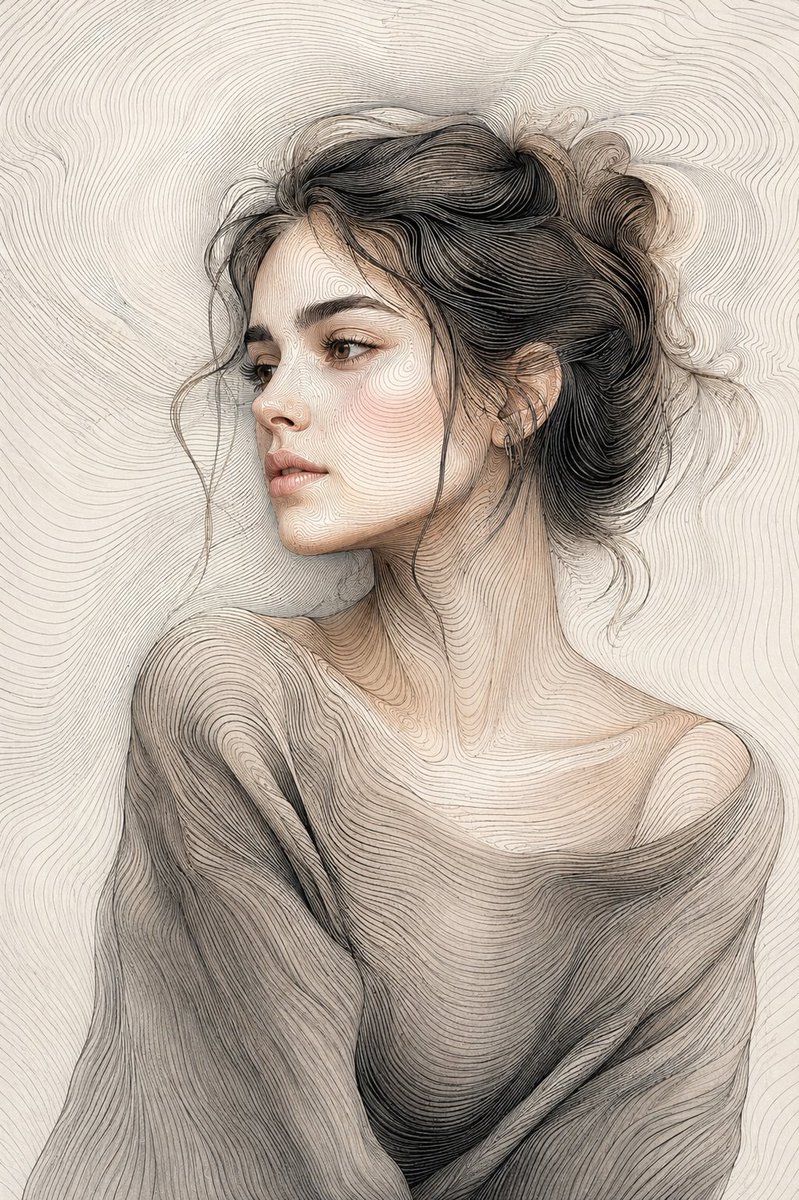
A detailed portrait illustration of a beautiful young woman with dark brown hair in a l...
插画与艺术2:3

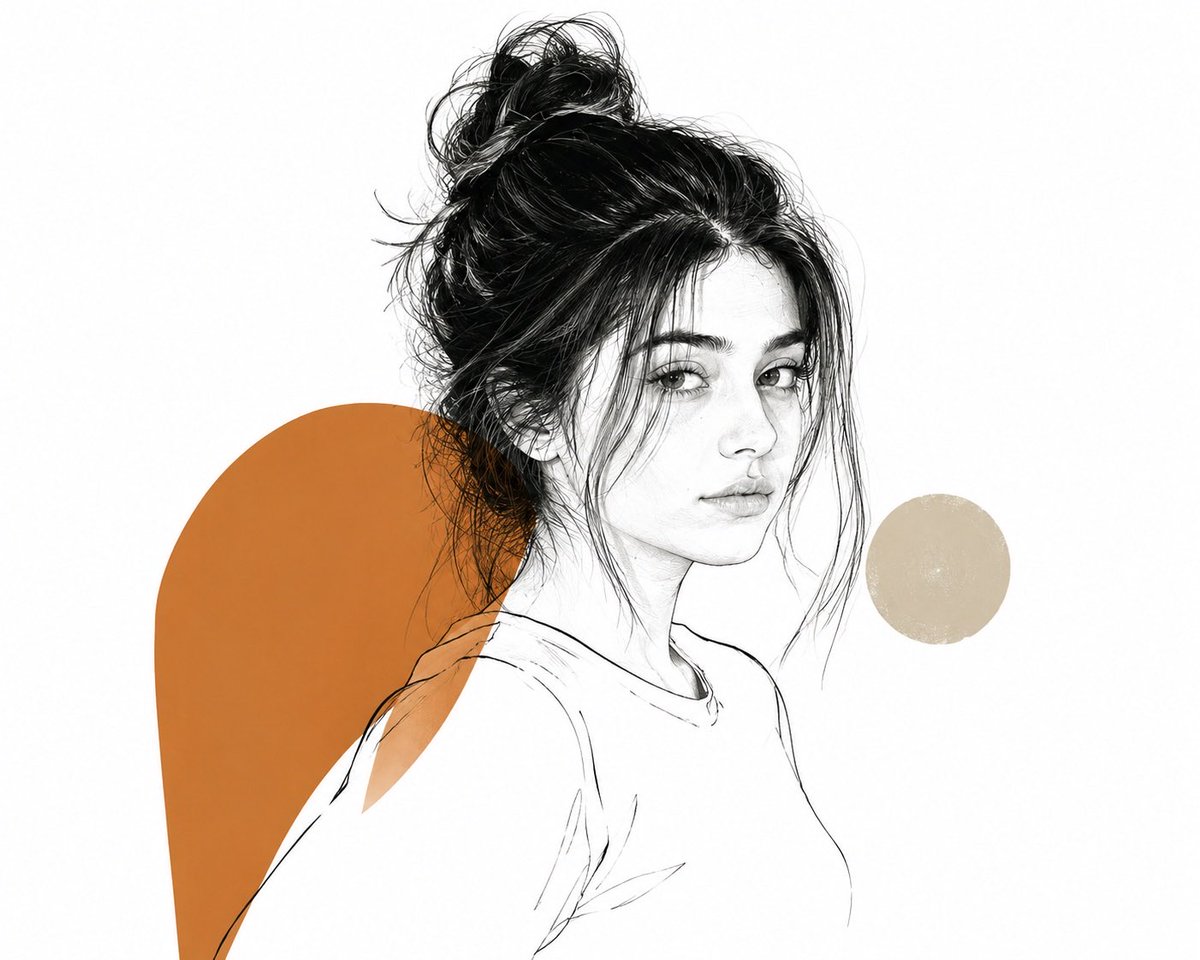
A detailed portrait illustration of a beautiful young woman with dark brown hair in a loose, messy updo with loose strands framing her face. She has subtle makeup, warm brown eyes, and soft pink lips, looking off to the side in three-quarters profile. She wears a relaxed, draped off-the-shoulder grey sweater. The entire image is rendered in a hypnotic topographic line-art style, with intricate, fine contour lines mapping her facial features, skin, hair, and clothing over a light beige textured canvas background. Minimalist aesthetic, fine line shading, neutral beige and muted brown color palette, soft lighting.

GPT Image 2
Lumina Mascot LogoLumina · AI 提示词与光影画廊·纯粹呈现 · 非营利性灵感交流与提示词研究
免责声明