Lumina Mascot LogoLumina
Transform the uploaded photograph into a standalone, premium 3:4 vertical design poster.
创意内容与场景3:4

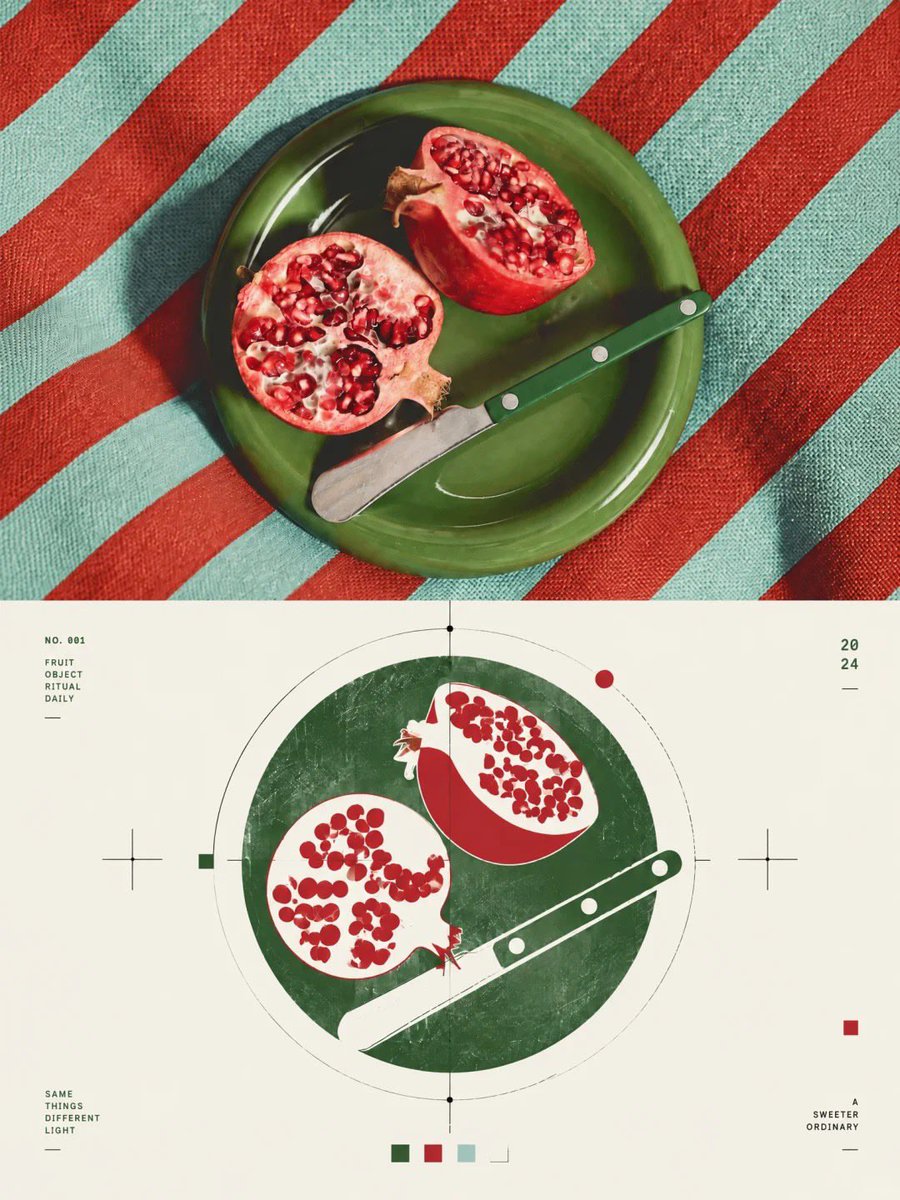
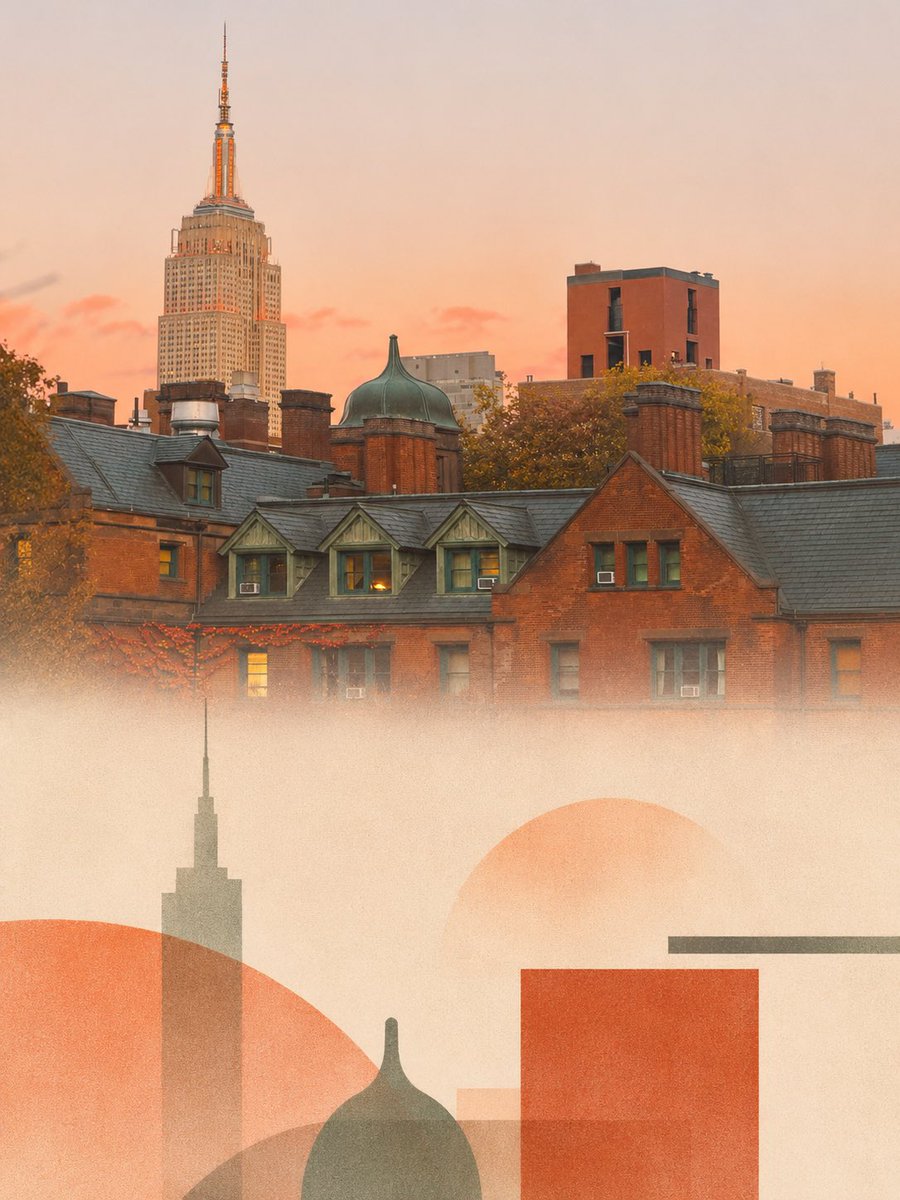
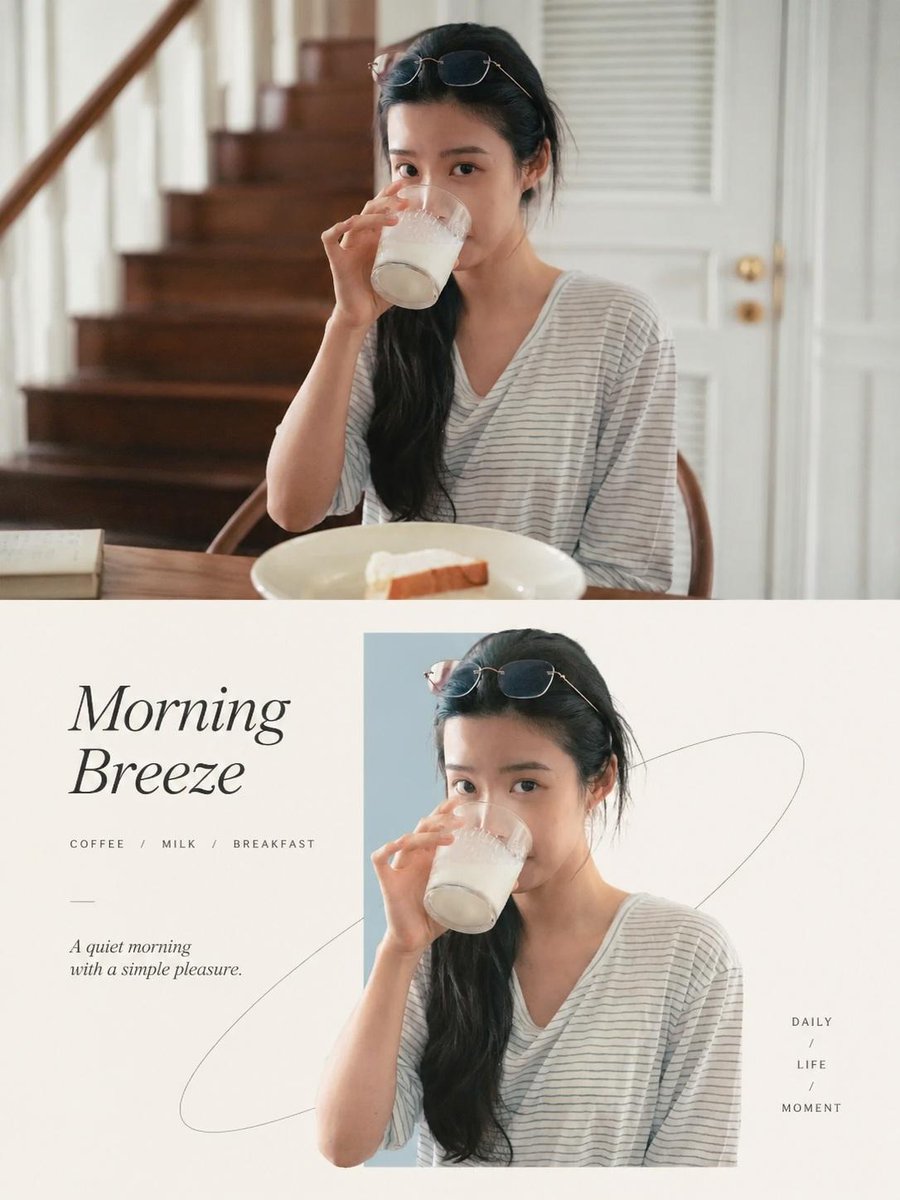
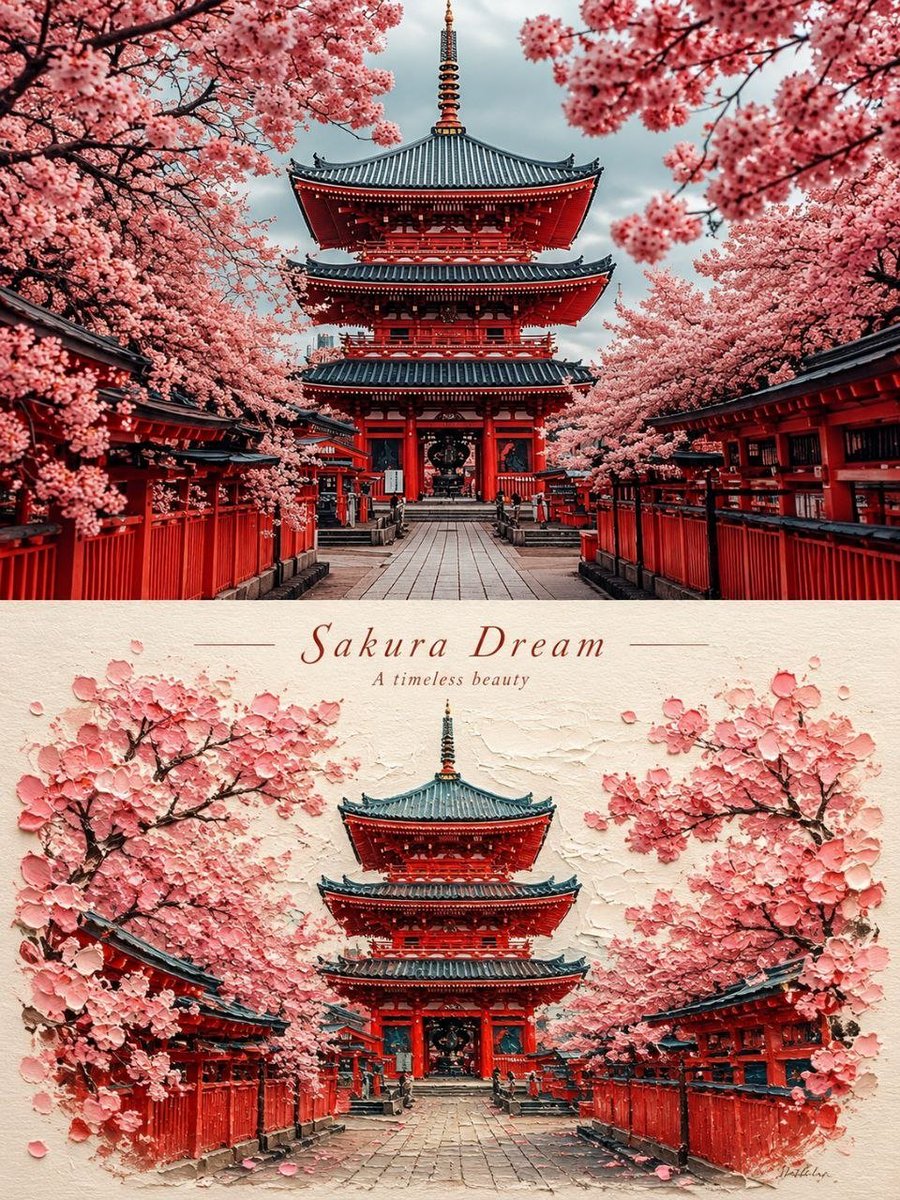
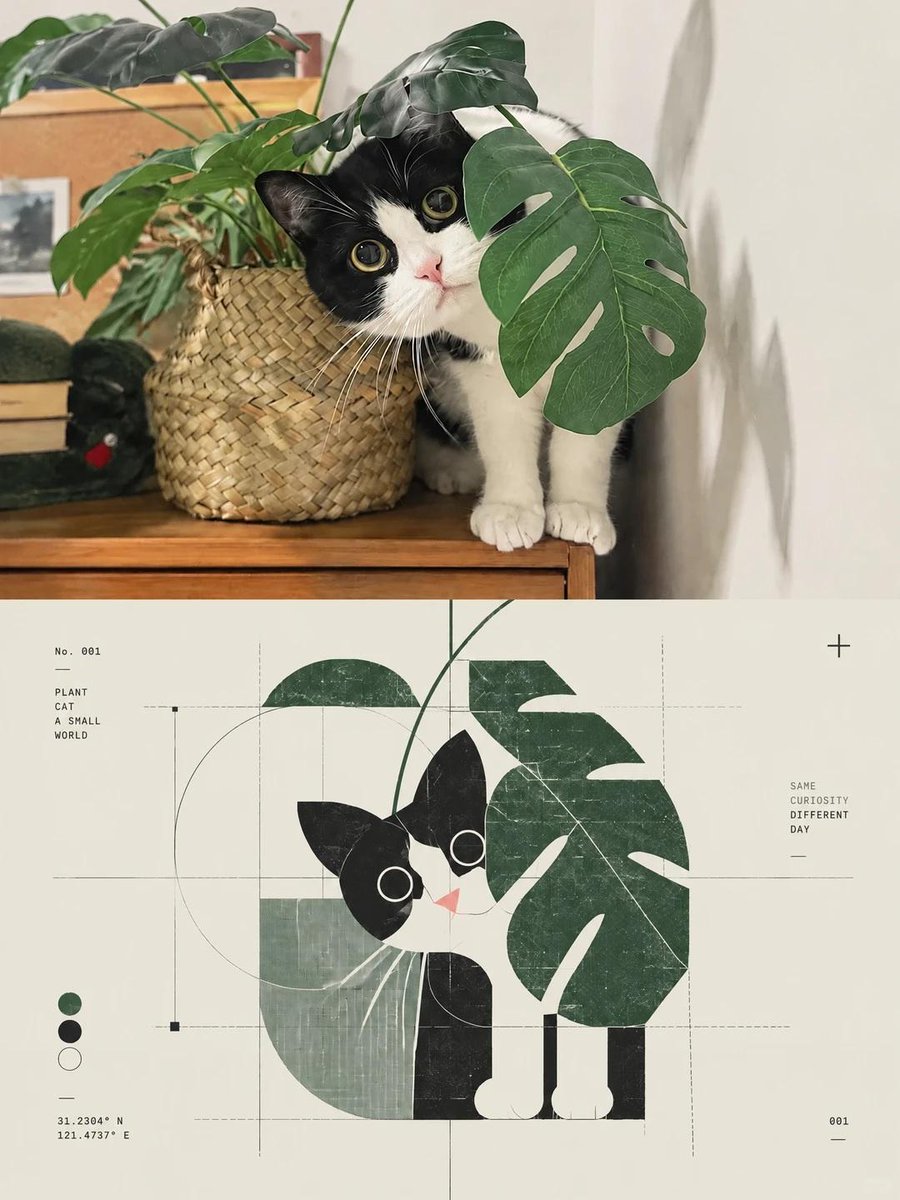
Transform the uploaded photograph into a standalone, premium 3:4 vertical design poster. 1. Overall Composition & Layout Divide the entire canvas into two perfectly equal horizontal sections: - Top 50%: Original photographic image. - Bottom 50%: Abstract visual identity derived from the core essence of the photograph. Maintain a precise 1:1 vertical division between the two sections. The final result should feel like a sophisticated art publication, experimental design poster, and high-end visual identity system. 2. Upper Section — Artistic Photography Preserve the original photograph's subject, composition, structural details, realistic textures, natural lighting, shadows, and authentic color atmosphere. Apply only subtle, sophisticated color grading to elevate the image into an editorial fine-art photography aesthetic. - Maintain the original subject's identity, proportions, pose, and physical characteristics. - Do not stretch, distort, reconstruct, or alter the subject. - Extend the background naturally if necessary to accommodate the 3:4 vertical composition. - Preserve the original photographic realism. - Avoid excessive retouching, artificial effects, or overly stylized color grading. The result should resemble premium editorial photography featured in an independent art and design publication. 3. Lower Section — Abstract Visual Identity Extract the photograph's essential visual DNA and translate it into an independent, abstract graphic symbol. Identify the most recognizable characteristics of the subject: - Silhouette and overall outline. - Structural geometry and distinctive forms. - Pose, movement, or spatial relationships. - Core narrative and emotional character. Do not recreate the complete subject or produce a literal illustration. Instead, reduce its defining characteristics into a minimal, recognizable abstract visual mark. Use: - Geometric deconstruction. - Modular shapes and structural blocks. - Precision linework and architectural geometry. - Negative space. - Symbolic forms and visual simplification. - Circular trajectories, grids, and abstract nodes. The final symbol should feel like the central identity mark of a high-end creative studio, experimental design label, architectural practice, or contemporary art institution. 4. Visual Design Language Explore a sophisticated combination of: - Post-digital graphic design. - Deconstructed Swiss design. - Generative symbol systems. - Diagrammatic abstraction. - Experimental editorial typography. - Contemporary visual identity design. Create a visual tension between: - Order and imperfection. - Precision and handmade irregularity. - Digital systems and analog aesthetics. - Rational geometry and emotional expression. Use geometric modules, delicate lines, circular arcs, subtle grids, micro-symbols, numbering systems, and abstract structural connections. Keep the composition extremely restrained. The abstract symbol must remain the single dominant visual focal point, positioned centrally or slightly off-center, surrounded by generous negative space. Avoid visual clutter, excessive decorative elements, multiple competing icons, or infographic-style layouts. 5. Typography & Micro-Details Typography should function only as a subtle component of the visual system, never as the main headline. Optionally incorporate: - Tiny serial numbers. - Minimal alphanumeric codes. - Short experimental annotations. - Small indexing labels. - Fine typographic markers. Use refined, minimalist typography with an archival, technical, experimental-publication aesthetic. Every typographic element should feel intentional and structurally connected to the abstract symbol. 6. Color System Extract the dominant and most distinctive colors directly from the original photograph. Reinterpret them as a coherent visual identity color palette. Use: - Warm white, off-white, or soft grey as the primary background. - Restrained accent colors such as teal, cyan, blue, magenta, or orange when supported by the original image. - Small, highly intentional color accents as functional visual codes. Color should communicate structure and identity rather than serve as decoration. Avoid chaotic color combinations, cheap neon effects, oversaturated palettes, and generic commercial gradients. 7. Print Texture & Material Treatment Introduce subtle physical imperfections to give the digital composition the tactile quality of a printed experimental art publication. Incorporate: - Xerox photocopy texture. - Risograph grain. - Subtle print registration misalignment. - Fine scanner noise. - Delicate paper grain. - Slightly imperfect edges. - Minimal analog printing artifacts. Keep these textures extremely subtle and controlled. They should enhance the material quality without compromising clarity, precision, or visual hierarchy. 8. Final Art Direction The final poster should communicate the feeling of a sophisticated, independent visual identity extracted directly from the original photograph. The upper half represents the original subject through authentic photography. The lower half represents its visual essence through an abstract, independently recognizable graphic identity. The two sections should feel conceptually connected while maintaining distinct visual languages. Creative references: Contemporary art institutions, experimental publishing, architectural identity systems, Swiss graphic design, independent creative studios, and high-end cultural branding. Final aesthetic: Minimal, intelligent, conceptual, architectural, editorial, tactile, and visually distinctive. Strict requirements: - Vertical 3:4 aspect ratio. - Exact 50% photographic / 50% abstract division. - Preserve the original photograph without distorting its subject. - One dominant abstract symbol in the lower half. - Generous negative space. - Sophisticated, restrained color palette. - Subtle physical print textures. - No unnecessary decorations, excessive text, or infographic layouts. The ultimate goal is to extract a unique visual DNA from the photograph and transform it into a self-contained abstract logo — a minimal, culturally resonant visual identity with its own character, memory, and design language.
GPT Image 2.5
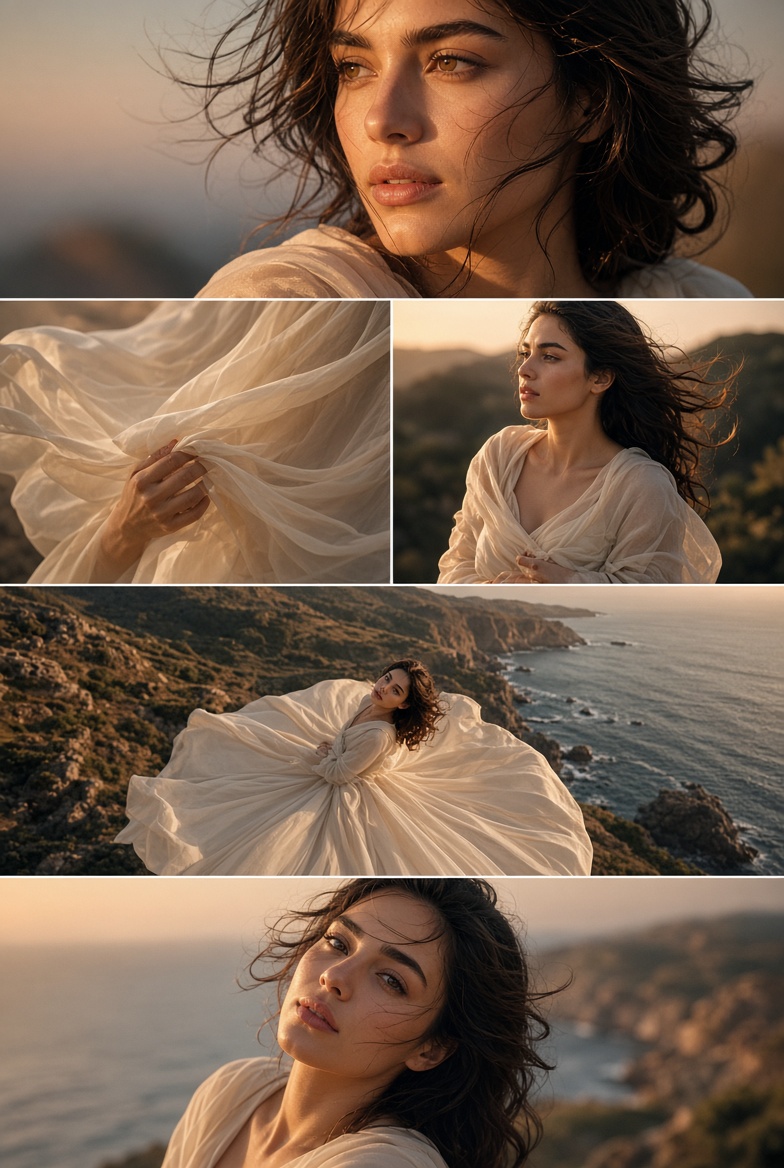
A cinematic multi-panel mood board featuring a young woman with dark, wind-swept hair a...
漫画与分镜2:3

A cinematic multi-panel mood board featuring a young woman with dark, wind-swept hair and expressive eyes, wearing a flowing, sheer cream-colored dress. The scenes capture her outdoors at sunset against a coastal landscape with rolling hills and a rocky ocean shore, showcasing close-ups of her face bathed in golden hour light, a detailed shot of her hand gathering the light fabric of her gown, and a wide aerial view of her standing on a cliff with the massive, billowing skirt spread out dramatically. The overall aesthetic is dreamy, elegant, and ethereal, with a warm color palette and soft natural lighting.

GPT Image 2.5
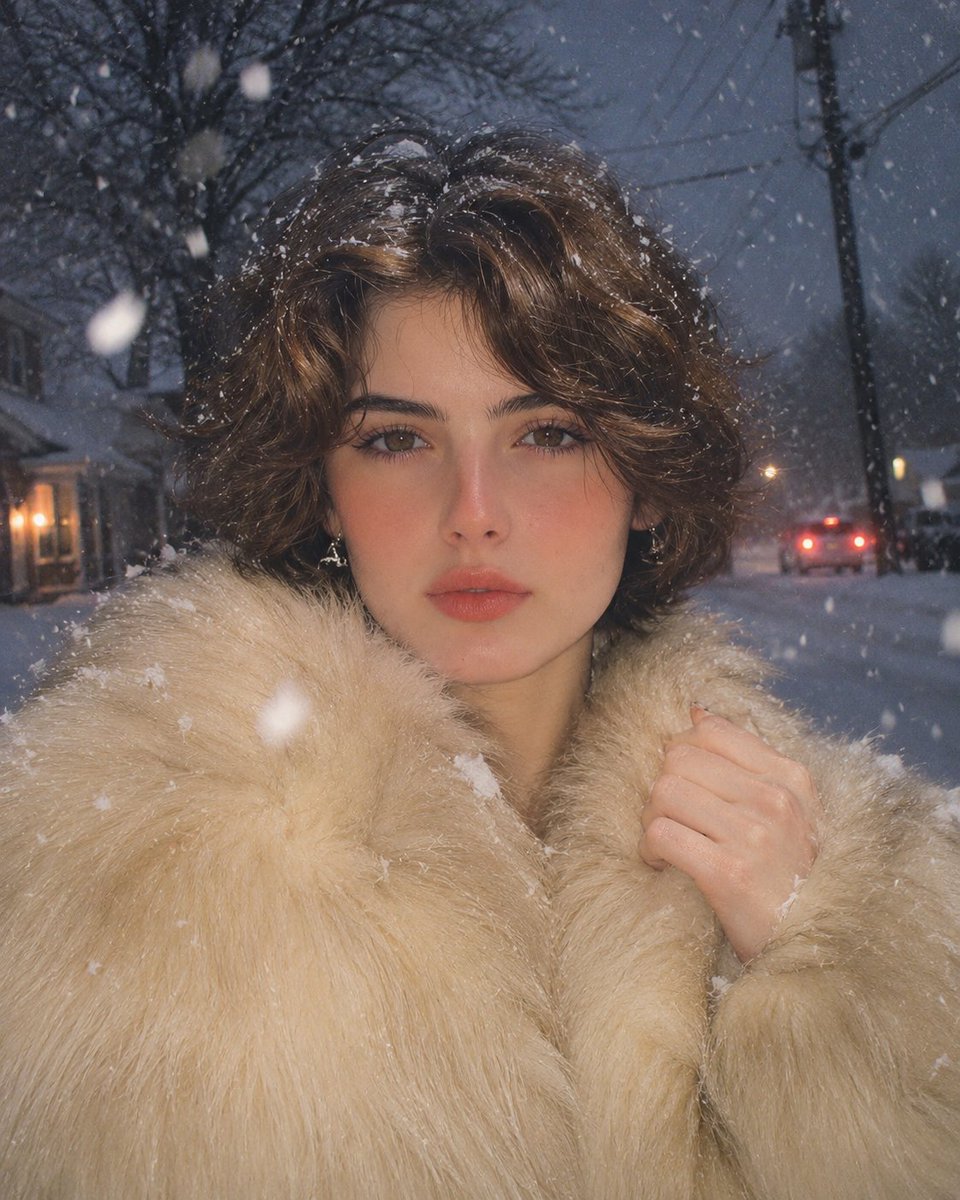
WINTER AFTERGLOW | VINTAGE 2000s WINTER FASHION PORTRAIT
女性美学3:4

WINTER AFTERGLOW | VINTAGE 2000s WINTER FASHION PORTRAIT Create a high-quality, ultra-realistic winter fashion photograph using the woman's face from the reference image. Preserve her exact facial identity, natural features, skin tone, and overall appearance without any alterations or distortion. A vertical chest-up portrait on a snowy American residential street at dusk. Her body is slightly turned sideways, shoulders gently raised, and head facing directly towards the camera. Her chin is slightly lowered, with a confident, subtly seductive gaze and naturally parted lips. Her hair must retain the exact color from the reference image. It is long, thick, and voluminous, with a side part and large natural waves. A few loose strands blow naturally across her face. Her makeup is soft glam, featuring defined eyelashes, subtle bronzer, delicate blush, naturally glowing skin with realistic texture, and nude-pink lips. She wears an oversized, luxurious cream-beige fur coat with dense, long, fluffy fur. Its voluminous collar wraps around her shoulders and neck, while one hand gently holds the fur near her shoulder. The background features snow-covered American houses, overhead electrical wires, a roadside utility pole, and a car with glowing red taillights. Heavy snowfall fills the scene, with large snowflakes passing directly in front of the lens, creating depth and subtle motion blur. Photography & Visual Style: Use an eye-level camera position, close distance, and frontal angle. Recreate the nostalgic aesthetic of early-2000s digital photography with powerful direct flash illuminating her face, coat, and foreground snowflakes. Use cool, muted blue-gray background tones, warm peachy-pink skin tones, and deep greenish-gray shadows. Add slightly faded colors, soft contrast, delicate grain, subtle atmospheric haze, and a gentle glow in the highlights. Maintain natural, slightly imperfect sharpness characteristic of vintage digital cameras. The final image should feel like a spontaneous, intimate winter fashion photograph captured on a snowy evening. IMPORTANT: No watermark, no author signature, no text, no logos, and no additional typography anywhere in the image.

GPT Image 2.5
Use the uploaded image as reference.
海报与版式3:4

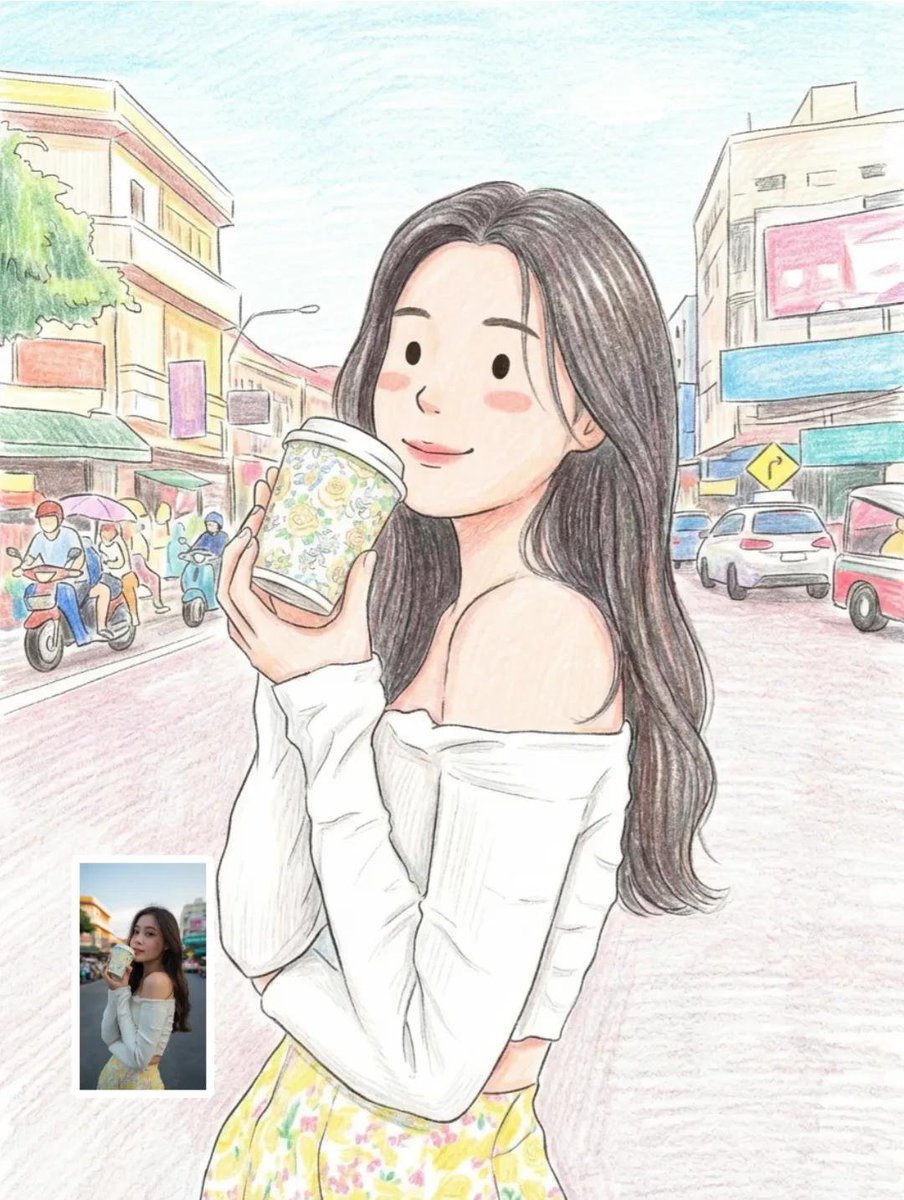
Use the uploaded image as reference. Illustration style: hand-drawn colored pencil illustration, clean line art with slightly rough pencil outlines, soft pastel coloring with increased brightness, lighter and more vivid color tones, enhanced saturation while staying natural, visible pencil strokes and gentle shading texture, warm and friendly tone, semi-cartoon realistic proportions, simple facial features with dot eyes and small smiles,flat yet detailed coloring, minimal shadows, soft highlights, storybook illustration feel, cozy and cheerful atmosphere, vibrant yet soft color palette, children-book / lifestyle sketch style, high clarity, no realism, no photo textureUse the uploaded image as reference. Hand-drawn colored pencil illustration with clean line art and slightly rough pencil outlines, combined with soft watercolor wash textures. Bright pastel colors, lighter and more vivid tones with natural saturation. Visible pencil strokes layered with subtle watercolor gradients. Warm and friendly tone, semi-cartoon realistic proportions. Simple facial features with dot eyes and small smiles.Flat yet detailed coloring, minimal shadows, soft highlights. Storybook illustration feel, cozy and cheerful atmosphere, children-book style, high clarity, no realism, no photo texture.

GPT Image 2.5
A woman whose flowing dress transforms into an entire field of wildflowers.
女性美学3:4

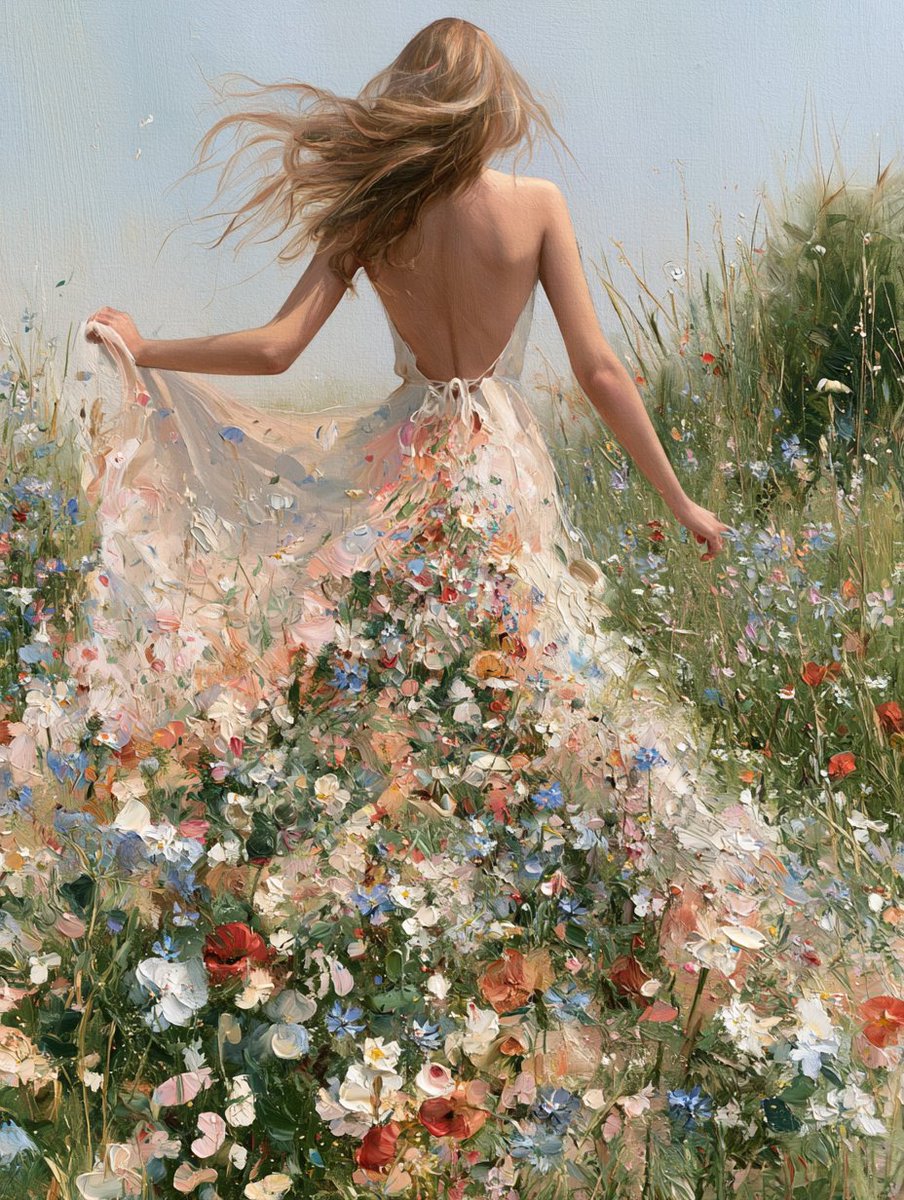
A woman whose flowing dress transforms into an entire field of wildflowers. Style: expressive mixed-media fine art

GPT Image 2.5
A fashion editorial style portrait of a stunning South Asian woman standing next to a s...
女性美学2:3

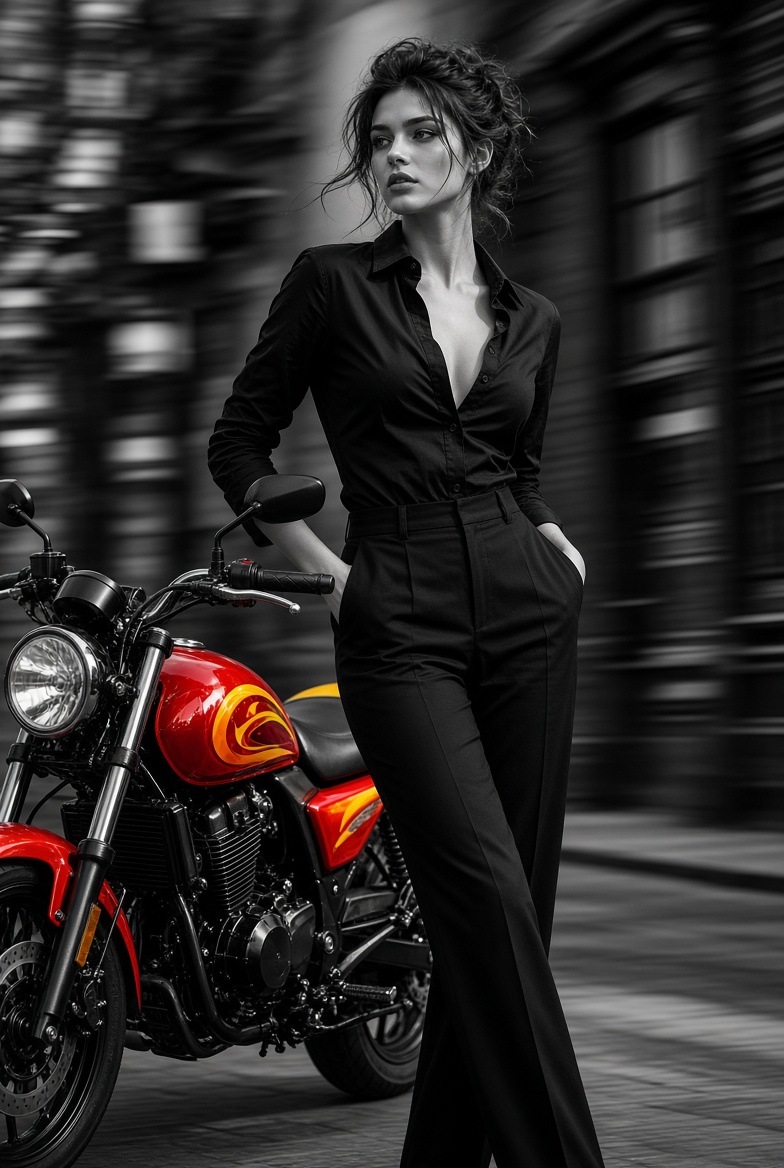
A fashion editorial style portrait of a stunning South Asian woman standing next to a sleek red and black motorcycle on a European city street. She has voluminous, wavy dark hair styled in an elegant updo with soft wisps framing her face, and wears a modest black collared shirt buttoned up with high-waisted black trousers and her hands casually tucked into her pockets. The background features a dramatic motion blur of classic architecture, creating a high-speed sense of motion while the subject remains pin-sharp. Shot on 35mm lens with high-contrast monochrome tones and vivid pops of red on the motorcycle tank, capturing a moody, sophisticated, and cinematic atmosphere.

GPT Image 2.5
Professional 3D Animated Character Portrait | Animator's Brief
人物与角色1:1

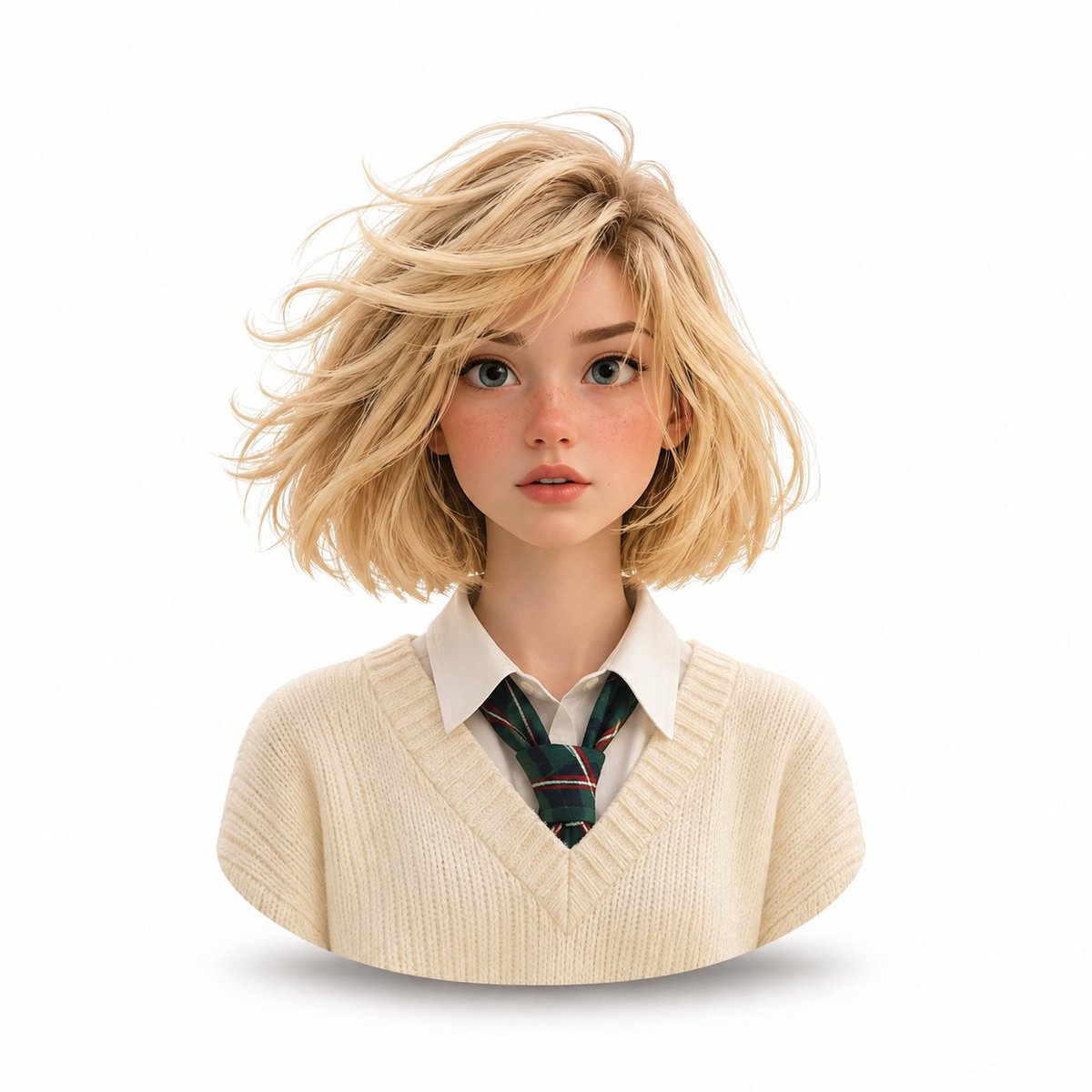
Professional 3D Animated Character Portrait | Animator's Brief Using the uploaded reference photo, create a premium-quality 3D animated character portrait of me, inspired by the expressive charm and polished visual storytelling of Pixar-style character design. Character Design: Transform me into a beautifully stylized 3D animated version while preserving my distinctive facial features, face shape, hairstyle, skin tone, and recognizable identity. The character should look instantly recognizable to anyone familiar with the original photo. Maintain natural facial proportions while adding subtle animated charm, expressive eyes, and refined details. Composition: Create a head-and-shoulders bust portrait only, positioned precisely in the center of the canvas. Keep the character relatively small, surrounded by generous, clean negative space on all sides. Use a pure, seamless white background with no additional objects or decorations. Rendering & Lighting: Use high-quality 3D character rendering, smooth yet realistic skin shading, detailed hair, refined facial textures, and soft studio lighting. Keep the skin tone fair and neutral, with accurate natural undertones. Avoid excessive warmth, golden hues, orange casts, or yellowish skin tones. Finishing Details: Give the bottom of the bust a smooth, softly rounded sculptural edge, with a subtle natural shadow directly beneath it to create a gentle floating effect. Maintain clean contours and beautifully polished 3D surfaces. Overall Aesthetic: Premium animated movie character quality, playful yet sophisticated, friendly facial expression, appealing character proportions, cinematic 3D craftsmanship, and professional studio presentation. Technical Requirements: - Aspect ratio: 1:1 (square) - Background: Pure white (#FFFFFF) - Framing: Head and shoulders only - Placement: Precisely centered - Lighting: Soft, balanced studio lighting - Output: High-resolution, crisp and polished - Intended use: WhatsApp profile picture Important: Identity preservation is the highest priority. Do not change my recognizable facial characteristics or invent a different person. The final result should feel like me reimagined as a high-end animated movie character.

GPT Image 2.5
Elegant watercolor fashion illustration of a stylish youn...
人物与角色9:16

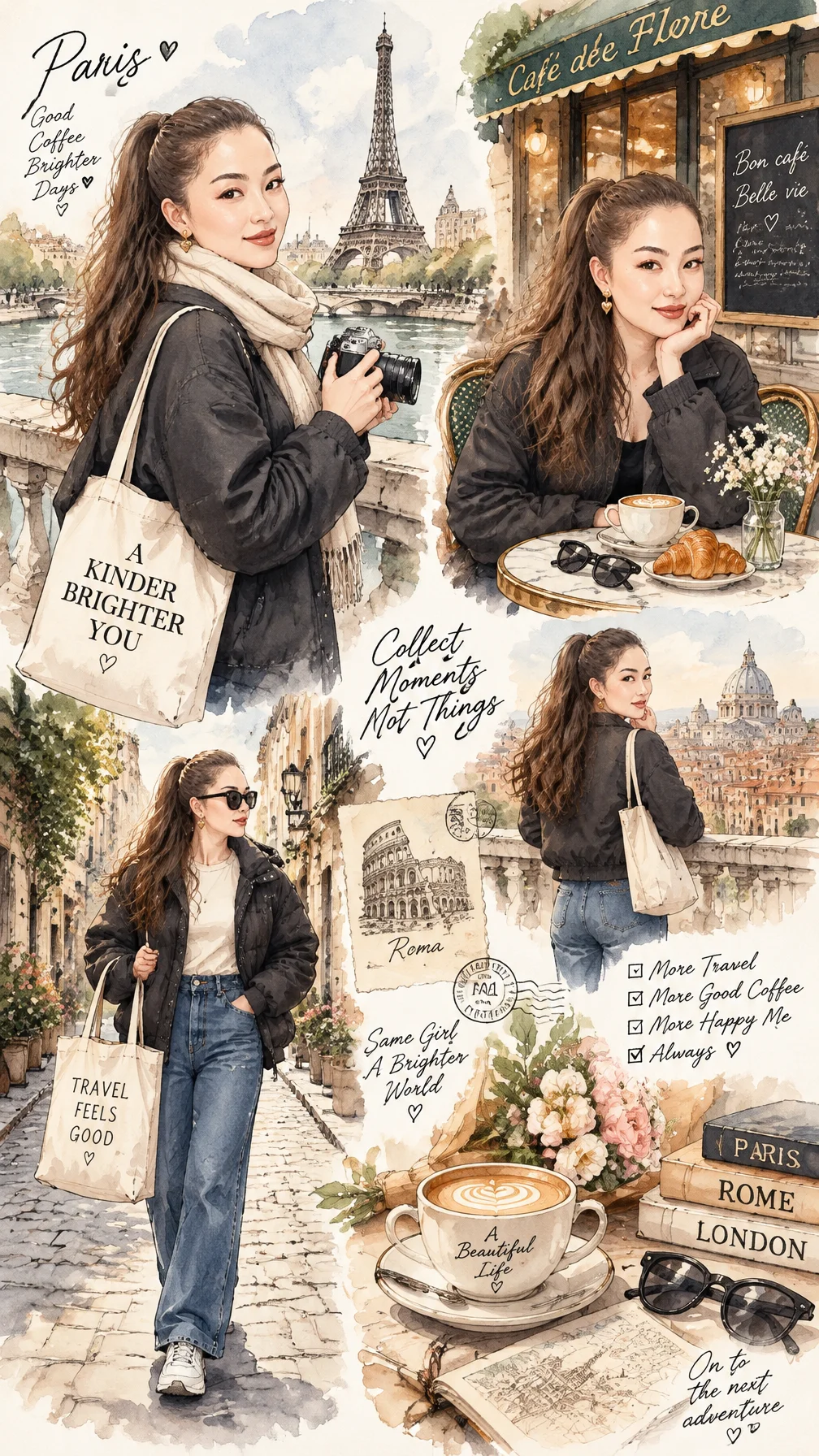
Elegant watercolor fashion illustration of a stylish young woman exploring scenic European cities and cozy cafés, soft hand-painted watercolor textures, expressive ink sketch outlines, long wavy dark hair, chic oversized jackets, denim jeans, tote bags, sneakers, vintage camera, candid travel moments, historic streets, warm café lighting, pastel neutral tones, airy white background, delicate brush strokes, luxury fashion editorial meets travel sketchbook diary, Pinterest aesthetic, cinematic sunlight, modern feminine vibe, ultra detailed, elegant urban lifestyle artwork, timeless chic atmosphere, 8K masterpiece.

GPT Image 2.5
Create an exceptionally sophisticated, contemporary architectural art poster featuring...
创意灵感2:3

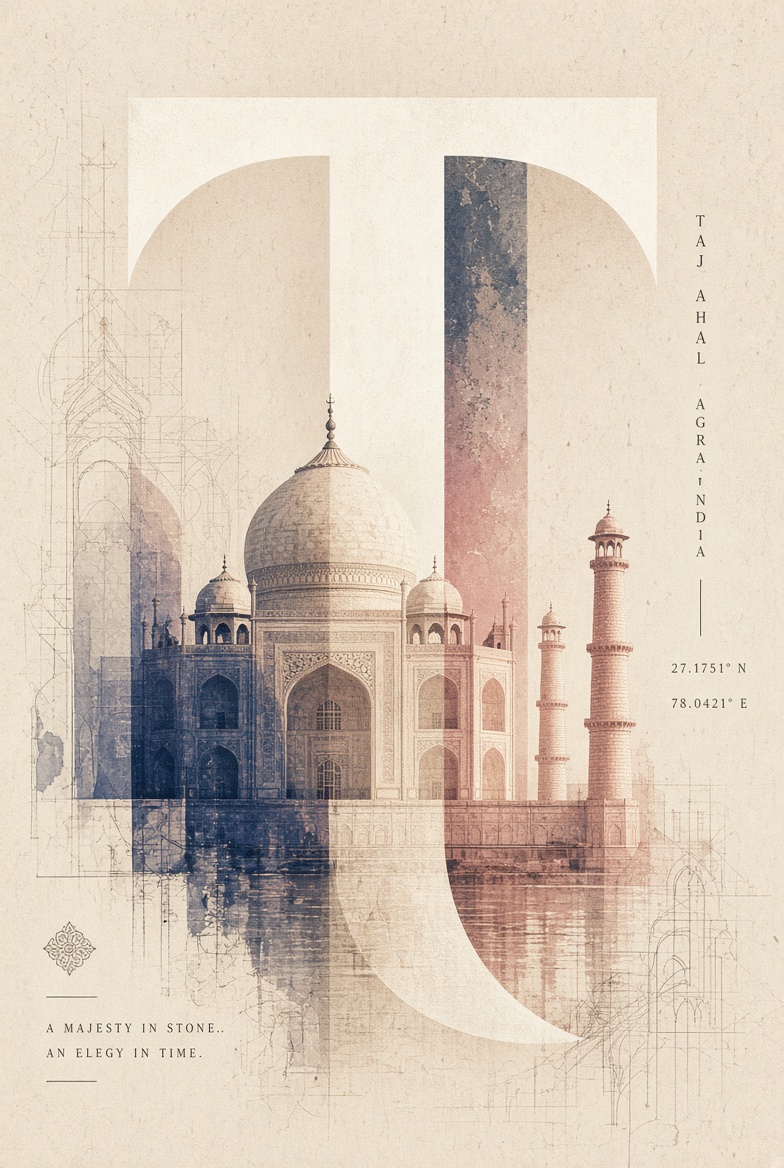
Create an exceptionally sophisticated, contemporary architectural art poster featuring [LANDMARK NAME], [CITY], [COUNTRY]. 1. GIANT TYPOGRAPHIC COMPOSITION Feature one enormous, oversized uppercase letter associated with the destination name as the central graphic element. The letter should dominate the composition, extending almost across the entire poster. Use bold, elegant, geometric typography with distinctive curves and negative spaces. 2. LANDMARK INTEGRATION Seamlessly integrate a highly detailed architectural photograph or realistic architectural illustration of [LANDMARK NAME] into and across the oversized letter. The landmark should appear to emerge from the typography, partially overlap its boundaries and interact naturally with its shape. Preserve the landmark’s authentic architectural details, proportions and recognisable silhouette. Create an artistic double-exposure effect where the architecture and typography become one unified visual composition. 3. DISTINCTIVE COLOUR TREATMENT Choose a unique colour palette inspired by the destination’s cultural identity, national colours and architectural character. Use two or three contrasting colours within the oversized typography. Apply translucent colour overlays across selected sections of the landmark, creating a beautiful combination of architectural photography, coloured light and graphic shapes. Every new destination must receive a different colour combination. Never repeat palettes. 4. TEXTURE & BACKGROUND Use a warm ivory, soft white or subtle textured paper background. Introduce delicate architectural sketch marks, distressed ink textures, faded photographic grain and subtle print imperfections around the central composition. Keep the surrounding space clean and uncluttered. 5. EDITORIAL TYPOGRAPHY Include the following information: [LANDMARK NAME] [CITY NAME] [COUNTRY NAME] Add small vertical typography along one side, geographical coordinates and a subtle destination-inspired tagline. Use sophisticated editorial typography with carefully balanced spacing. 6. ART DIRECTION Luxury architectural editorial design, experimental typography, architectural double exposure, contemporary Swiss graphic design, oversized letterforms, cinematic monochromatic photography, translucent colour blocking and minimalist gallery poster aesthetics. 7. FINAL PRESENTATION Create a visually striking, intellectual and artistic collectible landmark poster. The architecture must remain recognisable while becoming an integral part of the oversized letter. Vertical 4:5 composition, premium art-print quality, exceptional visual balance and sophisticated negative space. Avoid ordinary travel-poster layouts, decorative clutter, excessive colours and generic typography.

GPT Image 2.5
Ultra-realistic fine-art double-exposure portrait, 85mm lens, soft diffused light, drea...
创意灵感3:4

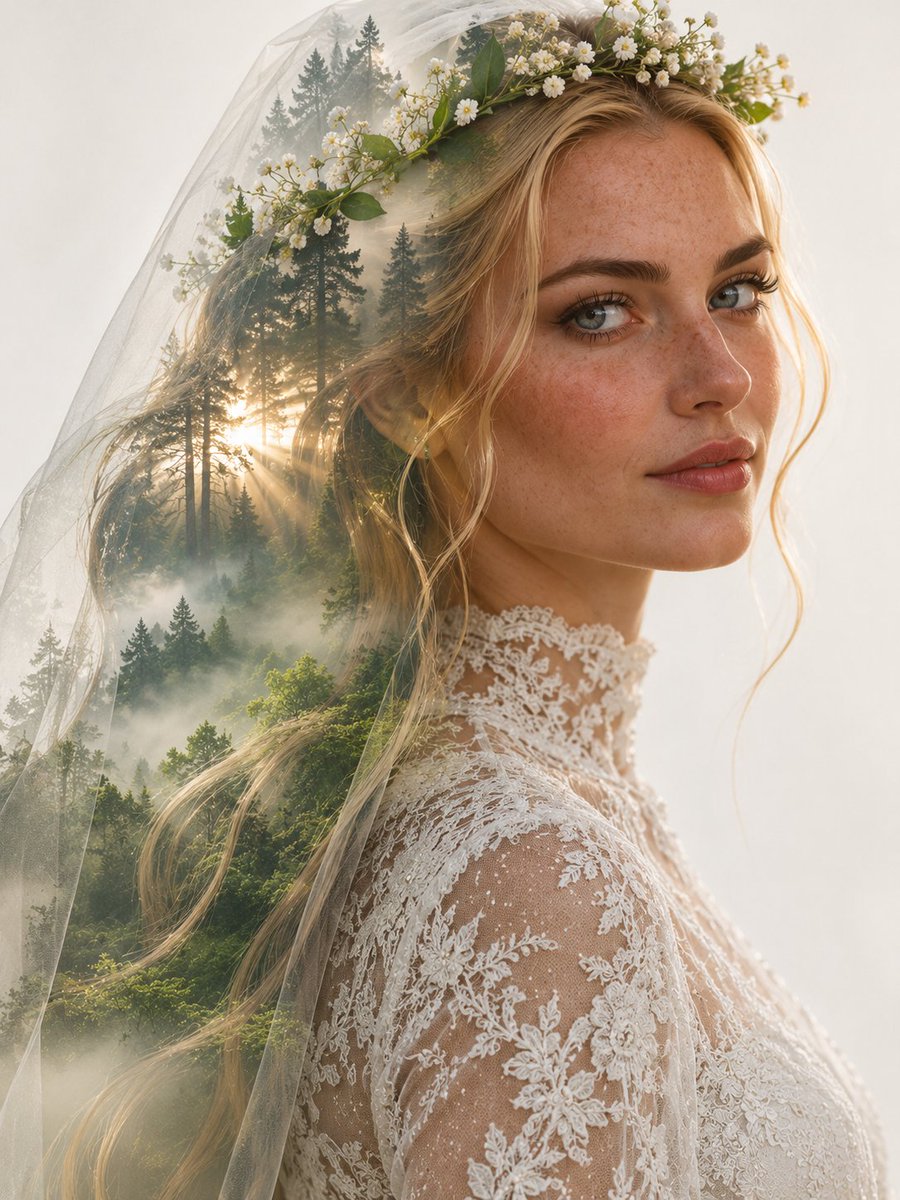
Ultra-realistic fine-art double-exposure portrait, 85mm lens, soft diffused light, dreamy and clean. Shot: Head-and-shoulders double exposure: her face stays clear, and the inside of her hair and veil blends into a misty green forest. Hair/outfit: Long blonde hair under a sheer veil with a small flower crown; high-neck white lace wedding dress with long sleeves. Pose/expression: Face turned three-quarter to the camera, serene soft smile. Setting/light: Plain pale background; forest trees, fog and sun rays appear only inside her hair and veil silhouette; soft front light on the face. Palette/framing: white, moss green, soft gold. Head to chest, vertical 3:4. Negative: no text, no watermark, no extra fingers, no distorted face, no clutter.

GPT Image 2.5
A cinematic vertical 35mm photograph captured at eye level — an evocative over-the-shou...
女性美学2:3

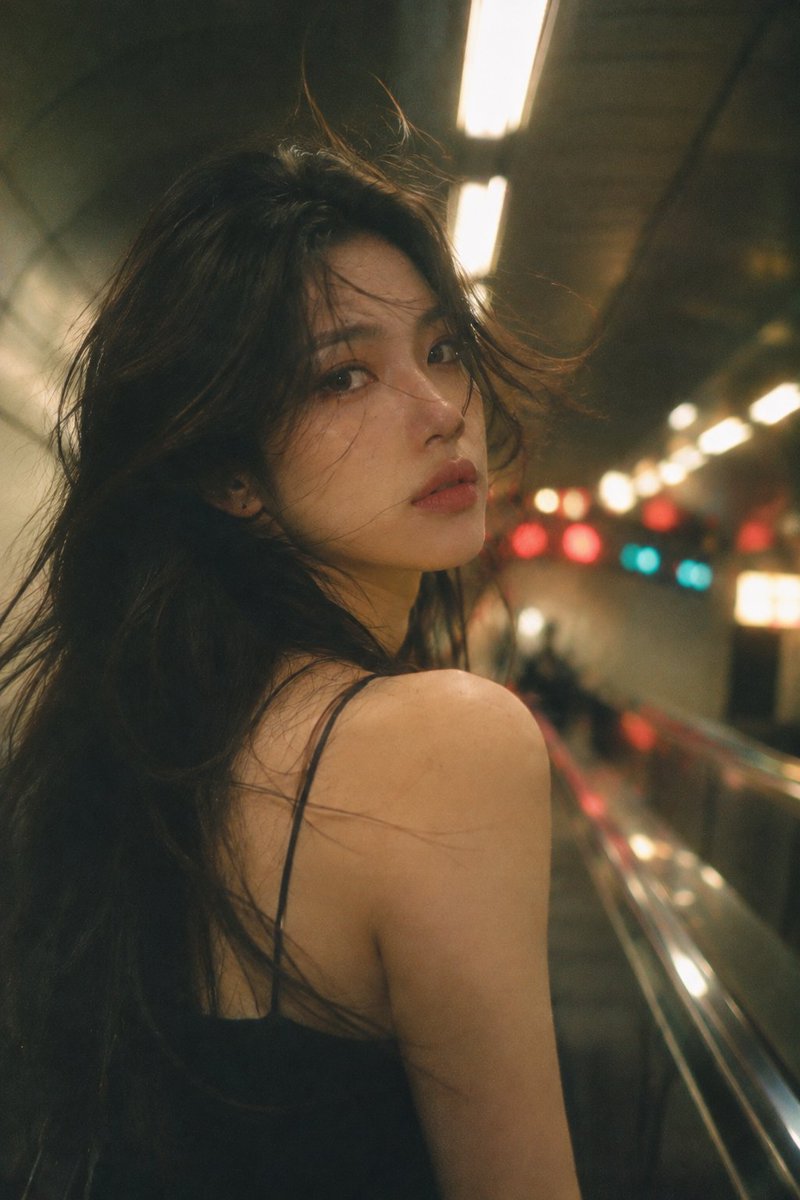
A cinematic vertical 35mm photograph captured at eye level — an evocative over-the-shoulder medium portrait of a stunning young East Asian woman looking back toward the camera while riding a dimly lit subway escalator. She possesses delicate, melancholic beauty with expressive dark eyes and natural lips, casting an enigmatic glance over her shoulder. Her long, layered jet-black hair blows freely in the underground draft, with loose strands sweeping across her cheeks and face with realistic kinetic motion. She wears a minimalist black spaghetti-strap slip top that reveals elegant collarbones and bare shoulders. The setting is a vintage metro tunnel with escalator railings receding into deep perspective. Overhead linear fluorescent lights glow with a soft amber-green halation bloom, while the distant terminal melts into colorful circular bokeh of red, cyan, and warm white, creating a moody, nostalgic urban atmosphere reminiscent of 90s cinema. Shot on a fast 50mm vintage prime at f/1.4 with soft diffusion filtration and authentic 35mm film grain in an M1 cinematic narrative register. Genuine human skin with fine pores, biological warmth, realistic wind dynamics on hair, and rich color-negative film roll-off — cinematic frame, strictly no CGI, no 3D render, no plastic skin, no artificial smoothing.

GPT Image 2.5
Transform my uploaded photo into a standalone, premium-quality 3:4 vertical design post...
女性美学3:4

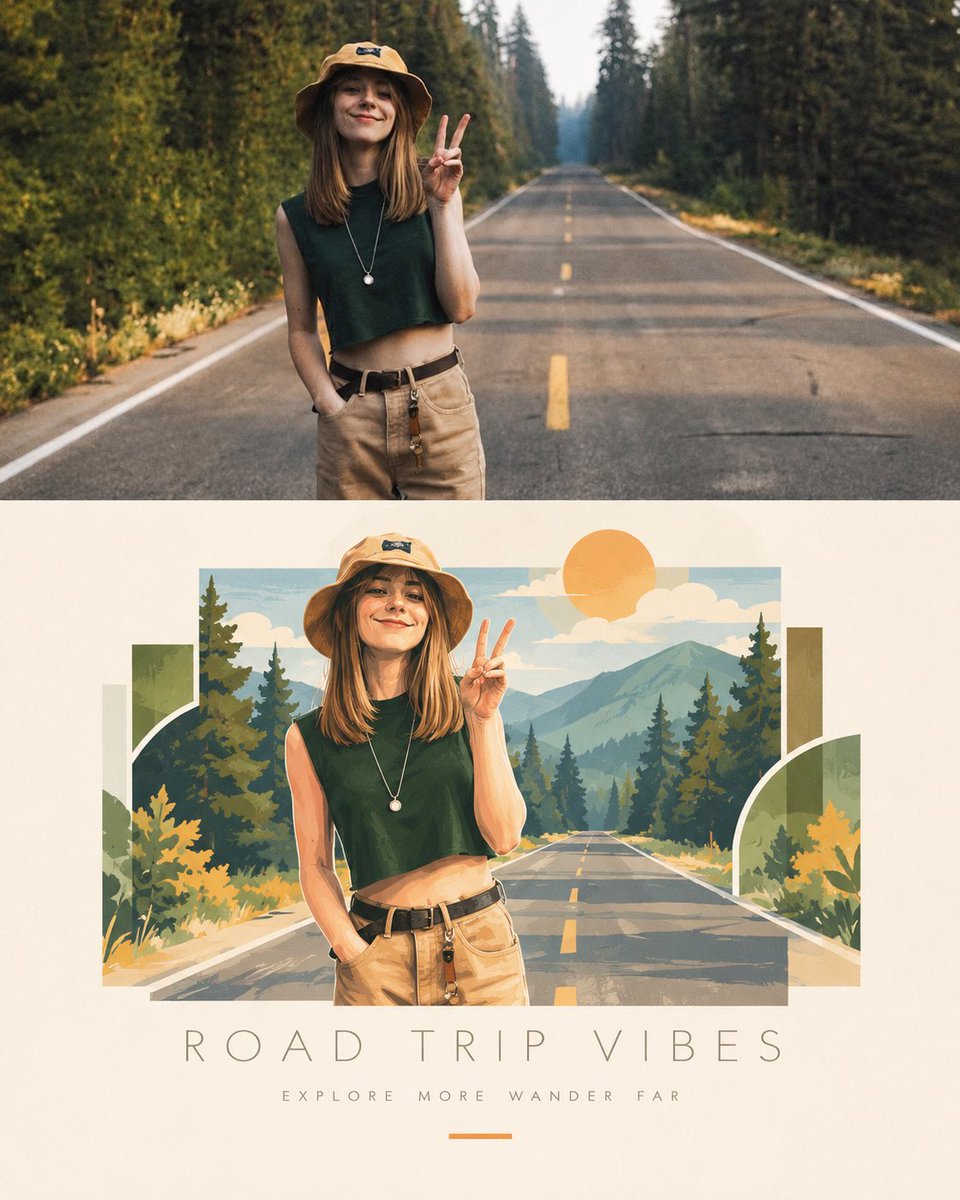
Transform my uploaded photo into a standalone, premium-quality 3:4 vertical design poster. Divide the entire canvas into two perfectly equal horizontal sections: the top half (50%) and the bottom half (50%). The upper section should feature realistic photography, while the lower section should present an abstract visual symbol derived from the core identity of the subject. TOP HALF – REALISTIC PHOTOGRAPHY Preserve the original subject's structure, realistic textures, natural lighting, shadows, and original color atmosphere. Apply only subtle, sophisticated color grading to achieve the aesthetic of fine-art photography and independent editorial publications. The background may be naturally extended to fit the canvas, but never stretch, distort, or alter the original subject. BOTTOM HALF – ABSTRACT VISUAL IDENTITY Extract the photograph's essential visual characteristics: the subject's silhouette, structure, posture, and narrative relationships. Do not recreate the entire object. Instead, reduce it into a recognizable abstract visual symbol. Use geometric deconstruction, modular shapes, structured lines, negative space, and symbolic elements to create a central visual identity inspired by premium branding and experimental design systems. Focus on the subject's core character rather than minor details. Even with minimal geometric elements, the abstract symbol must remain visually connected to the original photograph. VISUAL STYLE & DESIGN LANGUAGE Post-digital graphic design, deconstructed Swiss design, generative symbol systems, and diagrammatic abstraction. Build a systematic visual language using geometric modules, fine lines, circular trajectories, grids, micro-symbols, numerical indexing, and abstract nodes. Create visual tension between: - Order × Imperfection - Precision × Handmade Traces - Digital × Analog - Rationality × Emotion Achieve strong visual recognition using the fewest possible elements. Keep everything minimal and avoid unnecessary complexity. COMPOSITION & LAYOUT Maintain a highly restrained composition. The abstract symbol must be the sole visual focal point, positioned centrally or slightly off-center, surrounded by generous negative space. Avoid excessive icons, decorative elements, or infographic-style layouts. The overall aesthetic should resemble the core visual identity of contemporary art institutions, architectural studios, experimental creative labels, and premium design brands. TYPOGRAPHY & DETAILS Typography should function only as a supporting system component, never as a dominant headline. You may incorporate extremely small numbers, letters, or short phrases that interact with the abstract symbol through indexing and reference relationships. Use refined, restrained typography with the subtle annotation aesthetic of archival documents and experimental art publications. COLOR SYSTEM Extract the signature colors from the original photograph and reinterpret them as a cohesive brand color system. Introduce a small number of distinctive accent colors as functional visual codes, such as teal, blue, magenta, or orange, combined with gray-white or warm-white backgrounds for contrast. Colors should function as systematic identifiers rather than decoration. Avoid chaotic color combinations, cheap neon effects, and generic commercial gradients. PRINT TEXTURE & MATERIALITY Incorporate subtle material effects inspired by: - Xerox texture - Risograph grain - Print registration errors - Scanner noise - Subtle paper texture Add delicate printing misalignment, fine grain, scanning noise, and slightly imperfect edges to give the digital symbols the tactile quality of physical print. FINAL OBJECTIVE Extract an independent and self-contained visual DNA from the original photograph. The final result should feel like a sophisticated, minimal, culturally meaningful abstract logo with a strong visual identity and systematic design language.
GPT Image 2.5
Style: Ultra-realistic bright fairytale portrait, soft clean daylight, 85mm lens, light...
女性美学3:4

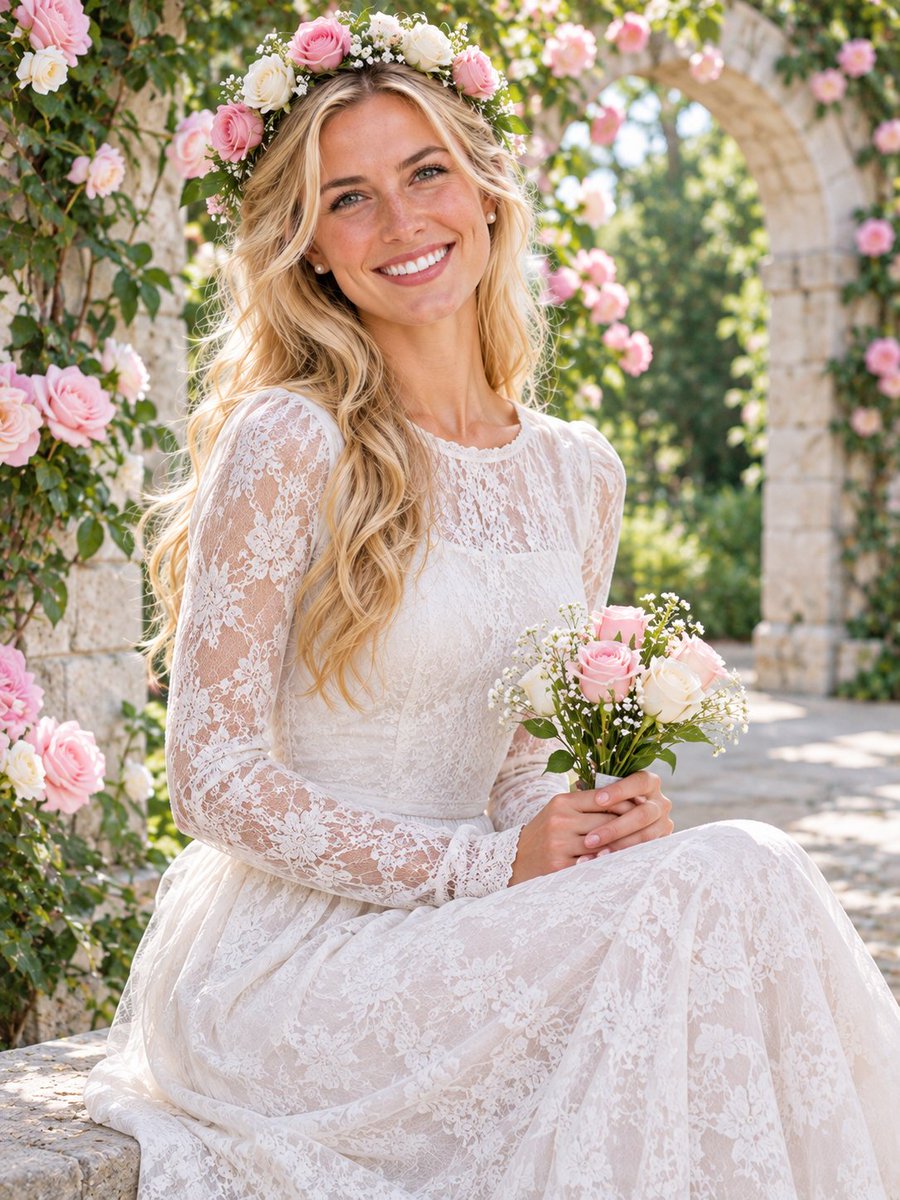
Style: Ultra-realistic bright fairytale portrait, soft clean daylight, 85mm lens, light dreamy colors, face clear and glowing. Main Prompt: Create an image of a model with long blonde hair in soft curls with a crown of white and pink roses, wearing a long-sleeve white lace gown with a modest neckline, sitting in a sunlit garden with a stone arch covered in roses. Hands gently holding a small bouquet, a warm gentle smile toward the camera. Three-quarter portrait. Vertical portrait format 3:4. Negative Prompt: no text, no watermark, no extra fingers, no dark tones, no clutter.

GPT Image 2.5
Create a premium artistic travel poster inspired by the uploaded photograph. Use a soph...
海报与版式3:4

Create a premium artistic travel poster inspired by the uploaded photograph. Use a sophisticated 3:4 vertical composition divided into two sections. TOP HALF (50%): Preserve the original photograph as a breathtaking, photorealistic landscape. Maintain natural lighting, realistic textures, atmospheric depth, and the original scene's composition. BOTTOM HALF (50%): Transform the main subject or location into a beautiful hand-drawn editorial illustration. Use Japanese vintage poster aesthetics, delicate ink outlines, watercolor textures, geometric shapes, abstract patterns, botanical elements, and flowing organic lines. DESIGN STYLE: Minimalist Japanese-inspired graphic design, Scandinavian aesthetics, muted navy blue, warm terracotta, dusty beige, soft grey, and off-white palette. Add subtle paper grain, imperfect hand-painted textures, collage elements, and carefully balanced negative space. LAYOUT: Keep the illustration centered and visually connected to the photograph above. Add small decorative details, geometric frames, dotted patterns, and elegant botanical sketches. Include a tiny Japanese-inspired typography element at the bottom. Overall aesthetic: Premium art gallery poster, vintage travel magazine, contemporary Japanese illustration, sophisticated editorial composition, handcrafted artistic finish. High detail, clean composition, beautiful visual balance, professional graphic design, 3:4 portrait ratio.

GPT Image 2.5
将上传的每一张照片转换成独立的高级编辑比照海报。每张照片都要独立地处理,避免将图片或主题、颜色或不同照片的元素结合。使用严格的3:4比例肖像画布,水平分成精确的两种平等的50...
人物与角色3:4

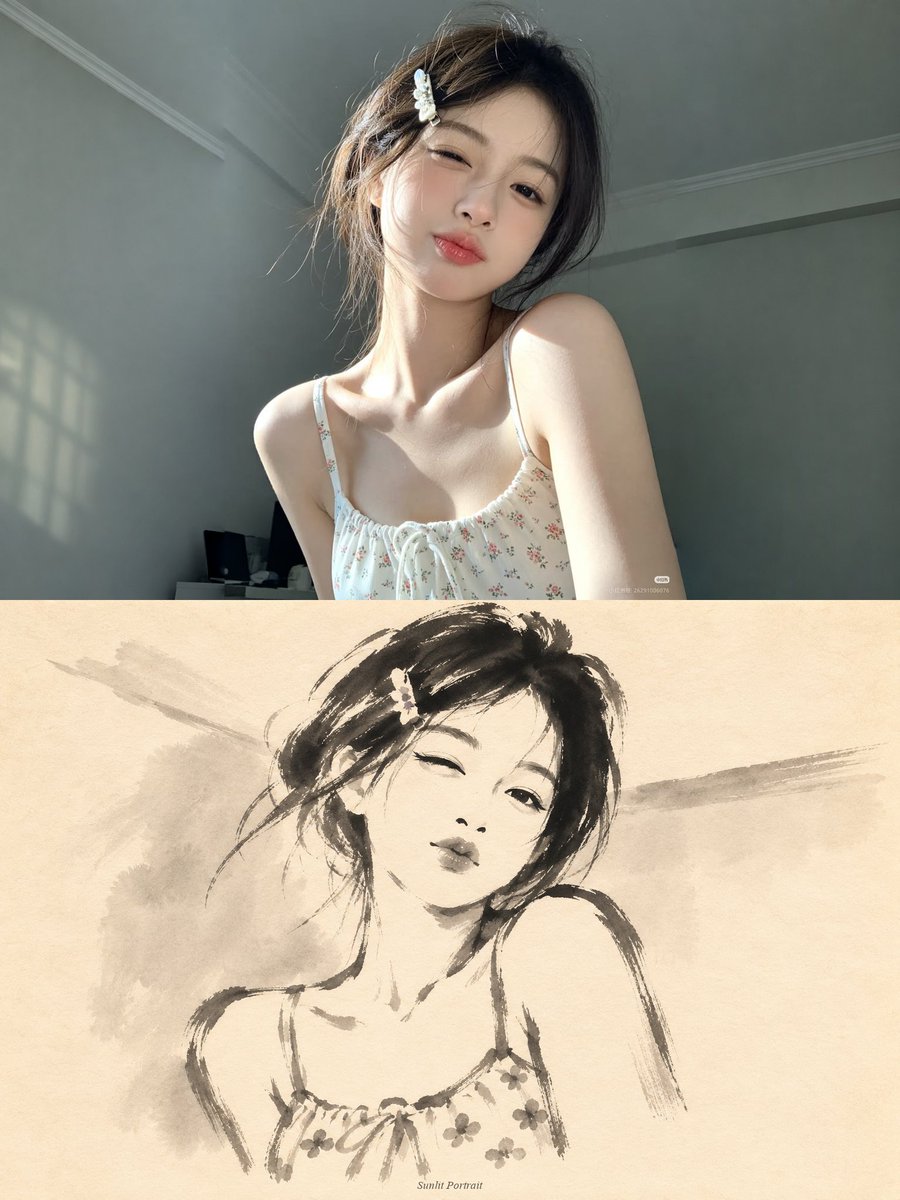
将上传的每一张照片转换成独立的高级编辑比照海报。每张照片都要独立地处理,避免将图片或主题、颜色或不同照片的元素结合。使用严格的3:4比例肖像画布,水平分成精确的两种平等的50%部分,中间部分保持无缝连接。上半部分 — 原创摄影:忠实地保留原创照片,包括主题身份、面部特征、表情、姿势、比例、构图、相机角度、框架、真实的纹理、自然的照明和原创的色彩氛围。只添加微妙的专业编辑色彩评分,用于精致的艺术杂志或展览美学。如果必要,自然地扩展周围的背景,不要伸展、扭曲、替换或修改任何主题。保持最接近的原创照片画法。不要添加文字、边框、图形或装饰元素。下半部分 — 表达性的中国墨水涂鸦画:重新解释同一张照片作为真实的传统中国手工墨水画(Xieyi / Sumi-e)在稍微变老的温暖象牙色Xuan米纸上,从上方直接观察。从照片中抽取最可识别的主题、轮廓、手势、空间关系和构图结构,保留它们的相对位置、比例和视觉层次。重建场景使用表达性的书法笔触、五到六种色调的黑色和灰色墨水、干刷纹理、飞白笔触、湿墨涂鸦和宽广的空白空间。避免摄影真实主义、精确的轮廓、过度的细节和字面追踪。遵循“一幅画”的原则,宽广的空白空间,一亿点的注重。画面应该占占据下方画板的约80%,留出自然的空白米纸边缘。 用淡淡的墨水和大气中的空虚感呈现远处元素,中间地平的主题用层次分明的中间地平的主题,用多层的中间地平的墨水和深色墨水涂抹,前景用大胆的笔触涂抹。保留原图的左右和上下排列。只在现有有意义的视觉元素中,例如服装、雨伞、灯笼、花朵、屋顶细节或焦点物体中,引入只一个小巧精心地位置的紫色点缀。紫色点缀必须极其小、被限制且自然地融入画作中,从而永远不出现作为单独的图形、标志、印章或装饰性标记。绝对无封印和无框规则:不要在整个图片中生成任何传统的印章、艺术家的签名印章、红色方块、红色长方形、红色轮廓、红色边缘、角落标志、盒子标志、字母标志、装饰性标志、水印、标志或印章等。下方右角必须完全不受封印、标志、红色标记、标记盒子和装饰性元素的影响。所有外边和纸张边缘必须保持干净、自然质地和未装饰。颜色限制:只在画作中使用五到六种单色黑色和灰色墨水,温和地呈现出黄色米纸,使用温和地黄色米纸和一条细小的紫色点缀,引入真实的墨水吸收。无需使用数字渐变、人工纹理、真实的阴影、或数字过滤的摄影。字体:在画作下方只在字母上精心绘制的英文字母中添加一个极小的线条,源自照片的可识别位置或背景。 如果精确的地点不明,请使用简体中文的简短描述英文名称,而不是编造地理位置。除本文、字母、数字、标志、字幕、标签、签名、水印或印刷品在海报上任何地方,除本文中已可见的真实细节外,其他文本、字母、数字、标志、字幕、标签、签名、水印或印刷品在海报上都没有。最终的美学:真实摄影 × 经典的中国式表达墨画 × 简约的编辑设计。安静、诗意、克制、氛围感、复杂且空间丰富。创建一个令人惊叹的对比,照片真实与表达墨画抽象之间保持清晰的视觉对照。严格避免使用色彩鲜艳的插图、真实的水彩风景、过度的紫色、中国式的印章、红色角印章、红色方形轮廓、装饰框架、卡通美学、商业广告布局、重复的模板、发明的主题和不必要的细节。海报必须包含绝对没有红色印章、红色框架、红色盒子或底右角的印章或印章。

GPT Image 2.5
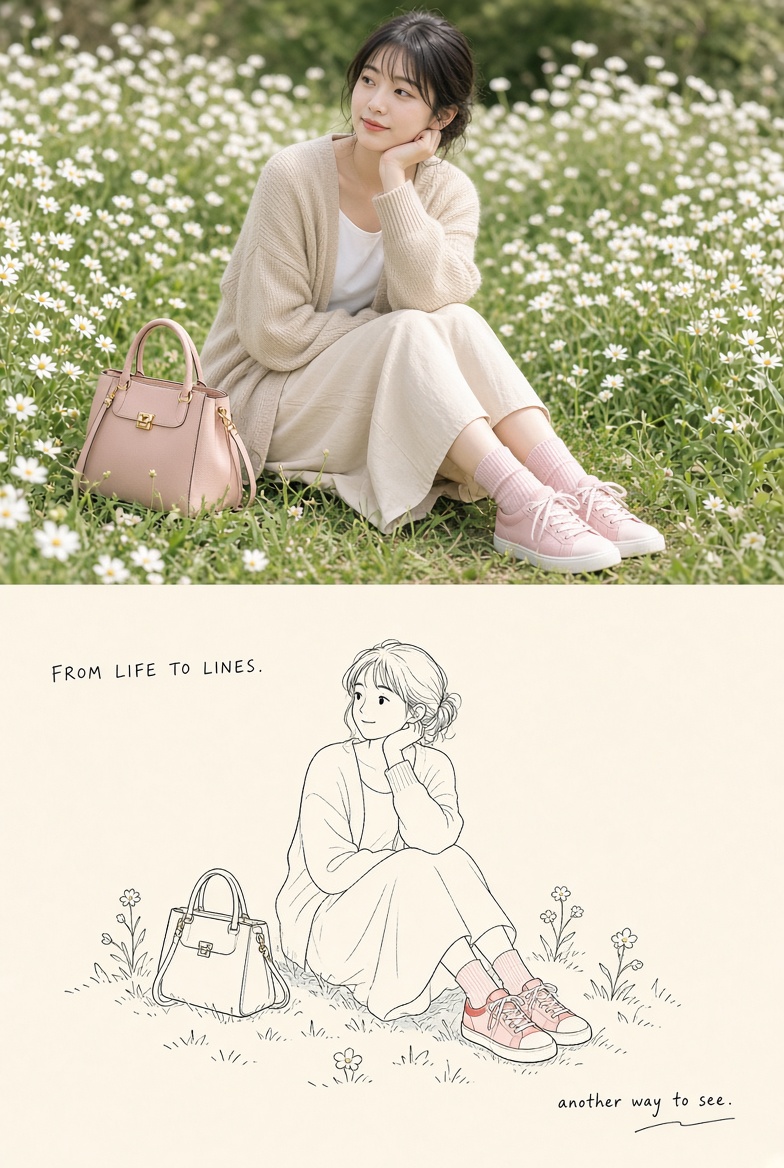
Task: Create a 3:4 Split-Panel Photo-to-Japanese Illustration Poster
海报与版式2:3

Task: Create a 3:4 Split-Panel Photo-to-Japanese Illustration Poster Transform the uploaded photograph into a vertically composed 3:4 comparison poster. The upper half displays the original photograph, while the lower half features a Japanese hand-drawn manga illustration with a limited-color print-poster aesthetic, faithfully redrawn from the same photograph. Divide the canvas into two equal horizontal sections, each occupying exactly 50% of the total height. Both sections must have the same width. The horizontal division should connect seamlessly, with no gap, border, overlap, or decorative separator. 1. Upper Half — Original Photograph - Preserve the original photograph exactly as it is. - Do not redraw, recolor, retouch, or add any text to the photograph. - Scale proportionally without stretching or distorting the image. - If necessary, crop peripheral background areas first while preserving the main subject and important visual details. - If the aspect ratio cannot be accommodated without compromising essential content, extend the edges with a light grayish-cream background. Never invent or reconstruct missing parts of the original photograph. 2. Lower Half — Japanese Hand-Drawn Illustration Redraw the photograph as a Japanese-inspired hand-drawn manga illustration with a minimalist, limited-color screen-print poster aesthetic. The original photograph is the exclusive source of the subject's identity, appearance, pose, structure, composition, layout, and relationships between objects. For people: - Preserve recognizable facial shape, hairstyle silhouette, expression, pose, gestures, and clothing category. - Simplify the face into clean manga-style shapes. - Render hair as grouped, flowing masses rather than individual strands. - Express clothing through elegant, simplified fashion silhouettes. For animals: - Preserve the species, body proportions, distinctive coat-color patterns, and pose. - Use simplified contours and flat color blocks to retain recognizability. For objects: - Preserve the original silhouette, essential structural details, and proportions. For landscapes and scenery: - Preserve the terrain, architecture, distribution of visible elements, and spatial depth. - Redraw the main landscape as a cohesive illustration rather than reducing it to an isolated object. Preserve all visible contact, overlap, and occlusion relationships. Depict only what is visible in the source photograph. Do not introduce new subjects, props, gestures, or structures outside the original image. If an additional style reference is provided, use it only for drawing technique, color palette, and layout. Never copy its subjects or content. 3. Linework and Color Treatment Use a consistent combination of delicate ink outlines, naturally simplified shapes, and limited-color flat fills. - Ink outline: Near-black "#02030B", with varied pressure, subtle line-weight changes, occasional pauses, and slightly irregular hand-drawn edges. - Keep internal lines minimal, retaining only the structural details necessary to define form. - Use clean, continuous, opaque color blocks. - Merge shadows into a small number of hard-edged color shapes. - Avoid individual hair strands, dense hatching, photorealistic textures, and excessive decorative detail. - Preserve the subject's essential natural colors and distinctive identifying color patterns. Lower-panel background: Light grayish cream "#ECEDE5". Primary accent: Warm red "#E9444B". Secondary accent: Muted blue-gray "#5296BD". Use red as the dominant accent and blue sparingly. Ensure that accent colors complement the subject without compromising its recognizability. on all sides. - Do not let the illustration touch the edges or fill the entire panel. - Do not use large background color blocks to fill the empty space. - Do not add a border around the illustration

GPT Image 2.5
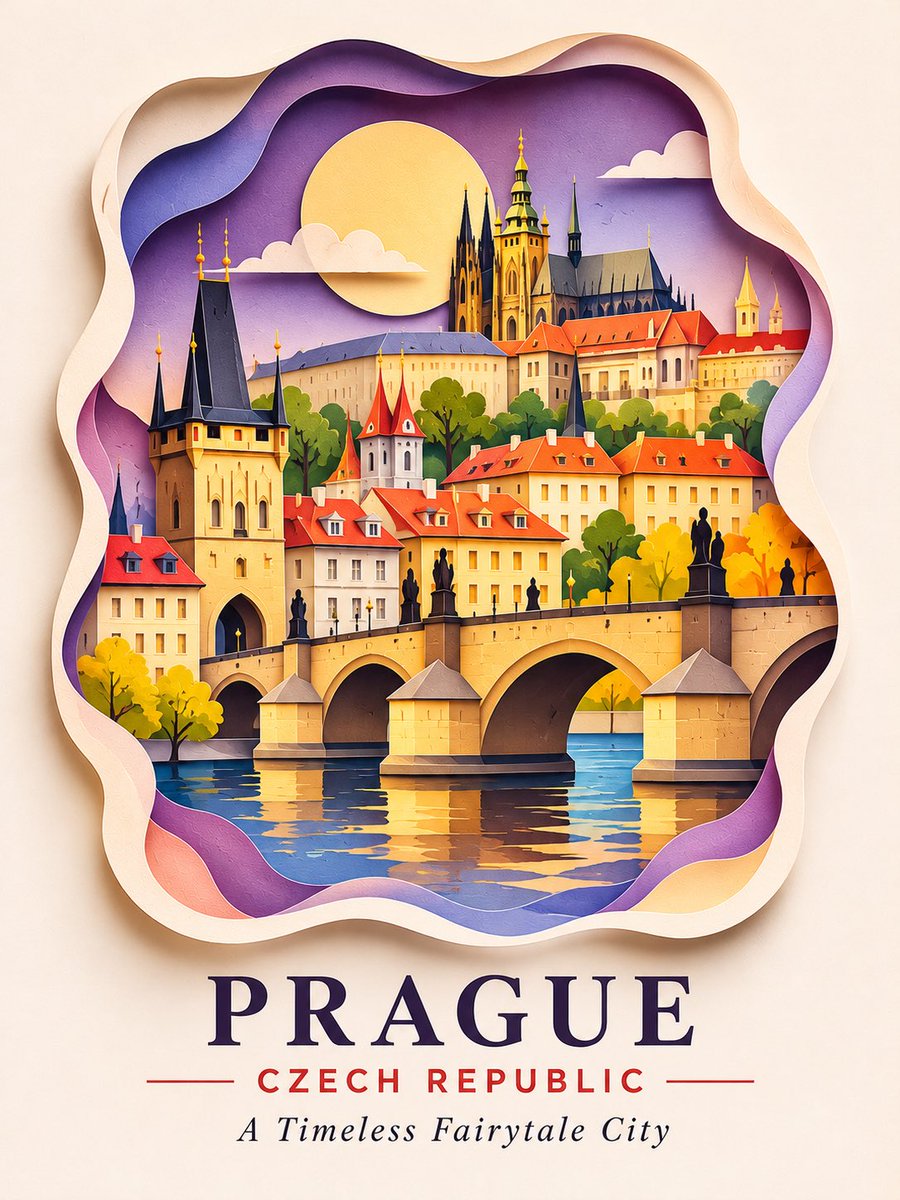
Create an extraordinarily beautiful 3D layered paper-cut architectural travel poster fe...
平面与数字设计3:4

Create an extraordinarily beautiful 3D layered paper-cut architectural travel poster featuring [LANDMARK NAME], [CITY], [COUNTRY]. Transform the destination into an enchanting miniature architectural world, crafted entirely from intricately layered, sculpted and cut coloured paper. 1. CENTRAL ARCHITECTURAL SCENE Feature the destination’s most iconic landmark as the main attraction. Preserve its authentic and recognisable architectural identity. Recreate buildings using multiple layers of carefully cut paper. Include distinctive rooftops, windows, arches, towers, domes, bridges or architectural details specific to the destination. Arrange smaller surrounding buildings to create a charming miniature cityscape. Make the entire scene resemble a beautifully handcrafted architectural diorama. 2. LAYERED PAPER LANDSCAPE Build an extraordinary three-dimensional environment. Flowing paper-cut hills and sculpted mountains. Layered rivers, lakes, coastlines or ocean waves where appropriate. Curved bridges, winding pathways and miniature staircases. Overlapping paper clouds, hills and architectural backgrounds. Intricate foreground elements framing the composition. Beautiful irregular paper-cut edges surrounding the scene. Every layer should have visible depth, delicate edges and realistic cast shadows. 3. UNIQUE DESTINATION DETAILS Include small architectural and cultural elements that make each destination instantly recognisable. Select details according to the location rather than repeating the same decorations. 4. DESTINATION-SPECIFIC COLOUR PALETTE Create a completely original colour identity for every destination. Use 6–9 harmonious shades inspired by its architecture, culture, landscape and atmosphere. Combine rich colours, soft pastels, contrasting paper layers and carefully selected neutral tones. Never repeat the same palette between different destinations. 5. THREE-DIMENSIONAL PAPER ART Authentic handmade paper-cut aesthetic. Multiple overlapping cardstock layers. Sculpted paper architecture. Delicate folded and curved paper details. Visible paper thickness. Soft realistic shadows between layers. Beautiful tactile textures. Intricate miniature craftsmanship. Gentle studio lighting. The artwork must look like a real handcrafted paper sculpture photographed professionally, not a flat illustration or plastic 3D render. 6. DISTINCTIVE POSTER COMPOSITION Place the entire architectural scene inside an elegant irregular organic paper-cut frame. Use a balanced vertical composition with: Large miniature architectural scene in the centre. Beautiful layered foreground. Subtle surrounding negative space. Soft neutral background. Realistic depth and dimensional shadows. 7. MINIMAL TYPOGRAPHY Below the artwork, write: [CITY / DESTINATION NAME] [COUNTRY] Add one short, elegant poetic tagline of approximately 3–6 words inspired by the destination. Use elegant uppercase modern typography for the destination name and a delicate refined serif font for the tagline. Keep typography minimal, correctly spelled and beautifully positioned. 8. FINAL ART DIRECTION A breathtaking fusion of miniature architecture, layered paper sculpture, handcrafted papercraft, whimsical storytelling and premium contemporary travel poster design. Extremely intricate craftsmanship, sophisticated colour harmony, realistic paper shadows, beautiful depth, exquisite architectural details and museum-quality presentation. Portrait 2:3 composition. No watermark, no unnecessary text, no photorealistic buildings, no plastic appearance.

GPT Image 2.5
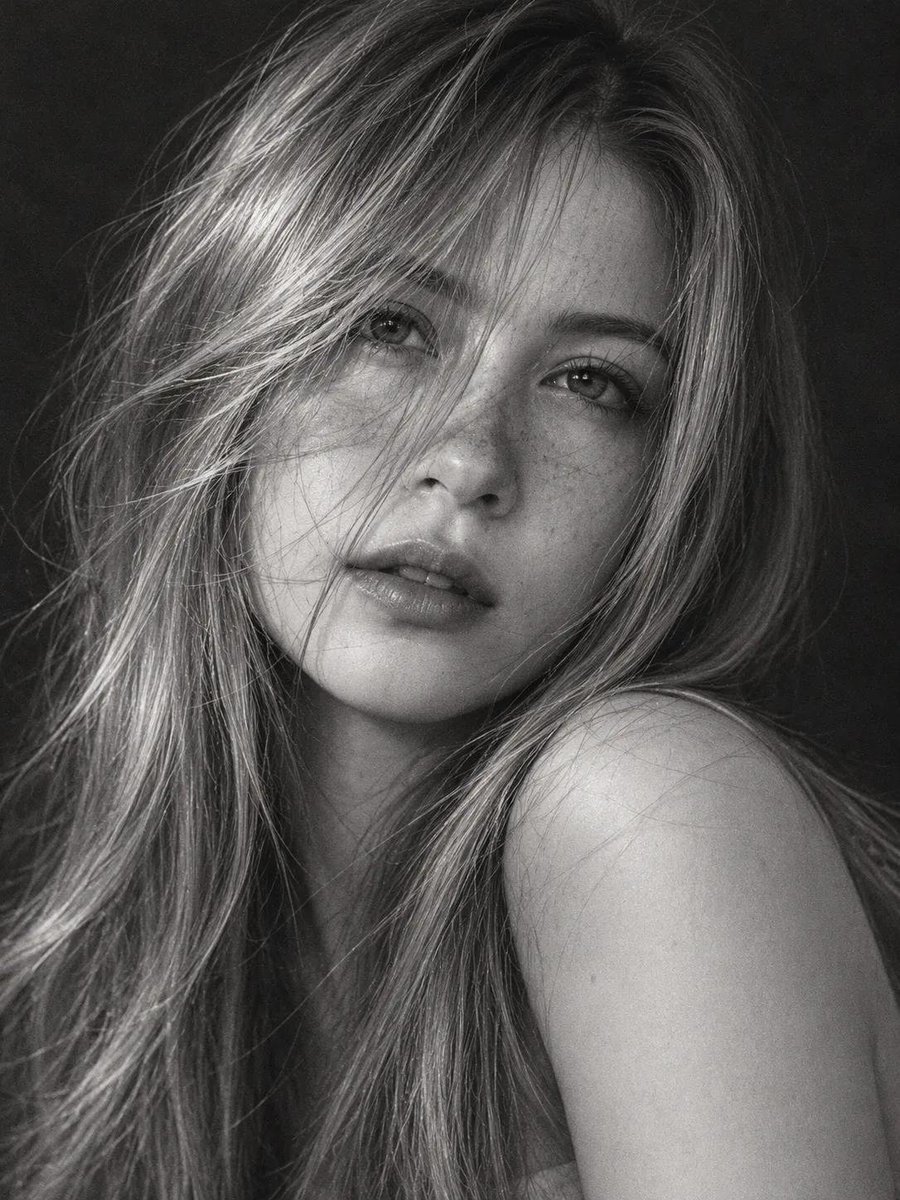
Ultra-realistic black and white editorial fashion portrait of a stunning young woman wi...
女性美学3:4

Ultra-realistic black and white editorial fashion portrait of a stunning young woman with long, naturally flowing, slightly messy blonde hair partially covering her face. Beautiful expressive eyes, delicate facial features, natural freckles, soft full lips, flawless yet realistic skin texture. She is looking directly into the camera with a mysterious, dreamy expression. Bare shoulders, elegant feminine pose, cinematic soft lighting, deep dark background, professional DSLR photography, 85mm portrait lens, shallow depth of field, exquisite details, natural film grain, luxury fashion magazine aesthetic, high contrast monochrome photography, 8K ultra HD, photorealistic, vertical 9:16 composition.

GPT Image 2.5
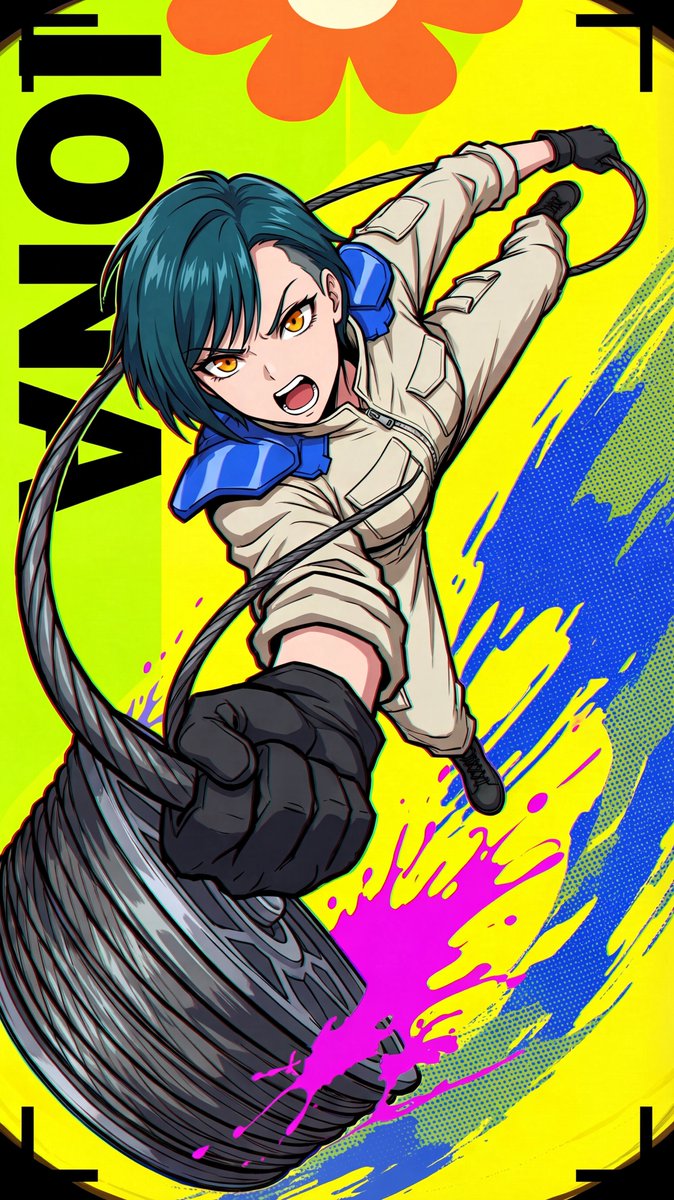
Full-bleed [ASPECT RATIO] original adult anime character key-art poster.
动漫与漫画9:16

Full-bleed [ASPECT RATIO] original adult anime character key-art poster. Camera: ultra-wide 14mm fisheye, lens almost touching the nearest hand or prop so it looms huge while the body shrinks into depth. Tilted horizon, curved edges, never eye level. Style: Japanese anime cel art, thick uneven hand-inked contours, one hard cel shadow, wide-open shouting mouth. Red/green/cyan misregistered line offsets along selected contours and hair. Character: [SUBJECT: adult, age, hair, fully closed practical clothing] Action: [ACTION: shouting, prop thrust at the lens] Layout: [LAYOUT: where the name, hero and impact shapes sit] Text: only "[NAME]", spelled exactly, as enormous heavy black upright block sans letters that interlock with the figure. No other words or signatures. Palette: acid lime #D8F000 + lemon yellow #F7DD20 ground, ink black #101216 letters and broken corner brackets, wet cobalt #0756C9 brush swipes with coarse halftone, hot magenta #E32FE3 splash, flat orange #FF913F / cream #FFF0C5 flower impact discs. Keep 15–22% flat empty field; texture only in motion wedges. Flat diffuse light, no glow, no glossy 3D.

GPT Image 2.5
Create an ultra-realistic candid street-style photograph of the person in the reference...
女性美学3:4

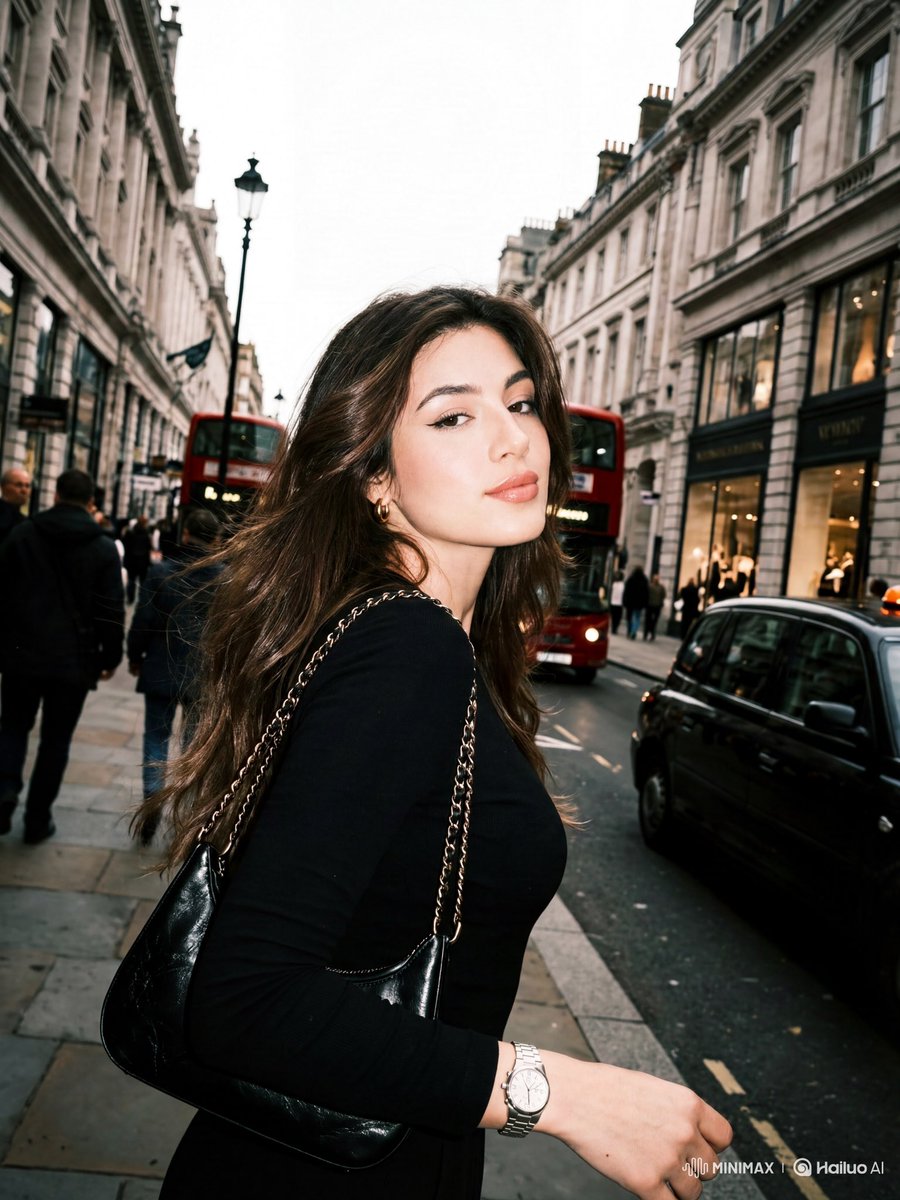
Create an ultra-realistic candid street-style photograph of the person in the reference image, walking through a busy European city street, inspired by London fashion photography. Subject & Styling: The subject wears a fitted black long-sleeve outfit, elegant gold hoop earrings, a silver wristwatch, and carries a glossy black leather shoulder bag with a gold chain strap. Long, naturally flowing brunette hair, subtle luxury makeup, and effortless model-like confidence. Scene & Background: Authentic London street atmosphere with historic European architecture, luxury storefronts, pedestrians, iconic red double-decker buses, and black London taxis. Overcast daylight with a naturally busy urban environment. Photography Style: Spontaneous paparazzi-style street photography, shot on a professional DSLR with a 35mm wide-angle lens, direct on-camera flash, realistic skin texture, natural facial details, slight film grain, crisp subject focus, and beautifully imperfect candid composition. Composition: Vertical 3:4 framing, eye-level perspective, natural body proportions, subject prominently occupying the foreground, realistic depth and perspective. Mood & Aesthetic: Effortless European fashion, quiet luxury, Pinterest street-style aesthetic, candid celebrity photography, editorial realism. Important: Preserve the reference person's facial identity, facial structure, hairstyle, and natural appearance. Avoid artificial beauty filters, CGI, plastic skin, or overly polished AI aesthetics.

GPT Image 2.5
Using my uploaded portrait as the identity reference, create a photo-booth collage: thr...
头像与社交媒体9:16

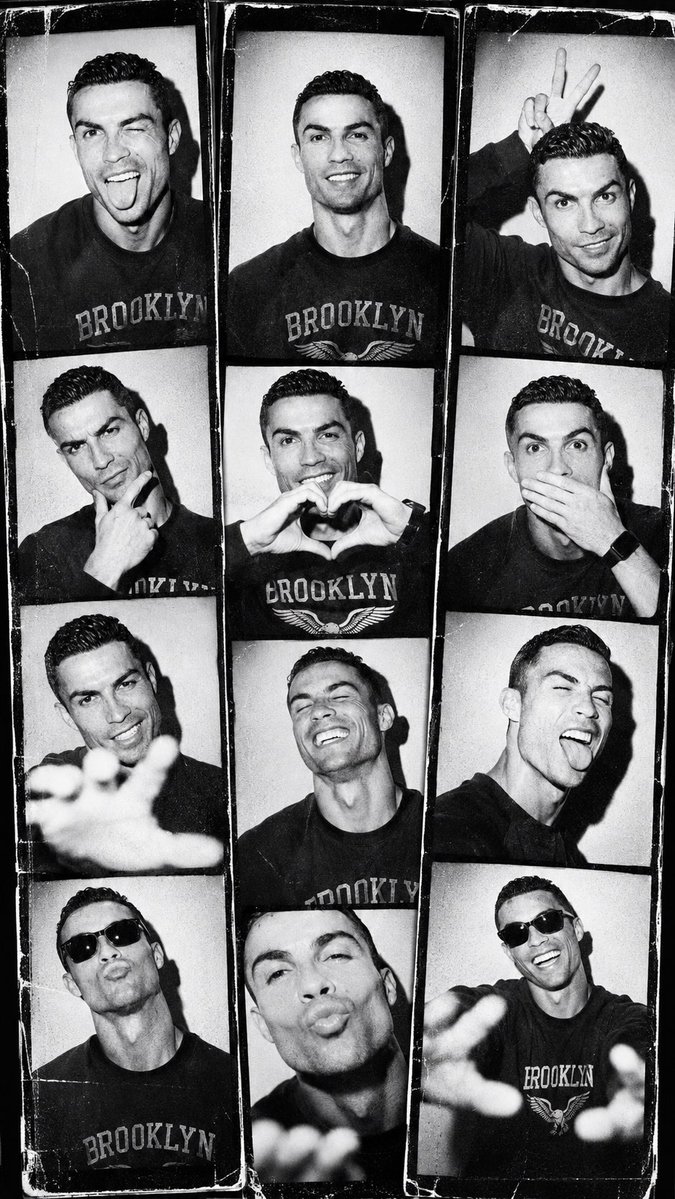
Using my uploaded portrait as the identity reference, create a photo-booth collage: three black and white vertical strips side by side misaligned, four photos in each strip, each strip slightly tilted to overlap in a 9:16 composition. Preserve the subjects’ facial identity, outfits, and hairstyles. Poses and expressions are varied, fun, and silly. Some photos have people partially cropped, completely cropped, switching places, closer to camera. Use harsh direct flash, extreme contrast, crushed blacks, blown whites, few midtones, and lost detail. Add coarse film grain, overexposure, thick black borders, and very light wear. Analog booth print.

GPT Image 2.5
Create a 3×3 image collage featuring the same beautiful young adult woman across all ni...
女性美学1:1

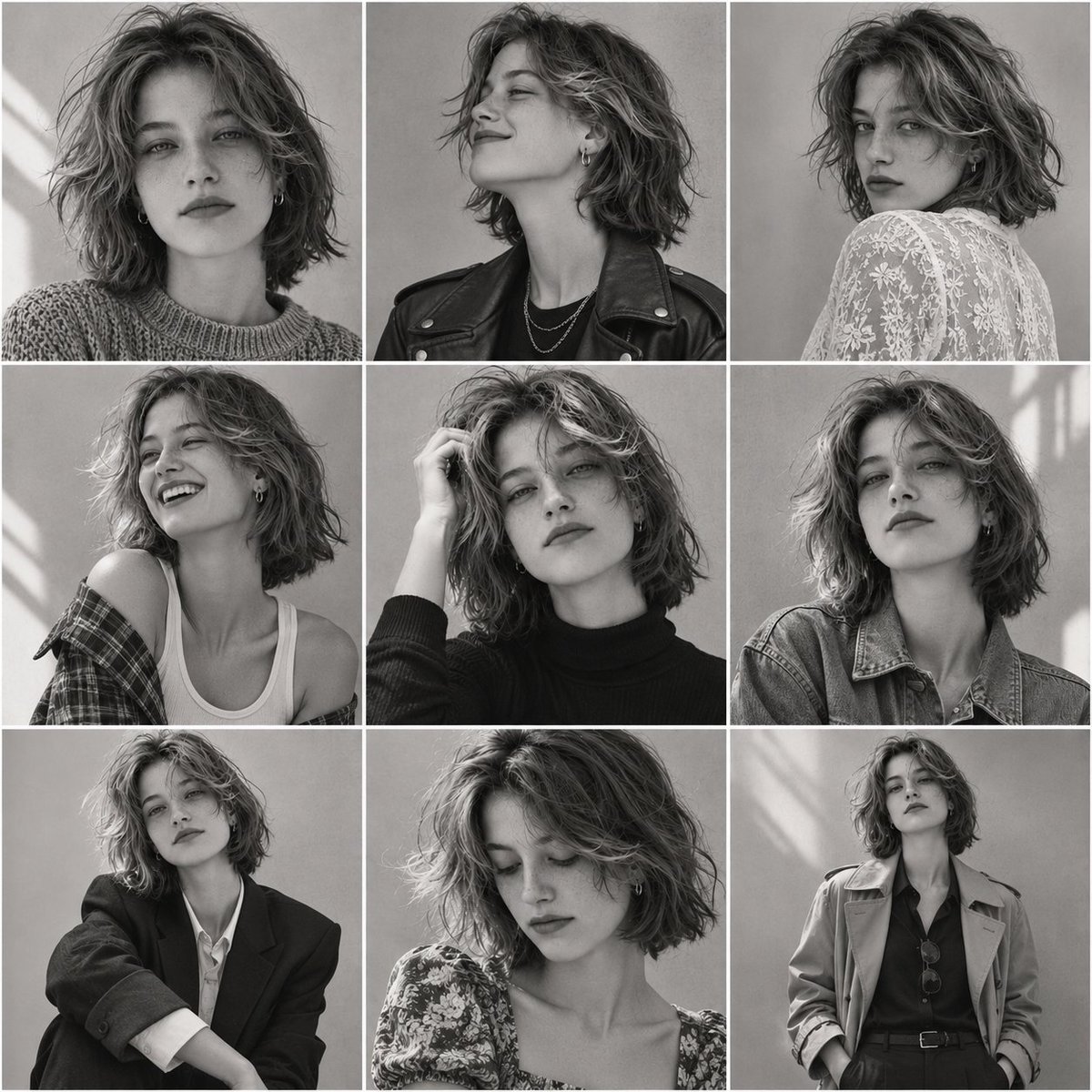
Create a 3×3 image collage featuring the same beautiful young adult woman across all nine frames. Maintain perfectly consistent facial identity, hairstyle, skin tone, facial features, and overall appearance in every frame. Subject: A beautiful 23-year-old woman with long, naturally wavy dark brown hair, expressive eyes, clear natural skin, soft facial features, and an elegant appearance. Wearing a stylish white outfit with minimal jewelry. Nine different shots: 1. Close-up portrait looking directly into the camera. 2. Side profile with a gentle smile. 3. Three-quarter angle, looking over her shoulder. 4. Natural candid laugh, looking away from the camera. 5. Close-up with one hand gently touching her hair. 6. Serious editorial expression with cinematic lighting. 7. Sitting casually, looking toward the camera. 8. Looking down with a soft, thoughtful expression. 9. Full upper-body portrait with a confident pose. Visual style: Ultra-photorealistic photography, natural skin texture, realistic facial details, soft cinematic lighting, professional fashion editorial photography, subtle color grading, 85mm portrait lens, shallow depth of field. Composition: Perfect 3×3 grid, nine equal-sized rectangular frames, clean straight borders, consistent subject identity throughout, no overlapping frames, no text, no logos, no watermarks. High-end photography quality, realistic proportions, beautifully detailed and visually cohesive collage.

GPT Image 2.5
Transform each uploaded photo separately into an independent 3:4 vertical poster, witho...
海报与版式3:4

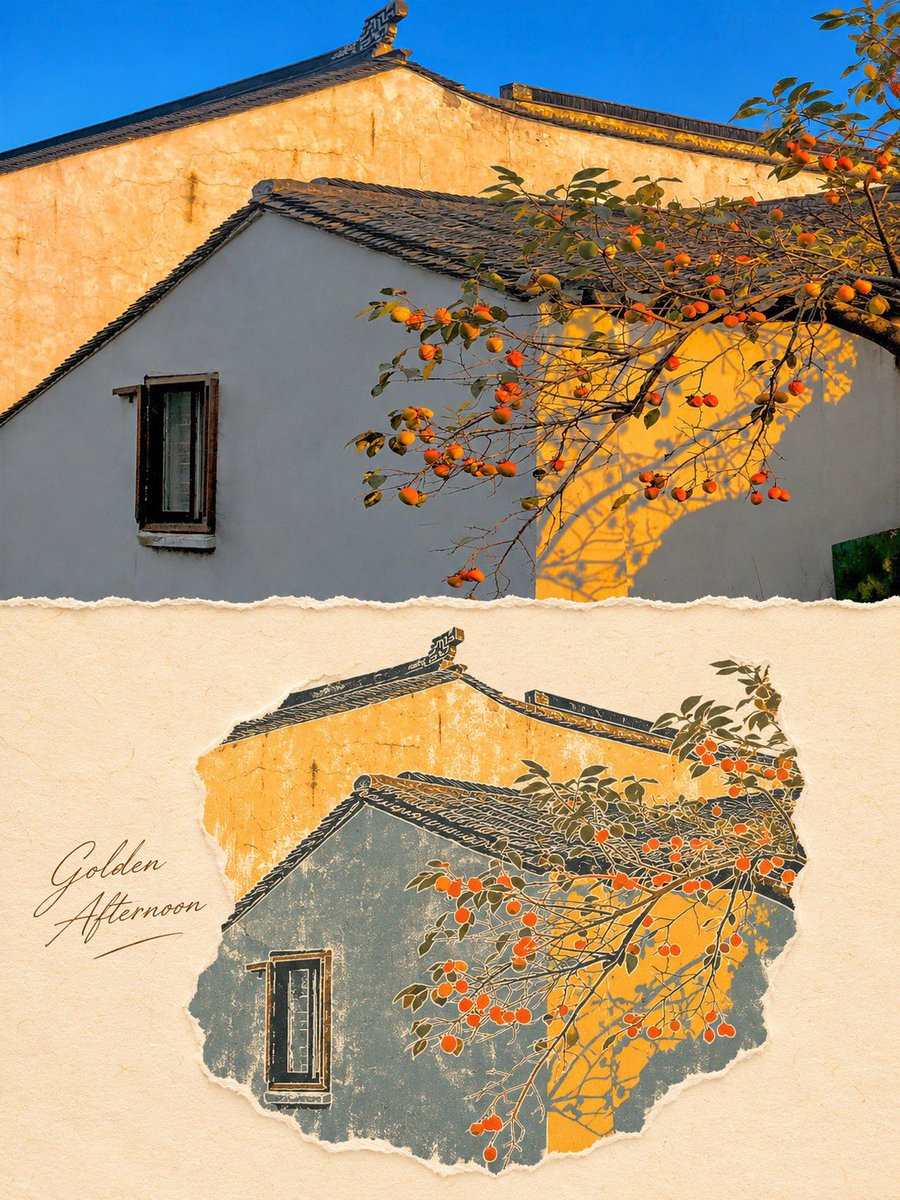
Transform each uploaded photo separately into an independent 3:4 vertical poster, without mixing images. The upper and lower halves should each occupy 50% of the composition, connected seamlessly at the center, with no visible frame or border. Upper Half — Original Photography Preserve the main subject, pose, proportions, spatial relationships, materials, lighting, and colors of the original photograph. Allow only subtle color correction, proportional cropping, or natural background extension. Do not distort, redesign, or alter the main subject. Lower Half — Abstract Graphic Interpretation Extract two or three recognizable visual characteristics from the same photograph, such as contours, movements, centers of gravity, or repeated visual rhythms. Use a minimal number of geometric color blocks, lines, cuts, overlapping printed shapes, and negative space to transform these features into independent abstract symbols that express movement and dynamic tension. Do not draw a complete representation of the original subject. Do not simply repeat, mirror, or duplicate the photograph. Visual Style — Deconstructed Swiss Design Follow the principles of digital imagery and deconstructed Swiss graphic design, emphasizing a single strong visual focus, restrained composition, and generous negative space. Extract one or two dominant colors and one supporting accent color from the original photograph. Combine these colors with a warm-white background, flat print-like color fields, extremely subtle paper grain, and slight local printing misregistration. Add only a few structurally meaningful lines, curves, and points. The design should feel experimental yet intentional, with strong visual rhythm, asymmetrical balance, and sophisticated editorial restraint. Typography Keep any text extremely small, understated, and readable. Typography should complement the composition without competing with the imagery. Restrictions Avoid large headlines, random fonts, watermarks, commercial UI elements, neon gradients, arbitrary geometric patterns, dense charts, heavy decoration, and outdated graphic design aesthetics. Final Aesthetic The finished poster should be concise, organized, contemporary, and visually striking, with a subtle handmade printing quality. Maintain a clear contrast between the realistic photographic upper half and the abstract graphic lower half while ensuring a seamless visual connection between them. The result should resemble a sophisticated experimental art poster created by an independent graphic designer, not a conventional photo collage or digitally filtered image.

GPT Image 2.5
Transform the uploaded reference image into a beautiful, premium editorial illustration...
海报与版式3:4

Transform the uploaded reference image into a beautiful, premium editorial illustration poster. Composition: Create a vertical 4:5 split-layout design. The upper half should display the original photograph in its realistic photographic style, preserving the subject's exact appearance, facial features, hairstyle, outfit, pose, and expression. The lower half should feature a beautifully stylized 2D illustration of the exact same subject, recreating the original photograph's pose, expression, clothing, and composition. Convert the subject into a charming, hand-painted digital illustration with soft brush textures, clean shapes, delicate outlines, warm skin tones, and beautiful artistic details. Background Design: Transform the original background into a creative illustrated environment. Add minimal geometric architecture, abstract shapes, subtle plants, soft natural elements, and a complementary color palette inspired by the original photograph. Poster Layout: Place the illustration inside a clean rectangular artwork frame, surrounded by a warm ivory or cream-colored background. Add a large elegant uppercase headline beneath the illustration, with a small complementary subtitle and a subtle decorative line. Typography: Use thin, sophisticated, widely spaced uppercase lettering. Choose a short title that matches the mood of the photograph, with a smaller minimalist tagline underneath. Art Direction: Modern Japanese editorial poster design, contemporary lifestyle illustration, soft pastel colors, warm sunlight, minimalist graphic design, artistic storytelling, premium magazine aesthetic. Important: Maintain the original person's identity and recognizable features. The illustrated version must clearly resemble the person in the original photograph. Keep the top photograph realistic and the bottom illustration artistic. Ensure both versions match perfectly in pose and composition. High-quality details, balanced layout, elegant negative space, professional art direction, 4:5 portrait poster.

GPT Image 2.5
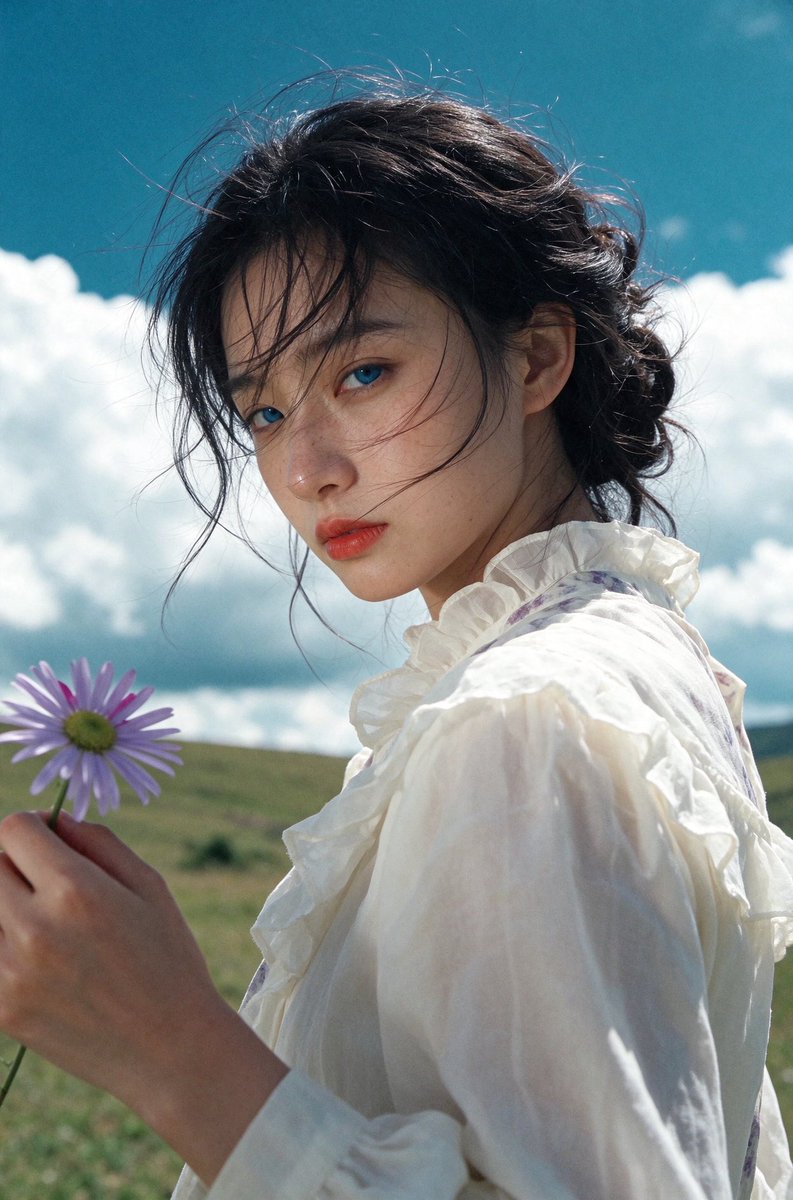
日系复古少女户外写真,成年东亚女性,黑色蓬松凌乱低盘发,风吹碎发遮挡半张脸,冷蓝色虹膜,零星自然雀斑,珊瑚红薄唇,清冷忧郁的神情,象牙白高领荷叶边衬衫,侧身回眸,手持一朵淡紫...
女性美学2:3

日系复古少女户外写真,成年东亚女性,黑色蓬松凌乱低盘发,风吹碎发遮挡半张脸,冷蓝色虹膜,零星自然雀斑,珊瑚红薄唇,清冷忧郁的神情,象牙白高领荷叶边衬衫,侧身回眸,手持一朵淡紫色雏菊伸向镜头,近距离广角透视,夸张的前景手部比例,面部清晰对焦,花朵与手部轻微失焦,开阔绿色高原草地,浓郁青蓝天空与白色积云,强烈直射自然日光,冷色环境补光,明亮高光,清晰的明暗转折,皮肤自然微纹理,轻微胶片颗粒,高饱和复古数码摄影色彩,非对称胸肩中近景,2:3 竖幅。

GPT Image 2.5
[Character] — while preserving their signature hairstyle, hair color, clothing structur...
动漫与漫画9:16

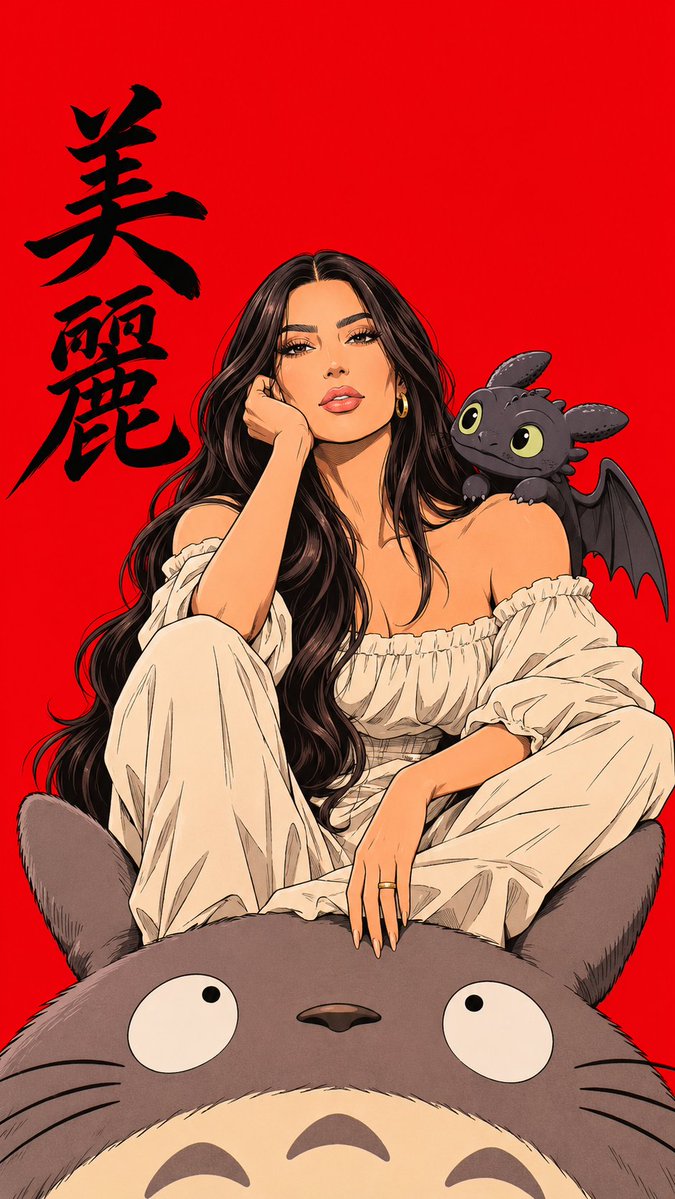
[Character] — while preserving their signature hairstyle, hair color, clothing structure, and iconic accessories — is reimagined in an independent Japanese manga illustration style. The artwork features finely hand-drawn manga-style linework, combining slightly thicker outer contours with fluid, delicate internal structural lines that have natural, organic variations. The character's proportions follow a stylized, slightly exaggerated manga aesthetic, with refined yet simplified facial features — particularly elongated, half-lidded eyes and a calm, relaxed expression. The hair is illustrated with clearly defined flowing strands and a few delicate flyaway hairs, while the clothing is depicted through clean, minimal folds. The coloring uses a minimalist, flat cel-shaded approach, characterized by broad, clean color blocks, selective sharp-edged shadows, and soft, subtle skin tones. A sense of three-dimensional depth is created through contours, overlapping forms, and clearly defined color planes. Presented in a vertical 9:16 poster format, the character is seated on a large, quirky-cute creature whose design reflects the character's identity, personality, and fictional world. The creature has a soft, rounded, irregular silhouette, featuring oversized white eyes with minimal black pupils. The character naturally interacts with a small fantasy pet, with relaxed body language and casually extended limbs. The background features a single, highly saturated solid color that strongly contrasts with the character's primary color palette, while the oversized creature is rendered in soft, harmonious tones. A bold black Chinese character relevant to the featured character or theme is positioned along the left side of the composition. The character and creatures are positioned in the lower-center portion of the poster, leaving generous negative space across the upper area. By combining richly detailed character artwork with the creature's minimalist design, the overall aesthetic captures the distinctive charm of a quirky, playful, lighthearted Japanese manga poster. The composition is clean and crisp, featuring confident, expressive linework and naturally rendered hands with accurate anatomical proportions.

GPT Image 2.5
Create a vertical 9:16 photorealistic aesthetic collage using the uploaded reference im...
Q 版与萌系9:16

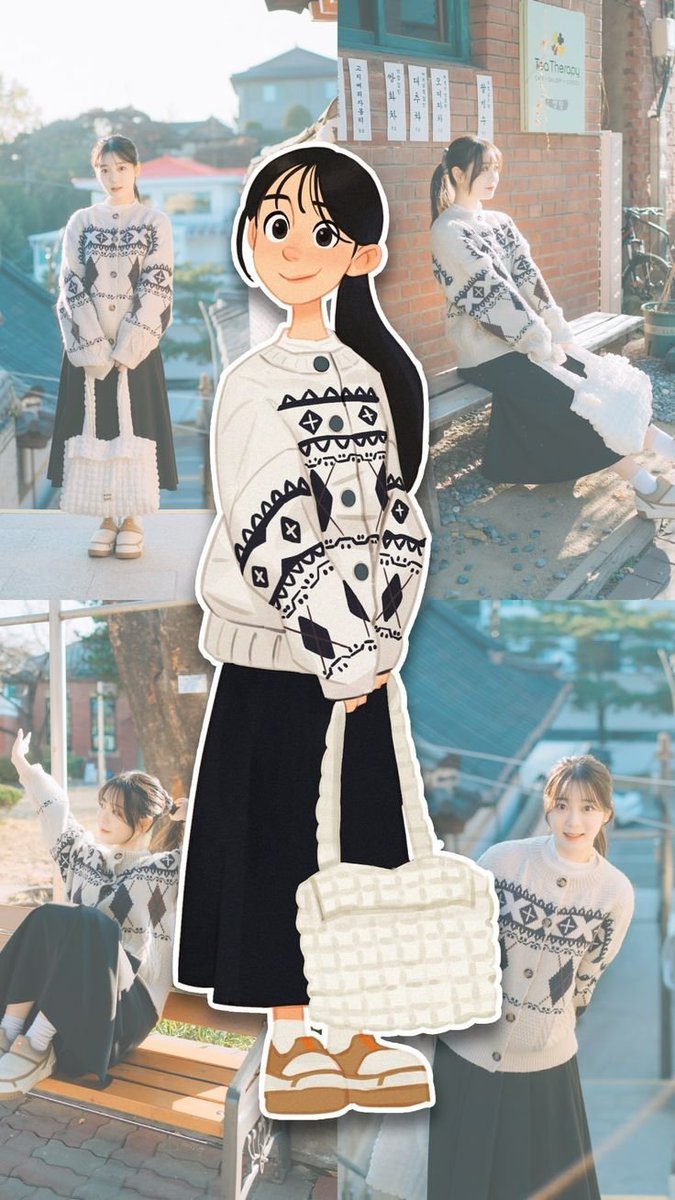
Create a vertical 9:16 photorealistic aesthetic collage using the uploaded reference image as the layout guide. Main Concept: A stylish character collage featuring the same young woman appearing in five different scenes. Arrange four realistic photographs in a 2×2 collage background, with one large illustrated cartoon version of the woman standing in the center. Character Consistency: Use the same person's face, hairstyle, facial features, and skin tone across all five appearances. The central character should be a cute 2D anime-style illustration with large expressive eyes, a gentle smile, clean outlines, and a thick white sticker border. Outfit: A cream-colored oversized knitted cardigan with black geometric patterns and buttons, a long black skirt, white socks, beige sandals, and a cream woven shoulder tote bag. Keep the outfit identical in every scene. Background Scenes: 1. Standing outdoors on a sunny rooftop terrace, holding the woven tote bag. 2. Sitting sideways on a wooden bench beside a brick building. 3. Sitting casually on a wooden bench, raising one hand. 4. Standing near a traditional Korean-style rooftop with a gentle smile. Central Character: A full-body cartoon illustration in the exact same outfit, standing naturally while holding the woven tote bag. Place her prominently over the four background photographs with a thick white die-cut sticker outline. Visual Style: Soft golden-hour sunlight, warm film photography, pastel tones, dreamy atmosphere, natural shadows, subtle vintage aesthetic, realistic photography combined with cute anime illustration. Important: Preserve the original collage composition, clothing, accessories, poses, and background details. Maintain consistent facial identity across every appearance. High-quality details, clean composition, vertical 9:16 aspect ratio.

GPT Image 2.5
Prompt:
海报与版式9:16

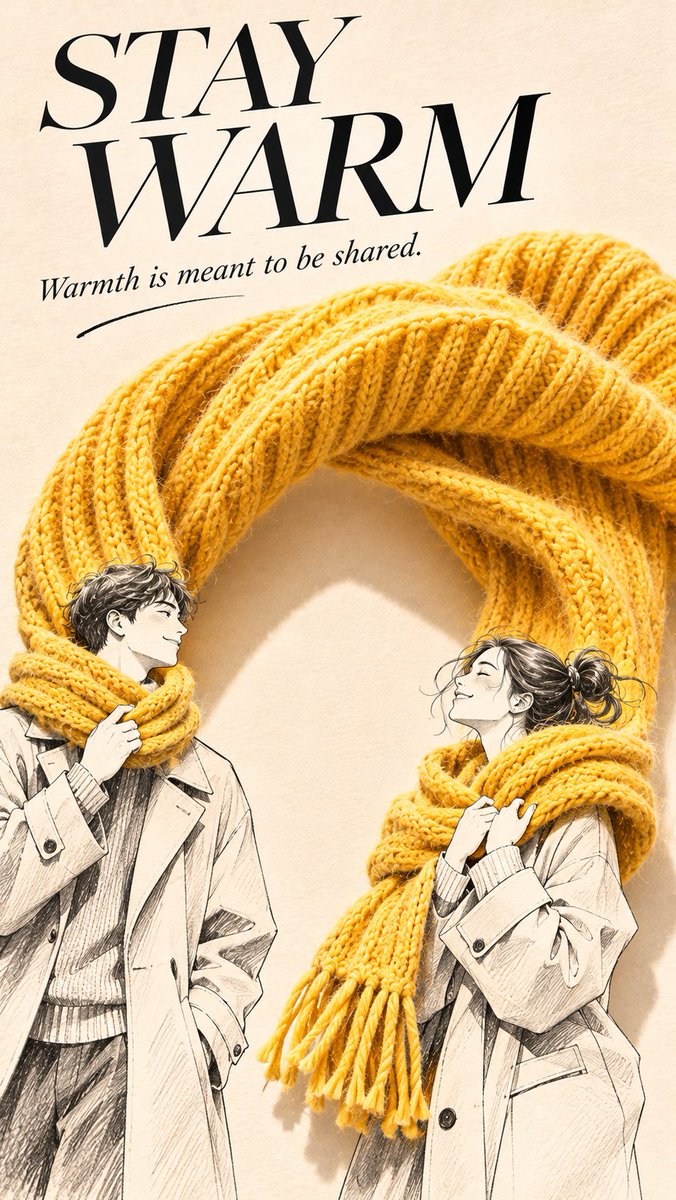
Prompt: [REALISTIC MATERIAL]: {Silk satin / Chunky knitwear / Sailcloth / Other fabrics} [ILLUSTRATED SUBJECT]: {Fashion model / Surfer / Two people / Sailor} [VISUAL INTERACTION]: {Describe how the real fabric transforms, flows, wraps around, or interacts with the illustrated subject} [ACCENT COLOR]: {Scarlet Red / Cobalt Blue / Butter Yellow / Emerald Green} [HEADLINE]: {Short English title, 1–3 words} [TAGLINE]: {One short, meaningful English sentence} [ASPECT RATIO]: 9:16 vertical Create a premium mixed-media editorial poster combining photorealistic fabric photography with elegant hand-drawn pencil illustrations. The central concept is a striking collision between 2D sketches and 3D reality. Render the [ILLUSTRATED SUBJECT] as refined black graphite line art with natural proportions, expressive poses, delicate shading, and sophisticated fashion-editorial aesthetics. Render the [REALISTIC MATERIAL] with exceptional photographic realism. Preserve authentic fibers, surface texture, folds, thickness, highlights, shadows, and natural material behavior. Use [ACCENT COLOR] as the dominant visual anchor. The fabric must physically interact with the illustration through [VISUAL INTERACTION]. Let realistic material emerge from sketched outlines, wrap around illustrated figures, overlap drawn elements, or transform into functional objects. Ensure convincing contact points, perspective, occlusion, and soft cast shadows. Composition: Use a warm ivory paper background with subtle texture and generous negative space. Create one bold, sculptural fabric shape occupying approximately 45–60% of the composition. Keep the illustrated subject clearly visible and the visual relationship instantly recognizable. Typography: Add [HEADLINE] in large, elegant, high-contrast editorial serif typography, inspired by luxury fashion magazines. Place [TAGLINE] beneath it in smaller refined italic text. Allow subtle interaction between the fabric and typography while keeping all words readable. English text only. Lighting: Soft directional studio lighting, realistic material reflections, natural shadow depth, and rich but controlled color contrast. The final result should feel like an internationally acclaimed fashion editorial: artistic, tactile, sophisticated, visually surprising, and immediately engaging. Avoid: Fully photorealistic people, cartoon characters, cheap CGI textures, floating fabrics without physical connections, cluttered backgrounds, excessive decoration, distorted anatomy, unreadable typography, extra text, logos, watermarks, numbering, and glass effects. Key principle: The fabric feels real. The characters remain hand-drawn. Their physical interaction makes the impossible feel believable.

GPT Image 2.5
Turn your photo into a minimalist premium editorial poster design with GPT Image 2.5
海报与版式3:4

Turn your photo into a minimalist premium editorial poster design with GPT Image 2.5 Prompt: PREMIUM EDITORIAL POSTER DESIGN — PHOTOGRAPHY MEETS GEOMETRIC ART OVERALL INSTRUCTION Transform each uploaded photograph into a separate, standalone premium design poster. Do not combine multiple photographs into a collage or create a multi-image composition. Each original photograph must produce its own independent poster. Canvas: Vertical 3:4 aspect ratio. Layout: Divide the canvas into two perfectly equal horizontal sections: - Top section: Exactly 50% of the total canvas height. - Bottom section: Exactly 50% of the total canvas height. The transition between the two sections must be clean, precise, and perfectly aligned. --- TOP HALF — ORIGINAL PHOTOGRAPH Preserve the original photograph as faithfully as possible. - Maintain the original subject, structure, proportions, pose, perspective, and spatial relationships. - Preserve realistic textures, natural lighting, shadows, and the original color atmosphere. - Apply only subtle, sophisticated photographic color grading to achieve the visual quality of a luxury brand campaign, fine-art editorial magazine, or contemporary art exhibition. - Enhance tonal depth, highlight roll-off, contrast, and color harmony without making the image look artificially processed. - If necessary, naturally extend the sky, ground, or surrounding environment to fit the composition. - Never alter, distort, replace, or unnecessarily regenerate the original subject. The upper section should feel like a beautifully art-directed original photograph rather than an AI-generated reinterpretation. --- BOTTOM HALF — MINIMALIST GEOMETRIC EDITORIAL POSTER Extract the most recognizable visual elements from the original photograph, including its subject, silhouette, posture, defining contours, movement, and narrative relationships. Reinterpret these elements into a sophisticated minimalist commercial-art composition. Core Visual Concept: "REAL OBJECTS THROUGH GEOMETRIC EMOTIONAL WINDOWS" Introduce one narrow, restrained, low-saturation geometric color block that acts as the primary visual anchor and spatial container. The geometric element should not follow a fixed orientation. Depending on the subject's visual weight, movement, silhouette, direction, and overall composition, it may be: - Horizontal. - Vertical. - Diagonal. - Slightly tilted or asymmetrically positioned. The original subject should appear within or emerging through this geometric window, maintaining a realistic photographic appearance or highly refined photorealistic rendering. Create an elegant interaction between the subject and the geometric boundary: - Allow selected parts of the subject to extend beyond the geometric shape. - Introduce subtle overlapping and intentional boundary-breaking. - Let parts of the subject emerge, cross through, or extend outside the color block. - Create a convincing sense of depth, spatial penetration, and natural movement. The result should feel as though a real physical object is passing through an abstract geometric space, creating a beautiful relationship between reality and graphic design. Avoid excessive decoration or unnecessary visual complexity. --- COMPOSITION & SPATIAL BALANCE Maintain an exceptionally clean, minimal, and balanced composition. Use three primary elements to establish the visual hierarchy: 1. The geometric color window. 2. The realistic subject interacting with and extending beyond its boundaries. 3. Generous negative space. The subject may be centered, asymmetrically positioned, vertically elongated, or horizontally extended, depending on what best complements the original photograph. However, always maintain a single dominant visual focal point. Keep the background predominantly white, soft grey, or an extremely light warm neutral. Optional subtle supporting elements may include: - Delicate cultural patterns. - Fine linear graphics. - Topographic contour lines. - Gentle water-wave patterns. - Soft shadow silhouettes. - Minimal abstract symbols. - Subtle architectural or organic outlines. These elements must remain extremely understated, functioning only as secondary visual layers. --- COLOR PALETTE & ART DIRECTION Extract the most distinctive and expressive colors from the original photograph and translate them into a cohesive premium design system. The overall color language should combine: - A soft, light-toned geometric window. - The original subject's authentic colors and textures. - Minimal neutral typography and graphic accents. Choose the geometric color according to the mood and identity of the photograph. Possible tones include: - Muted mist blue. - Pale aqua. - Soft ivory. - Dusty blush pink. - Warm grey. - Subtle champagne gold. - Muted beige. - Other delicate tones naturally derived from the original photograph. Keep the palette sophisticated, restrained, airy, and harmonious. Avoid excessive saturation, harsh contrasts, unnecessary gradients, or overly decorative colors. --- TYPOGRAPHY & EDITORIAL DESIGN Integrate typography naturally as part of the overall composition rather than treating it as an afterthought. Derive a short, meaningful English title from the photograph's subject, atmosphere, emotion, movement, condition, or symbolic meaning. The title should feel poetic, memorable, and editorial. Complement it with a small amount of secondary information, such as: - A short descriptive subtitle. - A location or geographical reference. - A mood or status word. - A minimal editorial annotation. - A small collection or edition reference. Typography may be arranged horizontally, vertically, or along the geometric shape and subject's visual direction. Use: - Elegant modern sans-serif or refined editorial serif fonts. - Small, carefully balanced text sizes. - Lightweight typography. - Generous letter spacing. - Precise alignment and spacing. - Minimal neutral colors. The typography should evoke the visual language of luxury real estate campaigns, high-end fashion publications, contemporary art magazines, and sophisticated seasonal editorial posters. Keep all text legible, intentional, and visually subordinate to the main subject. --- OVERALL ARTISTIC DIRECTION The final design should communicate a sophisticated fusion of: - Eastern minimalism and negative space. - Modern geometric order. - Natural energy and organic movement. - Premium commercial art direction. - Contemporary editorial design. - Photorealistic visual storytelling. Regardless of whether the original photograph contains a person, animal, plant, building, object, food, vehicle, or natural landscape, preserve the distinctive identity of the subject. The visual relationship between the original photograph and the geometric reinterpretation must remain clear, elegant, and consistent. --- STRICT OUTPUT REQUIREMENTS 1. Generate one independent poster for every uploaded photograph. 2. Never combine multiple photographs into a single image. 3. Maintain a precise vertical 3:4 aspect ratio. 4. Divide each poster into two perfectly equal horizontal sections (50% / 50%). 5. Preserve the original photograph in the upper section. 6. Create a sophisticated geometric editorial reinterpretation in the lower section. 7. Maintain photorealistic subject details and natural proportions. 8. Use a single dominant focal point and generous negative space. 9. Ensure typography is minimal, refined, and correctly spelled. 10. Maintain a consistent premium design language across all posters while allowing each photograph to determine its own colors, geometric orientation, composition, and editorial identity. FINAL CREATIVE GOAL: Every output should look like a collectible art-direction poster designed by a world-class creative studio — combining authentic photography, minimalist geometric intervention, refined typography, Eastern-inspired negative space, and premium luxury editorial aesthetics.

GPT Image 2.5
Create a vertical 3:4 comparison poster using the uploaded photo. Divide it into two eq...
3D 渲染3:4

Create a vertical 3:4 comparison poster using the uploaded photo. Divide it into two equal horizontal halves. Top half: Preserve the original photograph, subject identity, pose, proportions, details, lighting, and natural colors. Apply subtle premium color grading. No text or decorations. Bottom half: Reimagine the same subject as a beautiful miniature landscape in thick impasto oil painting style, with rich palette-knife textures, sculptural paint layers, and handcrafted details. Use colors inspired by the original photo, warm-white negative space, and elegant minimal composition. Add a short, meaningful English title and one tiny subtitle within the bottom half. Use delicate typography and subtle paper texture. Style: Minimal, sophisticated, artistic, collectible editorial poster. Avoid: Changing the subject, collages, extra objects, cartoon style, plastic 3D, messy colors, excessive text.

GPT Image 2.5
Lumina Mascot LogoLumina · AI 提示词与光影画廊·纯粹呈现 · 非营利性灵感交流与提示词研究
免责声明